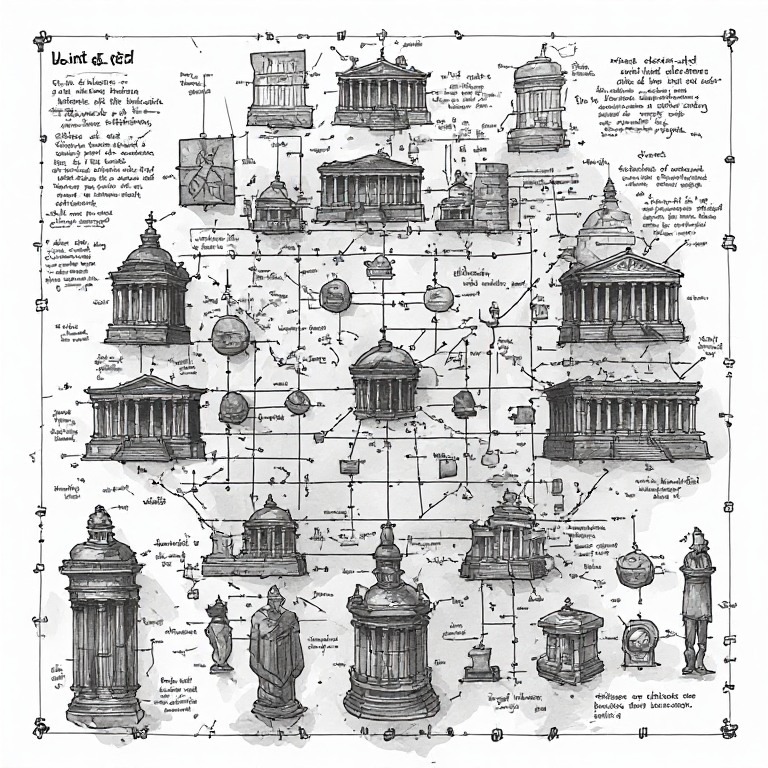

The Rise of the Administrative State: A Restorationist History
The administrative state did not appear in the Constitution, nor did the Framers imagine a federal apparatus capable of writing, interpreting, and enforcing its own rules. Yet today, administrative agencies form one of the most powerful and least understood pillars of American governance. To understand the constitutional tensions of the modern era, we must understand where this structure came from, why it grew, and how it came to wield authority that blends legislative, executive, and judicial functions.
The administrative state is not a constitutional inheritance. It is a historical construction — and a relatively recent one.
I. Origins: Late 19th‑Century Beginnings
According to historical analysis, the administrative state began to take shape in the late 1800s, when Congress first delegated lawmaking authority to specialized agencies to handle technical matters beyond the legislature’s capacity.
This was the birth of a new governing logic:
- Congress writes broad statutes
- Agencies fill in the details
- Courts defer to agency interpretations
This delegation marked a departure from the Framers’ design. The Constitution vests legislative power in Congress alone, but by the end of the 19th century, Congress had begun transferring portions of that power to unelected bodies.
The administrative state was born not from constitutional text, but from statutory necessity.
II. The Progressive Era: The Intellectual Blueprint
The Progressive Era of the early 20th century provided the ideological foundation for the administrative state. Progressive thinkers believed:
- modern society was too complex for elected officials to manage
- governance should be guided by experts, not politicians
- agencies should be insulated from electoral pressures
This era saw the creation of major regulatory bodies such as:
- the Department of Commerce and Labor
- the Federal Reserve System
- early trade and labor commissions
These agencies were designed to operate with independence from elected leadership, a feature Progressives openly acknowledged as a departure from the Constitution’s separation of powers.
The administrative state was not an accident. It was a deliberate intellectual project.
III. The New Deal: The Administrative State Becomes a Giant
While the Progressive Era supplied the theory, Franklin Roosevelt’s New Deal supplied the machinery. The economic crisis of the 1930s justified — in the eyes of Congress and the courts — an unprecedented expansion of federal agencies.
The New Deal:
- created vast new bureaucracies
- empowered them with broad rulemaking authority
- allowed agencies to enforce their own regulations
- blurred the lines between legislative, executive, and judicial functions
As one analysis notes, New Deal agencies exercised powers “largely independent of presidential control and altogether independent of political control”.
This was the moment the administrative state became a permanent structural feature of American governance.
IV. Judicial Deference: The Courts Cement the System
The administrative state’s power grew not only through legislation but through judicial doctrine.
Courts developed standards of judicial deference, meaning:
- when a statute is ambiguous, courts defer to an agency’s interpretation
- when an agency interprets its own rules, courts often defer again
This effectively gave agencies:
- quasi‑legislative power (writing rules)
- quasi‑judicial power (interpreting rules)
- executive power (enforcing rules)
As one source notes, agencies “exercise the same ability of a court to judge and interpret laws,” and courts must accept these interpretations as long as they are “reasonable”.
This is how unelected bodies came to wield powers the Framers reserved for elected branches.
V. The Great Society and Beyond: Expansion Without Pause
The administrative state continued to grow through:
- the Great Society programs of the 1960s
- environmental and consumer protection agencies of the 1970s
- financial and security agencies of the 2000s
Each new national challenge produced new agencies or expanded old ones. The administrative state became the default mechanism for federal action.
By the 21st century, the administrative state had become:
- vast
- complex
- deeply entrenched
- and largely insulated from electoral accountability
It was no longer a tool of governance. It was a governing system.
VI. Modern Critiques: A Fourth Branch Outside the Constitution
Modern scholars and political leaders across the spectrum have raised concerns about the administrative state’s power. Some argue it is undemocratic; others argue it is essential. But the structural critique remains the same:
The administrative state is the only major power center in Washington that the Constitution did not design and did not constrain.
It exercises:
- legislative power (rulemaking)
- executive power (enforcement)
- judicial power (adjudication)
This blending of powers is precisely what the Framers sought to prevent.
Even Britannica notes that administrative agencies “operate with varying degrees of independence” and often enforce the very rules they create.
This is the constitutional tension at the heart of the modern state.
VII. The Restorationist View: Understanding the Structure to Repair It
A Restorationist perspective does not demonize the administrative state, nor does it romanticize it. Instead, it asks:
- What did the Framers design?
- What did later generations build?
- Where do these structures align — and where do they conflict?
The administrative state grew from necessity, crisis, and intellectual movements that believed expertise should replace electoral accountability. It now stands as a powerful, unelected structure that can serve or frustrate any party at any time.
The danger is not that one party weakens it. The danger is that we have allowed a structure outside the Constitution to become central to governance.
Understanding its history is the first step toward restoring constitutional clarity.