
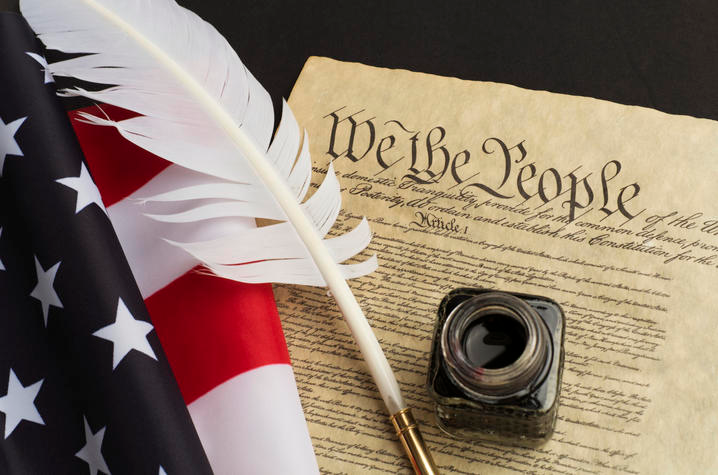
Individual liberty was the boldest idea at the heart of the American experiment. It rested on a radical but enduring premise: the smallest and most important minority is the individual. In this vision, freedom is not merely the absence of government interference. It is a constitutional and moral order in which people are judged by merit, protected by equal laws, and recognized as sovereign over their own bodies and minds.
That ideal still matters because individual liberty is more than a political slogan. It is the foundation of dignity, responsibility, and human flourishing. Yet it has never been a free gift. A free society can survive only when citizens exercise self-restraint and sustain a shared moral language strong enough to hold disagreement together without tearing the nation apart.
The Meaning of Individual Liberty
At its best, individual liberty means that people are not reduced to their race, class, party, or tribe. They are treated as persons first. Their rights do not depend on group identity, social usefulness, or public approval. Instead, each individual is entitled to equal protection, fair treatment, and the freedom to make meaningful choices about life, conscience, speech, and association.
This is one of the great achievements of the American founding. The constitutional system was designed to protect the individual from both government overreach and mob pressure. It rejected the idea that the majority may simply do whatever it wishes. Instead, it limited power and insisted that the dignity of the person comes before the demands of the crowd.
That principle remains essential. Individual liberty is the difference between a society that respects persons and a society that merely manages populations. But this vision works only when people understand that liberty is not license. Freedom without restraint quickly becomes disorder. And once disorder takes hold, the pressure grows for stronger controls, fewer choices, and more centralized power.
The Three Pillars of a Free Society
A healthy republic depends on more than laws and institutions. It also depends on habits, virtues, and expectations that ordinary people carry into public life. Three pillars are especially important.
Merit and Individual Liberty
A society committed to individual liberty must evaluate people as individuals, not as representatives of a category. That means judging competence, character, and effort rather than relying on blanket assumptions about groups.
Merit is not the enemy of fairness; it is one of its clearest expressions. Equal rules should apply to everyone. Equal outcomes, however, are a different matter. When government or culture begins to promise outcomes to groups, it often ends up treating individuals as interchangeable pieces of a political project rather than as responsible moral agents.
A merit-based order does not deny unequal talents or unequal results. It simply insists that opportunity should be open and that success should be earned. That is one of the clearest ways individual liberty becomes visible in everyday life: people are allowed to rise, fail, compete, and grow as individuals.
Individual Sovereignty
Individual liberty also requires strong protection for bodily autonomy and private choice. This is where constitutional safeguards matter most. The Bill of Rights was created to prevent the tyranny of the majority, the danger that popular opinion could crush unpopular people, ideas, or lifestyles.
Sovereignty over one’s own body and mind is not a small matter. It is the foundation of personhood. If individuals cannot control their beliefs, speech, conscience, or private life, then liberty becomes a slogan rather than a reality.
This principle does not mean that every choice is wise or every action should be celebrated. It means that adults must be free to make decisions, and to live with the consequences, unless they harm the rights of others. In a free society, individual liberty depends on a clear boundary: my freedom ends where your rights begin.
Moral Agency
The third pillar is moral agency. A free society depends on the belief that human beings can choose, deliberate, and accept responsibility. Without that belief, law becomes either sentimental or coercive. People either excuse every failure or demand that the state solve every problem.
Moral agency keeps liberty and responsibility tied together. It reminds us that our actions matter. It also reminds us that self-restraint is not weakness. In fact, it is one of the most important forms of strength. Citizens who can govern themselves need less external control.
This is why individual liberty is never merely about rights. It is also about character. A nation of self-governing people can remain free. A nation that forgets how to govern itself will eventually invite others to do it for them.
The 21st-Century Strain on Individual Liberty
The framers of the Constitution understood something modern society often forgets: a system built on individual liberty cannot endure if the people themselves lose the discipline to sustain it.
That warning feels especially relevant today. Shared civic identity has weakened. Hyper-partisanship has hardened public life. And in many places, the language of personal responsibility has been replaced by the language of grievance. Instead of asking what individuals can do to improve their circumstances, people are increasingly encouraged to view themselves primarily through the lens of group victimhood.
This shift has real consequences. When self-restraint fades, public trust erodes. When trust erodes, institutions grow more brittle. And when citizens no longer regulate their own conduct, the state is invited to step in and impose order from above. That may create temporary stability, but it often does so at the expense of individual liberty.
The danger is not only political. It is cultural and moral. A people that no longer honors restraint, duty, and personal accountability will eventually ask government to compensate for what citizenship has failed to provide. The result is usually less freedom, not more.
Why Self-Restraint Protects Freedom
Self-restraint is sometimes mistaken for repression, but it is actually one of the great safeguards of freedom. It allows individuals to live together peacefully, even when they disagree deeply about values, goals, or beliefs.
Without restraint, speech becomes cruelty, disagreement becomes hostility, and rights collide in endless conflict. With restraint, people can disagree without destroying one another. They can pursue their own lives while leaving space for others to do the same.
This is one reason individual liberty is so demanding. It asks not only that the state refrain from unjust interference, but also that citizens discipline their own impulses. Liberty lasts when people choose to respect boundaries before force is required.
That is what makes freedom durable. Not every disagreement can be solved by law, and not every conflict should be managed by authority. A free people must learn the harder lesson of living with difference while still preserving mutual respect.
The Way Forward for Individual Liberty
The constitutional order was built to account for human weakness, but it was never meant to survive on institutions alone. If individual liberty is to remain more than a memory, citizens must renew the habits that sustain it.
That means defending equal justice, protecting the sovereignty of the person, and refusing to let group resentment replace individual responsibility. It means restoring moral seriousness to public life and remembering that freedom and self-restraint are not enemies. They are partners.
A nation devoted to individual liberty cannot depend entirely on law to preserve what culture must uphold. We must choose to govern ourselves before others govern us for our own good. That is the enduring challenge of freedom, and it is also its great promise.
Individual liberty endures only when it is protected by strong institutions and animated by disciplined citizens. If we want a free society, we must fiercely defend the rights of the individual while voluntarily practicing the self-restraint that makes peace, dignity, and liberty possible. In the end, individual liberty survives not because it is convenient, but because people decide it is worth the moral effort required to keep it alive.