How a Generation Lost Its Story — And How We Restore It
Prelude
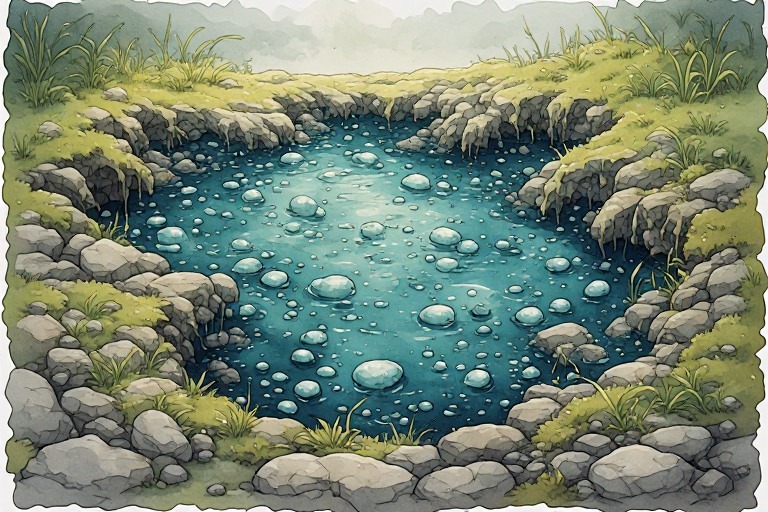
This is a philosophical argument, not a scientific one. It does not enter the debate between evolution and creation, nor does it carry any theological claim. What follows is simply an exploration of my Restorationist framework—an attempt to understand how a generation came to see itself as accidental, unanchored, and unformed, and what it will take to restore the foundations they were never given. The imagery of “primordial ooze” is not a comment on biology but a metaphor for the story our institutions now teach, and the consequences of that story on the shape of adulthood.
I. The Story They Were Given
For the first time in human history, a civilization raised its children on a story that explains everything except why they matter.
They were taught:
- Life is an accident.
- Humans are chemistry arranged by chance.
- Consciousness is a glitch.
- Morality is a social construct.
- Purpose is whatever you feel today.
- Death is the end, so hurry up and enjoy yourself.
This is the “primordial ooze” worldview:
a universe without intention, a life without meaning, and a self without obligation.
It is not science.
It is not philosophy.
It is not wisdom.
It is a story—and a remarkably thin one.
When you tell a generation they are nothing but cells, you shouldn’t be surprised when they live like nothing matters.
But here’s the truth no one tells them:
Human beings cannot survive without meaning.
If you remove it, they will search for it in the nearest available substitute—identity, rebellion, grievance, or spectacle.
And that is exactly what we see.
II. The Vacuum Where Formation Should Be
Every generation before this one inherited a formation system:
- family expectations
- community norms
- apprenticeship
- hardship
- consequences
- duty
- faith
- a shared moral grammar
These were not constraints.
They were scaffolding—the structure that allowed a young person to grow into a capable adult.
But over the last fifty years, those structures were dismantled, mocked, or abandoned.
Not maliciously.
Not intentionally.
Just… neglected.
And into that vacuum rushed:
- algorithmic affirmation
- identity performance
- emotional primacy
- institutional drift
- grievance as virtue
- safetyism as morality
The result is not a generation of rebels.
It is a generation of orphans—unformed, unanchored, and unclaimed by any story larger than themselves.
They are not lost because they are weak.
They are lost because no one taught them how to be found.
III. Why They “Fight for Freedom They Already Have”
When you remove transcendent meaning, rebellion becomes the only remaining purpose.
If life is accidental and morality is subjective, then the only heroic act left is to “resist.”
Resist what?
It doesn’t matter.
The point is the feeling of purpose.
They fight for freedom not because they lack it, but because:
- it gives them identity
- it gives them belonging
- it gives them a sense of righteousness
- it fills the void where duty used to live
It is rebellion as self-definition, not rebellion as principle.
This is why their battles feel hollow.
They are not fighting oppression.
They are fighting meaninglessness.
And meaninglessness always wins—unless something stronger replaces it.
IV. The Tragedy Beneath the Anger
Here is the part that breaks your heart once you see it:
This generation is not arrogant.
They are unformed.
They were never given:
- a coherent worldview
- a sense of lineage
- a place in the chain of civilization
- a model of adulthood
- a framework for meaning
- a vocabulary for duty
- a story worth living for
So they cling to the only things they were handed:
- chemistry
- identity
- emotion
That is not enough to build a life.
It is barely enough to survive.
Their anger is not rebellion.
It is grief.
V. The Restorationist Diagnosis
A civilization cannot endure if it teaches its children:
- that they are accidents
- that their ancestors were fools
- that their institutions are corrupt
- that their traditions are oppressive
- that their feelings are sovereign
- that their identity is sacred
- that their responsibilities are optional
This is not enlightenment.
It is civilizational amnesia.
And amnesia always leads to collapse.
But collapse is not the end.
Collapse is the clearing and preparation before rebuilding.
VI. The Restorationist Answer
For the adults in the room
Here is the part older readers need to hear clearly:
You are not powerless.
You are the answer.
Not because you are perfect.
Not because you are chosen.
But because you still remember what they were never taught.
You remember:
- that life has purpose
- that humans are more than chemistry
- that meaning is discovered, not invented
- that duty is liberating
- that gratitude is grounding
- that adulthood is earned
- that freedom requires responsibility
- that civilization is a relay race, not a performance
You carry the moral grammar they were denied.
You carry the story they were never given.
You carry the formation they desperately need.
And here is the Restorationist truth:
A single formed adult can stabilize ten unformed ones.
A community of formed adults can rebuild a civilization.
You are not here to shame them.
You are here to form them.
To give them the story that was withheld.
To offer them the structure they crave.
To show them that meaning is real, purpose is real, and they are not accidents.
You are the bridge between the world that was and the world that must be rebuilt.
VII. The Call
The younger generation is not the enemy.
They are the mission.
They are not broken.
They are unbuilt.
And we—those who still remember the old truths, the old virtues, the old responsibilities—are the builders.
Not to dominate.
Not to control.
But to restore.
To restore meaning.
To restore dignity.
To restore agency.
To restore adulthood.
To restore the moral grammar that makes civilization possible.
This is the Restorationist calling:
to rebuild what drift destroyed.
And the first step is simple:
Tell them the truth they were never given.
They are not accidents.
They are not chemistry.
They are not meaningless.
They are not alone.
They are part of a story older than the stars—
and we are here to hand it back to them.