
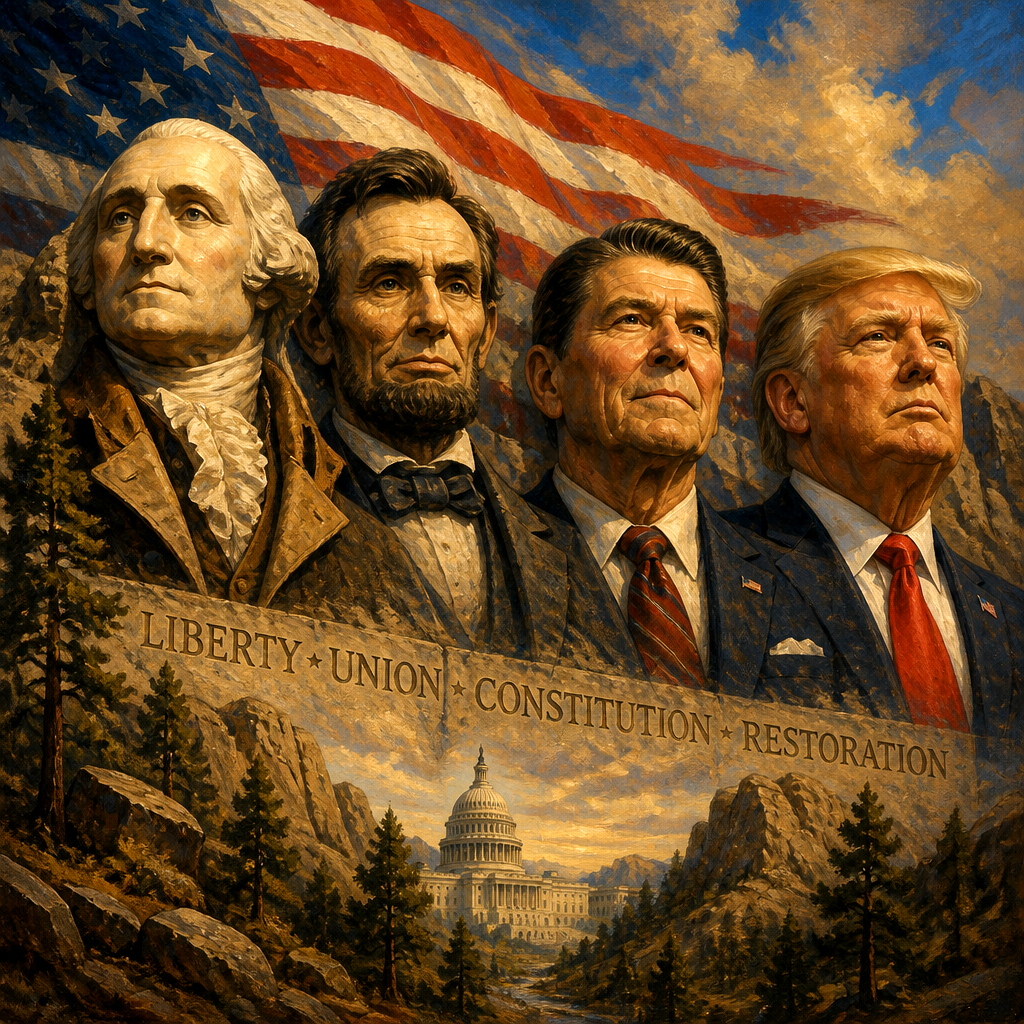
A Restorationist Reflection
There is a quiet frustration that runs through the heart of the Republican electorate — a frustration not born of ideology, but of abandonment. For decades, conservative voters have watched their representatives enter Congress with promises of conviction, only to become swallowed by the machinery of Washington. The result is a familiar complaint: “Our side does nothing.” Not nothing in the literal sense, but nothing that feels like leadership. Nothing that feels like a defense of the people who sent them there.
Republican voters have long endured the spectacle of Democratic majorities advancing sweeping agendas while Republican representatives respond with caution, procedure, and polite dissent. To many conservatives, it has felt like watching a team that refuses to take the field. And when Democrats run candidates on Republican platforms only to legislate against Republican goals, the sense of betrayal deepens. It is not merely political disagreement — it is the feeling of being unrepresented in a system that claims to speak for you.
Yet despite this frustration, Republican voters do not take to the streets when they lose in Congress or in the courts. They do not riot, burn, or demand the demolition of institutions. They do not treat unfavorable outcomes as proof that the system is illegitimate. Instead, they absorb the loss, regroup, and wait for the next election. This restraint is not weakness. It is cultural.
Republicans, by instinct and tradition, believe in the legitimacy of the system even when it denies them what they want. They believe that rules matter, that institutions must endure, and that the republic is larger than any single moment of disappointment. This is why Republican voters do not erupt into the streets — because they see themselves as stewards of a constitutional order, not combatants in a perpetual revolution.
The party’s leadership reflects this same psychology. For more than a century, Republican leaders have stayed on the tracks like a long freight train — a million cars deep, pulling the caboose up the hill with slow, grinding determination. It is not glamorous. It is not dramatic. It is not the stuff of street protests or revolutionary fervor. But it is steady. It is disciplined. It is rooted in the belief that the republic must be preserved, not reinvented.
And yet, this very steadiness has often looked like passivity. It has looked like inaction. It has looked like surrender. Republican voters have spent generations waiting for leaders who combine constitutional fidelity with the courage to use power effectively. Leaders who do not abandon restraint, but who do not confuse restraint with timidity. Leaders who understand the levers of power and are not afraid to pull them.
This is why figures like Lincoln, Reagan, and Trump loom so large in the conservative imagination. They are not identical men, nor do they share identical philosophies. But they share something deeper: a willingness to lead with clarity, conviction, and unapologetic strength. They are the rare figures who can operate within the constitutional framework while still bending history toward their vision.
Republican voters have waited a long time — perhaps a century — for leaders who combine moral seriousness with strategic boldness. Leaders who do not merely preserve the system, but animate it. Leaders who do not merely defend the republic but advance it. Leaders who do not merely hold the line, but move it.
The frustration of Republican voters is not the frustration of radicals. It is the frustration of people who believe in the system and want leaders who will fight for it with the same devotion they feel. It is the frustration of a movement that has been patient for generations, waiting for the next Lincoln, the next Reagan, the next Trump — leaders who understand that a republic requires both restraint and resolve.
In the end, Republican voters do not take to the streets because they believe the republic is worth preserving. They do not burn institutions because they believe institutions are the only thing standing between liberty and chaos. They do not demand revolution because they believe in restoration.
And perhaps that is the defining difference: Some movements seek to remake the system. Republicans seek to restore it.