
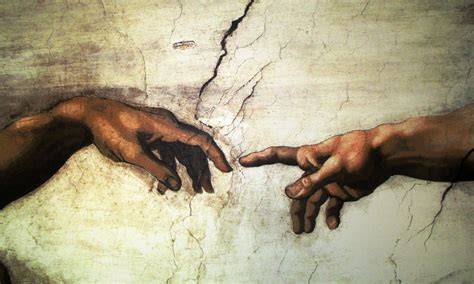
Where does a theory come from? Not from data first, and not from argument first — but from a recognition. Something is seen that cannot be unseen. A pattern breaks the surface of experience and refuses to submerge again. The thinker does not choose the theory; the theory chooses the moment, and the thinker either follows it into the open or covers it back over with the comfortable sediment of received opinion. Noetic Field Theory began precisely there — in the recognition that consciousness is not something the brain produces the way a furnace produces heat, but something the brain participates in the way an antenna participates in a signal it did not generate.
A note of intellectual honesty is owed before proceeding. The phrase Noetic Field Theory is not coined here. Richard L. Amoroso at the Noetic Advanced Studies Institute proposed a formal framework under that name in the early 2000s, grounding the relationship between mind and matter in quantum field mechanics. The broader noetic tradition is older still — the Institute of Noetic Sciences, founded in 1973 by Edgar Mitchell following his transcendent experience during Apollo 14 re-entry, has long pursued the primacy of consciousness as a scientific and experiential proposition. And behind both stands the Greek nous, the divine intellect of Plotinus, for whom mind is not produced by the world but is the second emanation from the One — the field through which the world itself becomes intelligible. What the Restorationist project adds to this existing tradition is neither the term nor the metaphysics in their original form, but a specific application: the argument that this framework has direct consequences for civic formation, for the architecture of emotional life, and for the kind of institutions a civilization built on that premise would need to construct. That application — limbic-cortical analysis, civic formation theory, and the noetic field held together as a diagnostic lens — is the original contribution here. The lineage is credited not as a disclaimer but as a foundation.
This is not a metaphor offered for comfort. It is a structural claim with consequences. If consciousness is a field — prior to matter, not derivative of it — then the entire edifice of materialist reduction requires not revision but replacement. And if that field is what theology has always, in its best moments, been reaching toward when it uses the word God, then the long divorce between scientific and religious ways of knowing is not a sign of maturity but of mutual impoverishment. Noetic Field Theory does not reconcile science and theology by softening both. It sharpens both by returning them to their shared subject: the generative ground of awareness itself.
To reason about this using the structures of the mind itself is to take the problem seriously at its own level. And the mind does not reason in one register. It reasons in two, and only rarely in both simultaneously. The limbic system — older, faster, more sovereign than most of us prefer to admit — does not process Noetic Field Theory as a proposition. It processes it as an event. When a human being first genuinely apprehends that consciousness is not a late evolutionary accident but the primary feature of reality, the response is not intellectual assent. It is recognition — the kind that arrives with a physical sensation, a sudden reorganization of the visual field, something that functions less like learning a fact and more like remembering something forgotten before language. This is the limbic signal that a generative truth has been contacted. Tribal emotions are built on constructed architectures, as we have seen; but this is different. This is the limbic system functioning as it was designed — as a detector of significance, not as a machine for tribal enforcement.
The cortical engagement follows, and it follows in a particular order. First comes the structural question: what must be true of reality if consciousness is foundational rather than emergent? This is load-bearing reasoning. If consciousness underlies matter rather than arising from it, then matter is not the primary category. Mind is. The physical world, including the brain, becomes the field’s local condensation — the place where the noetic field becomes navigable, manipulable, experienceable at the scale of individual perception. The brain is not the source of consciousness. It is consciousness’s instrument for engaging the material register of its own field. The cortex, working honestly, arrives at this not through mystical intuition but through rigorous elimination: every materialist account of consciousness leaves an explanatory residue — the hard problem, in Chalmers’ formulation — that cannot be dissolved without abandoning the premise that produced it.
The limbic and cortical pathways, then, do not conflict here. They converge. The limbic recognition precedes the cortical argument, but the cortical argument does not contradict it — it confirms and extends it. This convergence is itself diagnostic. In tribal emotional architecture, the limbic and cortical systems are at war: the limbic drives conclusions, and the cortex is conscripted to justify them. In noetic reasoning — in the kind of cognition Noetic Field Theory both describes and demands — the limbic delivers the signal and the cortex does the surveying. The feeling of recognition is not the conclusion; it is the beginning of inquiry.
What, then, would we expect to see in a civilization that had taken this framework seriously? We would expect civic institutions designed not merely to manage behavior but to cultivate awareness — structures that treat the development of consciousness as a public good rather than a private eccentricity. We would expect a politics less organized around tribal threat perception and more organized around the shared recognition of what human beings actually are: not isolated biological units competing for resources, but individuated expressions of a single generative field, differentiating itself through the instrument of personal experience. We would expect a theology that had stopped defending propositions and returned to its original function — the transmission of a practice that opens the individual to direct contact with the field that Noetic Field Theory names but cannot, by itself, deliver.
What we have instead is the inverse. Modern civic life treats consciousness as a private affair, irrelevant to public structure. Modern science treats it as an anomaly to be explained away. Modern theology treats it as a credential to be defended rather than an encounter to be sought. The Restorationist reading of this situation is not nostalgic. It does not propose a return to any prior arrangement. It proposes a renovation: that we build institutions, arguments, and practices adequate to what consciousness actually is — not to what it is convenient for our existing structures to believe it to be.
Noetic Field Theory is, in this sense, less a theory than a demand. It demands that we take seriously what the limbic system has always known and what the cortex, properly employed, can confirm: that the ground of being is aware, that we participate in that awareness rather than produce it, and that every institution, every civic formation, every argument we construct either honors that fact or distorts it. The Restorationist project is the work of building as though the fact were true.
Author’s Note
These essays are part of an ongoing Restorationist project — an attempt to build a diagnostic and formative language adequate to the civic conditions we actually inhabit, rather than the ones political optimism would prefer. The arguments here are working arguments: load-tested but not final, offered in the spirit of a framework under construction rather than a completed edifice. The Noetic Field Theory framing employed in the third essay draws on a prior tradition — including the work of Richard L. Amoroso, the Institute of Noetic Sciences, and the long philosophical lineage of nous reaching back through Plotinus to Aristotle — and the author acknowledges that lineage directly rather than discovering it as an afterthought. The distinctly Restorationist application of that tradition to civic formation, limbic-cortical reasoning, and institutional design is the original work of this project. Further essays in this series will address the relationship between institutional design and motive formation, the problem of scale in civic emotional architecture, and the practical conditions under which structural renovation of emotional and civic life becomes possible.