
How Psychology Missed the Most Important Discovery in Human Performance
“The brain does not think its way to calm. It feels its way there — and then thinks.”
She leaves the therapy session knowing exactly what is wrong with her. She walks to her car just as anxious as when she walked in. The insight was real. The words were right. And nothing, in any meaningful biological sense, has changed.
This is not a failure of her therapist. It is a structural mismatch — a map drawn for the wrong territory.
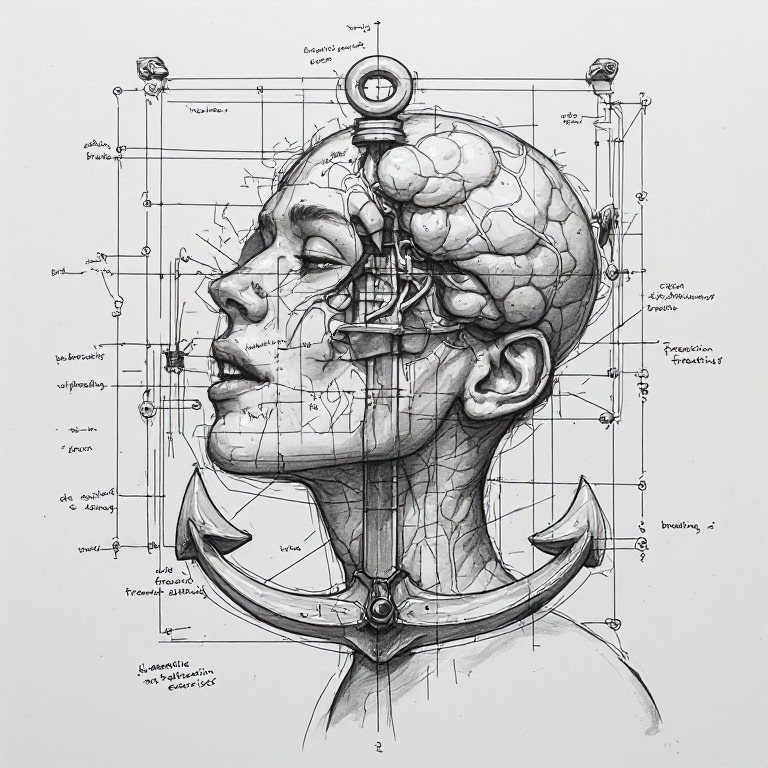
The territory is anatomical. The limbic system — the amygdala, hippocampus, and hypothalamus — processes threat in milliseconds, triggering a full-body stress cascade before the thinking brain has formed its first sentence. The prefrontal cortex is the advisor. The limbic system is the executive. Under stress, the executive overrules the advisor. Under extreme stress, it takes the advisor entirely offline.
LeDoux’s dual-pathway model showed this directly: threatening stimuli travel a fast “low road” to the amygdala, bypassing the cortex entirely. Porges’ polyvagal theory demonstrated that our sense of safety is not chosen — it is concluded by the nervous system, unconsciously, before cognition begins. Damasio showed that without bodily signals, the reasoning mind cannot make good decisions at all. The conclusion is both scientifically robust and practically explosive: you cannot talk your way into a calm nervous system.
And yet that is precisely what psychology spent a century trying to do.
Freud built a mind made of pressure and language. Behaviorism dismissed the interior life entirely. The cognitive revolution restored it — but only the cortical version: thoughts cause feelings, so change the thought. CBT became the gold standard. The DSM organized diagnosis around self-report. The body remained an elective.
Each paradigm was a genuine advance. Each carried the same blind spot: an overestimation of the cortex and a systematic neglect of the subcortical systems that actually govern behavior under stress. Van der Kolk named it plainly: trauma doesn’t live in the story. It lives in the physiology. The body keeps the score. Asking a traumatized nervous system to narrate its way to safety is like asking someone with a broken leg to think themselves toward walking.
The dissenters — Reich, Levine, Shapiro, Schwartz — were right. They remain, in most training programs, supplemental.
Meanwhile, five professions quietly solved the problem psychology had not.
They did it because they had no choice. Lives were on the line. And what they built — though they never called it therapy — was a rigorous science of limbic regulation.
The military developed SERE training: deliberate stress induction paired with recovery, building stress-induced neuroplasticity — actual structural changes in how the brain processes threat. Tactical breathing is not a relaxation exercise. It is a direct vagal nerve intervention with measurable effects on cortisol and amygdala activation. They called it training, not treatment. That distinction matters.
Emergency medicine built simulation-based training on a neurological reality: procedural memory, encoded through repetition, holds even when the prefrontal cortex is offline under stress. A surgeon’s steady hands under pressure are not willpower. They are architecture, built through thousands of deliberate repetitions.
Elite athletics began training the autonomic nervous system directly — HRV biofeedback, breath protocols, pre-performance routines as limbic anchors. The most effective performance interventions turned out to be physiological, not cognitive.
Aviation recognized that cockpit error under emergencies was not a knowledge problem — it was a stress-state problem. CRM training, simulator stress inoculation, and the FAA’s recognition that human error is fundamentally a failure of nervous system regulation: a landmark contribution to performance science, rarely cited in psychology.
Law enforcement learned that de-escalation is a physiological skill before it is a communication skill. You cannot co-regulate another person’s nervous system from a state of high sympathetic activation.
What these five share: training under stress, not in calm conditions. Body-anchored, not narrative-anchored. Building subcortical competence, not cortical insight.
The Navy SEAL learns to regulate his nervous system. The single mother in economic distress does not.
Limbic dysregulation is not a specialty problem. Anxiety affects 19% of U.S. adults annually. Impulsivity, emotional reactivity, and relational aggression drive domestic violence, educational failure, criminal justice involvement, and the intergenerational transmission of trauma. Chronic stress is a primary driver of cardiovascular disease, immune suppression, and accelerated aging.
The populations who bear these conditions most heavily have the least access to tools that address their source. They receive more cognitive instruction, more self-help content, more pharmacological management of symptoms — interventions that treat the echo of limbic distress rather than the distress itself.
This is not a character gap. It is a training gap. The tools exist. They have been proven, in the most demanding performance environments in human civilization, to work. They have simply never been democratized.
The Restorationist framework is a training philosophy, not a therapy protocol. Limbic regulation is a trainable physiological skill — it responds to progressive load, repetition, and recovery, exactly like cardiovascular fitness or strength.
Five principles, adapted from elite-profession training:
- Stress Inoculation — Graduated exposure to discomfort recalibrates the amygdala’s threat threshold. The nervous system learns through experience, not explanation.
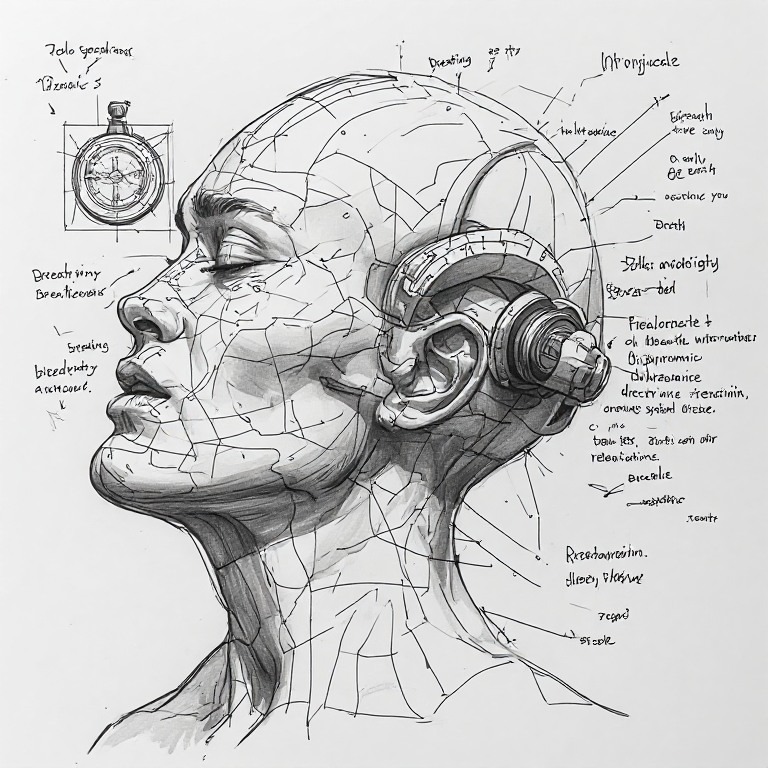
- Physiological Anchoring — Breath is the only voluntary gateway into the autonomic nervous system. Box breathing, diaphragmatic breathing, resonance frequency breathing: precision tools, not relaxation exercises.
- Procedural Conditioning — Regulation skills must be practiced under mild stress to be available under high stress. Understanding the skill is not the same as encoding it.
- Recovery Architecture — Adaptation happens in recovery. Sleep, parasympathetic activation, and social safety — Porges’ co-regulation — are not luxuries. They are the medium in which the nervous system rebuilds.
- Narrative Integration — Last, not first. Once the body has processed an experience physiologically, language becomes genuinely integrative. The physiology comes first. The words come after. And when they come after, they land differently.
The Restorationist is not an argument against psychology. It is an argument that psychology has been working with half the tools — the cortical half — while the subcortical half gathered dust in training rooms the rest of the population was never invited into.
The other half was always there. Written in muscle memory, in the slow exhale that activates the vagus nerve, in the graduated discomfort that expands the window of tolerance. It is the ancient architecture of a brain that learned to regulate itself long before language existed.
It is time to teach it to everyone.