

“When the scaffolding of demographic advantage is stripped away, a party must stand on the strength of its ideas, its governance, and its connection to the citizenry.”

What I see unfolding is not a partisan moment but a structural one — a long‑brewing conflict over how representation is defined in a republic. Redistricting battles are not new; they are the modern expression of an older struggle over who counts, how they count, and what principles anchor the apportionment of political power. For decades, the census has been pulled between two competing visions: one that treats representation as a measure of citizens, and another that treats it as a measure of all persons residing within a district, regardless of legal status. When non‑citizen populations are included in apportionment, the weight of a citizen’s vote shifts, and the balance of representation tilts in ways the Framers never anticipated. This tension has now reached a point where states are challenging the boundaries of the system itself.
From my perspective, removing these structural crutches — whether through court decisions, statutory changes, or shifts in census methodology — would expose the underlying condition of the political landscape. When the scaffolding of demographic advantage is stripped away, a party must stand on the strength of its ideas, its governance, and its connection to the citizenry. If those foundations are weak, the rot becomes visible. Followers may not admit it openly, but they would be forced to confront it. A republic cannot sustain permanent distortions in representation without consequences. Eventually, the system corrects itself, not through prediction or partisanship, but through the natural rebalancing that occurs when institutions return to their constitutional purpose: representing citizens equally, without artificial weighting or demographic engineering.
A Restorationist Reflection on Political Realignment
“Whether this leads to a new era of bipartisanship remains to be seen.”
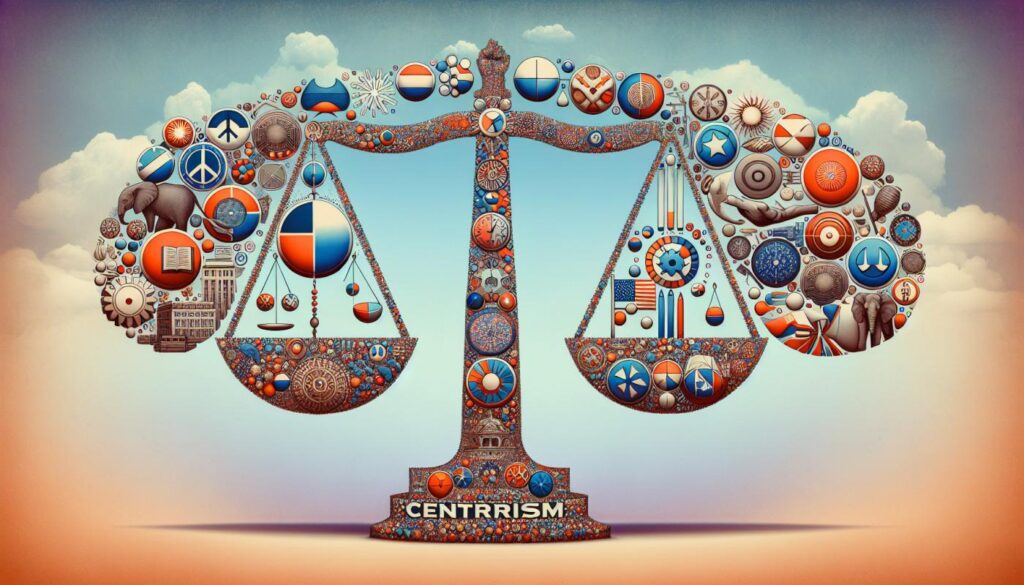
What is unfolding now feels less like a routine election cycle and more like a structural reckoning. For decades, American politics has been shaped by identity‑based frameworks — racial blocs, demographic engineering, and social experiments that treated citizens as members of categories rather than individuals. But institutions cannot sustain that model indefinitely.
When representation is challenged, when census practices are scrutinized, and when courts revisit the boundaries of apportionment, the scaffolding that supported identity politics begins to shift. In that kind of environment, parties are forced to confront their own internal contradictions. If a political movement has relied on demographic assumptions or group‑based narratives, the removal of those supports exposes weaknesses that were long hidden.
Followers may not admit it openly, but they will see it. And when the old frameworks lose their force, the only path forward is adaptation — a return to centrist, citizen‑focused governance rooted in shared civic identity rather than group identity. Whether this leads to a new era of bipartisanship remains to be seen, but the pressure is unmistakable: a republic cannot function on permanent divisions. Eventually, the system demands a politics grounded in individuals, not categories.