
PRELUDE: THE MIND THAT SEES SYSTEMS
I have spent my life repairing things — aircraft, machinery, structures, and systems. When you work long enough in environments where failure has consequences, you learn to see the world differently. You stop looking at surfaces and start looking at architecture. You stop asking how something feels and start asking how it functions. You stop treating problems as isolated events and start seeing them as symptoms of deeper structural drift.
That way of seeing never leaves you.
I see systems everywhere. Not because I’m trying to — but because the world is built that way.
Mechanical systems. Institutional systems. Moral systems. Covenantal systems. Human systems. Biblical systems.
Different domains, same architecture.
Most people read the Bible as a collection of stories. I read it the way I read a technical manual: looking for the design, the logic, the operating principles, the maintenance protocols.
That is why I keep returning to Genesis, Exodus, and Leviticus. Not out of nostalgia, and not out of piety, but because those books contain the core operating system of the entire biblical world. They describe the architecture of creation, the structure of the covenant, and the procedures that keep the system from drifting into failure.
To me, this is not abstract theology. It is systems engineering applied to the human condition.
People usually think of “Restorationism” as a movement. I use it differently. To me, Restorationism means this: when a system drifts, you restore it by returning to the architecture that made it stable in the first place.
That is what I am doing when I study Scripture. Not inventing new ideas. Not forcing modern politics into ancient text. Not trying to make the Bible say what I want.
I am tracing the system back to its foundation — to the design, the structure, the logic — so I can understand how it was meant to operate.
And once you see that architecture, you begin to notice something surprising:
The same patterns appear everywhere.
The logic of Leviticus shows up in institutional maintenance. The structure of Exodus shows up in leadership and covenant. The design of Genesis shows up in human behavior, incentives, and drift.
These connections aren’t forced. They’re simply visible to anyone who sees the world as a network of systems rather than a pile of disconnected events.
This is the lens I bring to Scripture. This is the lens I bring to life. This is the lens I bring to this project.
Not to preach. Not to persuade. But to restore clarity in a world that has forgotten how its own architecture works.
Leviticus and the Logic of System Integrity
A Restorationist Reading of How Sacred Systems Stay Clean, Trustworthy, and Operational
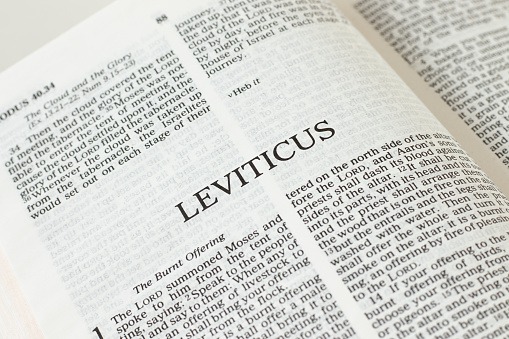
Modern readers stumble over Leviticus because they think it is about ancient rituals. It isn’t. Leviticus is about system integrity.
It is the Bible’s manual for:
- clearing accumulated corruption
- repairing breaches
- restoring trust
- maintaining safe operation between two incompatible environments
- preventing drift in a covenantal system
In other words, Leviticus is the maintenance protocol for the biblical operating system.
It is not emotional. It is not primitive. It is not barbaric. It is procedural.
The sacrificial system functions the way any disciplined institution functions when it must preserve trust:
- corrupted files must be cleared
- permissions must be reset
- breaches must be repaired
- the system must be restored to a stable state
This is not about appeasing a deity. It is about maintaining the integrity of a shared space where God and humans interact.
And here is the Restorationist insight:
Any covenant‑based system — sacred or civic — requires disciplined maintenance to remain trustworthy.
Leviticus shows that drift is inevitable. Impurity accumulates. Breaches happen. Trust erodes unless there are procedures to restore it.
This is not a political claim. It is a structural principle.
Sacred systems need maintenance. Civic systems need maintenance. Institutional systems need maintenance.
Leviticus simply reveals the architecture of how that maintenance works.
It teaches that:
- integrity is not self‑sustaining
- trust must be renewed
- breaches must be repaired
- systems must be tended or they decay
This is why Leviticus matters today. Not because we replicate its rituals, but because we recognize its logic.
Leviticus is the Bible’s reminder that no system — sacred or civic — stays clean on its own. It must be maintained, inspected, corrected, and restored.
That is the Restorationist reading.