
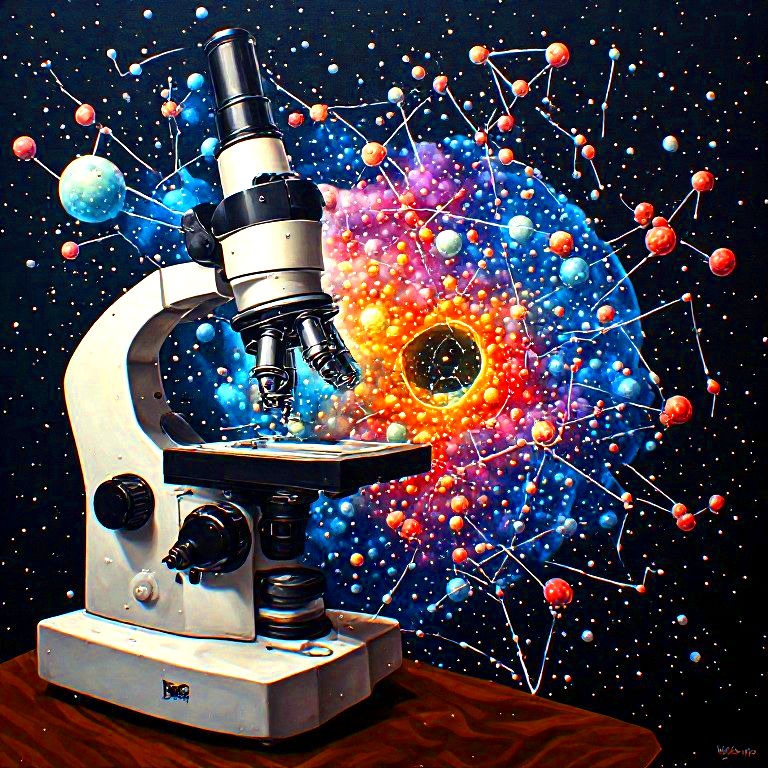
🔧 Inspection Manual: Panpsychism and the Challenge of Definition
Step 1: Initial Observation

- Inspect the casing: Reality appears mechanical, composed of matter and energy.
- Panpsychist claim: Consciousness is not limited to brains; it pervades all matter.
- Critical note (My stance): Before attributing consciousness to atoms, we must first define what consciousness is.
Step 2: Disassembly
- Remove assumptions: Challenge the view that consciousness emerges only from neural complexity.
- Expose hidden components: Panpsychists argue proto-consciousness exists at the level of atoms or photons.
- Critical note: Without a clear definition, “proto-consciousness” risks being metaphorical rather than explanatory.
Step 3: Component Analysis
- Identify parts: Panpsychists see experience as a fundamental property, like mass or charge.
- Trace connections: Consciousness scales upward, combining into richer forms in complex systems.
- Critical note: If consciousness is fundamental, it must be measurable or definable—otherwise, the claim lacks rigor.
Step 4: Blueprint Reconstruction
- Draft schematic: Reality is both structural (laws of physics) and experiential (qualities of mind).
- Philosophical parallel:
- Galen Strawson: Physicalism implies panpsychism—matter must already contain experiential qualities.
- Philip Goff: Panpsychism solves the “hard problem” by positing experience everywhere.
- David Chalmers: Even photons may have primitive experiential qualities.
- Critical note: These views expand the blueprint but still leave “consciousness” undefined.
Step 5: Restoration
- Reassemble with clarity: Panpsychism reframes knowledge as awakening to universal awareness.
- Preserve function: Consciousness is treated as a basic ingredient of reality.
- Critical note: Restoration requires precision—without defining consciousness, panpsychism risks being poetic rather than mechanical.
Closing Statement (Balanced Rewrite)
“My metaphor of reverse engineering captures the epistemic process well: just as a mechanic disassembles a machine to uncover its design, philosophers and scientists peel back layers of reality to reveal truths. Panpsychism attempts to extend this metaphor, claiming the machine is not only functional but also experiential, humming with proto-consciousness at every level. Yet if this were true, one might expect the machine to repair itself or act with agency. It does not. Machines obey design; atoms obey laws. To call this consciousness is misleading. It is structural necessity, not awareness.”