Preface
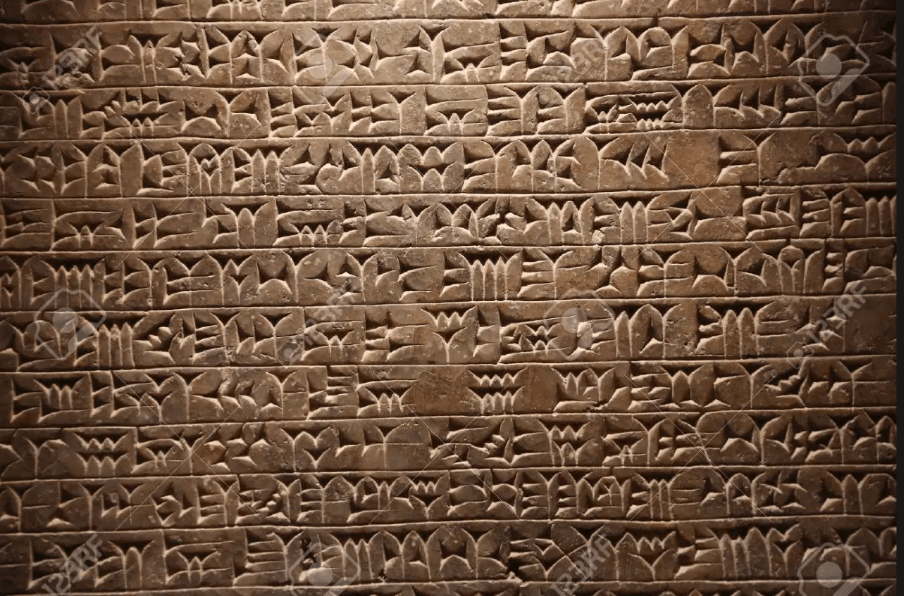
I went to bed thinking of ancient Sumer and woke up with the same thoughts. It struck me that the Sumerians developed the first written language, astronomy, mathematics, agriculture, and metallurgy—and that they employed scribes whose entire purpose was to record facts. Their inscriptions, pressed into clay with sharpened reeds, functioned as the official ledger of their society.
A ledger—whether kept by an accountant, a county clerk, or an entire civilization—is the structural memory of a people: a running record of actions, obligations, transfers, births, deaths, boundaries, and decisions that become evidence of historic fact. Ledgers turn events into accountable entries, anchoring claims to something verifiable rather than to sentiment or recollection. In Restorationist terms, the ledger is the backbone of civilizational continuity: it preserves the chain of custody between past and present, allowing societies to prove what happened, who acted, and what was owed.
When ledger‑keeping collapses, history becomes negotiable, authority becomes theatrical, and reality becomes whatever the strongest faction insists it is. What follows is my belief that the Sumerian tablets do not mythologize the world their authors inhabited. They record the facts of that world. It is my view that mainstream scholarship should stop circling the issue and begin treating the Sumerian cuneiform corpus as historical documentation. Nothing in this assessment concerns religion or any faith system; it rests solely on the texts themselves and what they reveal about a post‑flood transfer of knowledge from one civilization to the next.
I. The Problem of Interpretation
Every time humanity invents a new medium of meaning, a priesthood forms around it.
Clay tablets produced scribes. Parchment produced theologians. Printing produced academics. Digital media produced bureaucratic interpreters. AI is producing algorithmic interpreters.
Each priesthood claims the authority to decide:
- which texts are “real”
- which are “myth”
- which interpretations are allowed
But the Restorationist position is simple:
Return to the original signal, not the later priesthood.
And when we strip away the interpretive layers that accumulated over millennia, one archive stands alone as the earliest, clearest, and least‑mythologized record of the ancient world: the Sumerian cuneiform corpus.
II. The Cuneiform Corpus as the Oldest Human Record
Among all ancient sources, the cuneiform tablets are unique.
They are:
- the oldest large-scale written archive on Earth
- contemporaneous, not retrospective
- administrative, not allegorical
- literal, not symbolic
- internally consistent across thousands of years
- massive in volume and scope
Where other civilizations left inscriptions, hymns, or theological narratives, Sumer left:
- receipts
- contracts
- king lists
- flood accounts
- astronomical logs
- legal codes
- genealogies
- administrative orders
This is not mythic literature. This is civilizational paperwork.
If we want the earliest human memory, we must begin where writing begins.
III. The Sumerians Did Not Claim to Invent Civilization
The modern narrative says Sumer “invented” civilization.
The tablets say the opposite.
Taken literally, the cuneiform corpus states:
- there were cities before the flood
- there were kings before the flood
- there were sages before the flood
- there was organized knowledge before the flood
- a catastrophic flood destroyed that world
- a small number survived in marginal environments (“the deep”)
- these survivors taught the post‑flood peoples
- Sumer inherited — it did not originate — civilization
This is not mythic language. It is historical memory.
The Sumerians saw themselves as the restorers of a world that had ended.
IV. The Anunnaki and Apkallu: Not Gods, but Rulers and Specialists
A Restorationist reading does not deny theology. It simply takes the Sumerian texts at their word.
And the tablets describe their “gods” in a way that does not match later supernatural categories.
The Anunnaki
The Anunnaki are:
- embodied
- hierarchical
- territorial
- political
- capable of error
- capable of conflict
- capable of being wounded
- capable of dying
They:
- appoint kings
- issue laws
- punish cities
- travel physically
- require houses (temples)
- require food offerings
This is not the behavior of metaphysical deities. This is the behavior of a ruling class.
The Apkallu
The Apkallu are:
- teachers of writing
- teachers of agriculture
- teachers of mathematics
- teachers of surveying
- teachers of astronomy
- restorers of the crafts after the flood
This is the curriculum of a technical specialist class.
The Human Role
Humans are described as:
- laborers
- temple workers
- farmers
- builders
- administrators
This is a three‑tiered social structure:
- Anunnaki — rulers
- Apkallu — specialists
- Humans — labor force
Sumer is not polytheistic in the later sense. Nor is it atheistic. It is historical.
The beings they describe are not supernatural abstractions. They are remembered rulers of a world that ended.
V. The Flood as Civilizational Breakpoint
The tablets treat the flood as the dividing line between:
- the world before (high knowledge, long reigns, powerful rulers)
- the world after (rebuilding, shorter reigns, diminished knowledge)
This is not a symbolic cleansing. It is a civilizational discontinuity.
The Sumerians believed:
- the pre‑flood world was real
- its rulers were real
- its specialists were real
- its destruction was real
- its survivors were real
And they believed their own civilization was built on the remnants of that earlier world.
VI. Why Sumer Is the Root Archive
If the question is:
Which ancient text collection gives us the clearest, earliest, least‑mythologized account of the world before and after the flood?
The answer is unambiguous:
The Sumerian cuneiform corpus is the most authoritative ancient historical record on Earth.
Not because it is perfect. Not because it is infallible. But because it is:
- earliest
- largest
- most literal
- least mythologized
- closest to the events it describes
- free from later theological overlays
- written by scribes whose job was to record, not reinterpret
Egypt theologized. Israel theologized. India cosmologized. Mesoamerica encoded cycles. Greece dramatized.
Sumer documented.
VII. The Restorationist Imperative
A Restorationist reading does not reject theology. It simply insists that the earliest record deserves priority.
And the earliest record says:
There was a civilization before the flood. It had rulers (Anunnaki) and specialists (Apkallu). A catastrophe destroyed it. A remnant survived in the deep. They taught the post‑flood peoples. Sumer inherited civilization; it did not invent it.
This is not myth. This is memory.
And the cuneiform tablets are the Root Archive of that memory.