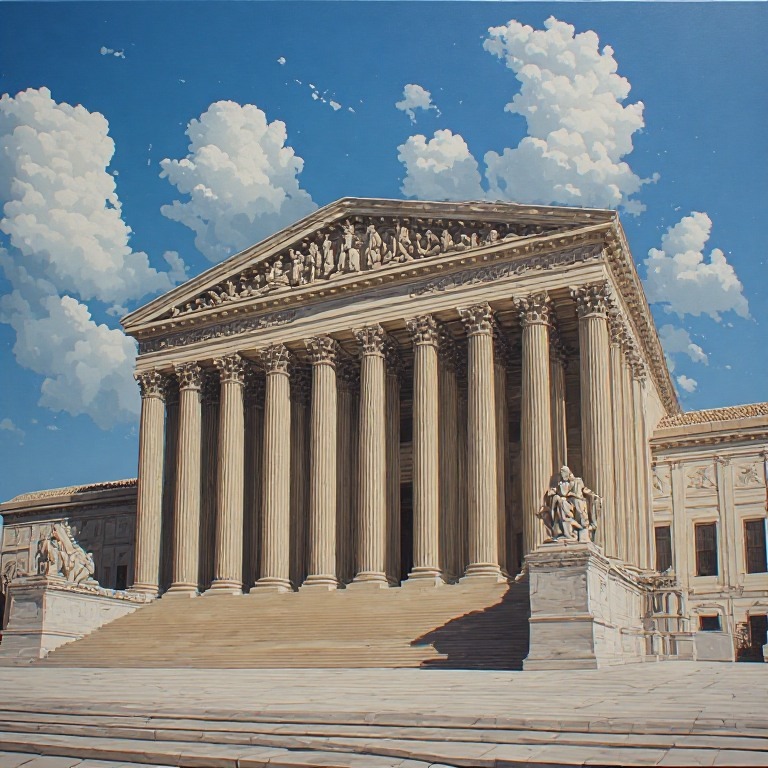

Repairing What’s Broken — A Restorationist Blueprint
I. The First Principle of Repair: Stop Forcing Congress to Do What It Cannot Do
The Founders designed Congress for deliberation, not negotiation. For oversight, not execution. For principles, not tactics.
Modern trade requires:
- speed
- secrecy
- unified direction
- technical expertise
- the ability to respond to foreign governments in hours, not months
Congress cannot do these things. It was never built to do these things. And forcing Congress to manage modern trade is like asking a lighthouse to plow a field.
A Restorationist repair begins by accepting this reality.
II. The Second Principle: Put Trade Authority Where It Belongs — In the Executive Branch
The President is the nation’s singular representative abroad. The Commerce Department is the nation’s technical engine. Together, they form the only structure capable of:
- negotiating trade agreements
- imposing tariffs strategically
- responding to foreign coercion
- protecting supply chains
- ending conflicts through economic pressure
- defending American workers and industries
This is not about expanding any particular President’s power. It is about aligning authority with capability.
III. The Third Principle: Congress Must Step Back — But Not Step Away
Congress should not:
- negotiate trade
- design tariff schedules
- approve every action
- micromanage the executive
- rely on emergency powers as a workaround
But Congress should:
- set the national principles
- define the legitimate purposes for tariff use
- establish guardrails
- require transparency
- retain the power to override misuse
Congress becomes the constitutional compass, not the mechanic.
This is how Congress gets out of the way without abandoning its role.
IV. The Fourth Principle: Replace Emergency Powers With Normal Powers
The current system forces Presidents to use emergency powers because Congress never modernized trade authority. This is governance by loophole, not design.
A Restorationist repair replaces:
- perpetual emergencies
- statutory ambiguity
- judicial guesswork
with:
- clear authority
- modern statutes
- durable frameworks
The President should not need an emergency declaration to defend American interests.
V. The Fifth Principle: Build a Modern Trade Authority Statute
This is the heart of the repair.
A single, modern law — call it the Strategic Trade and Economic Security Act — would:
- explicitly authorize tariff use for defined purposes
- empower the President to act quickly
- assign Commerce the technical execution
- require periodic reporting
- include long‑term sunset reviews
- allow Congress to override misuse by simple majority
This replaces the patchwork of Section 232, Section 301, and IEEPA with a coherent system.
VI. The Sixth Principle: Commerce Becomes the Engine of Execution
Commerce — not Congress — should:
- design tariff schedules
- analyze economic impacts
- monitor foreign compliance
- enforce import and export controls
- coordinate with allies
- run the data models
- implement presidential directives
This is where the expertise lives. This is where the machinery belongs.
The President sets the strategy. Commerce builds the machine. Congress sets the boundaries.
VII. The Seventh Principle: Build a System That Works for the Next Fifty Years
This repair is not about one administration. It is about building a structure that:
- ends wars through economic pressure
- forces negotiations without firing a shot
- protects American workers
- counters foreign coercion
- stabilizes supply chains
- restores constitutional clarity
- eliminates emergency‑powers dependency
- and functions regardless of who occupies the Oval Office
This is the Restorationist vision: repair, realignment, and renewal.