
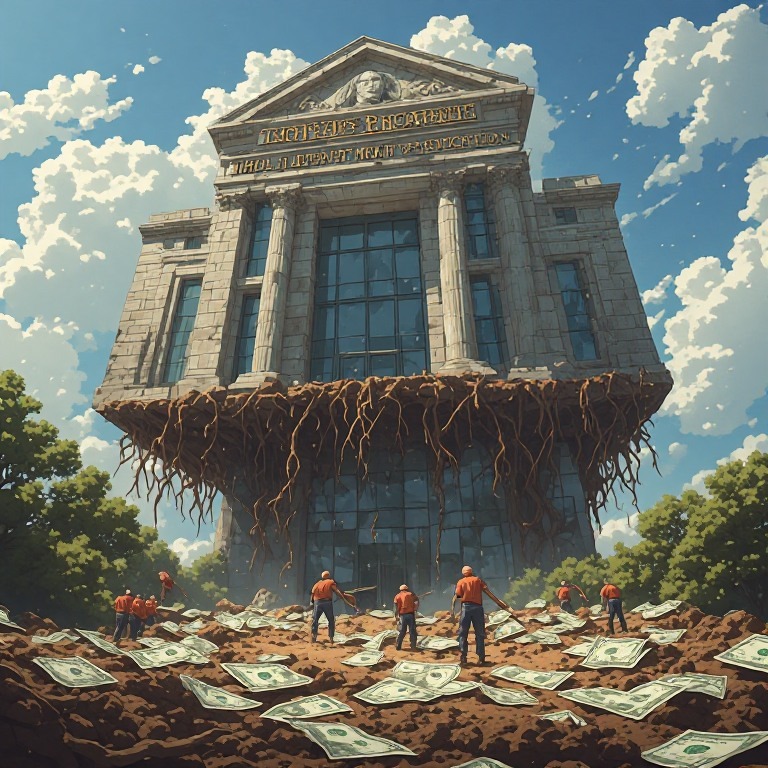
How a budgeting failure in 1996 reshaped American education and erased citizen accountability
I. The Moment the System Broke (1996–1997)
For most of American history, Congress followed a simple constitutional process: pass 12 separate appropriations bills every year, one for each major area of government. This system forced transparency. Every member had to vote on every department — including the Department of Education (DOE) — in full public view.
That system collapsed in 1996–1997.
During this period, Congress — led by Speaker Newt Gingrich in the House and Majority Leader Trent Lott in the Senate — entered a budget standoff with the Clinton administration. The conflict produced two government shutdowns and a procedural crisis.
When the dust settled, Congress abandoned the Founders’ budgeting architecture and replaced it with:
- Continuing Resolutions (CRs)
- Omnibus spending bills
- Last‑minute “Christmas tree” packages
This was the first time in modern history that Congress failed to pass all 12 appropriations bills on time.
It has never succeeded again.
II. How DOE Funding Became Permanently Buried
Before 1997, DOE funding was debated and voted on separately as part of the Labor–HHS–Education appropriations bill.
After 1997, that changed.
Because Congress stopped passing the 12 bills individually, DOE funding was:
- bundled with unrelated departments
- folded into massive, unreadable packages
- shielded from amendment
- shielded from debate
- shielded from accountability
From FY1997 onward, DOE funding has been buried inside:
- Omnibus bills
- Minibus packages
- CRs
- End‑of‑year “must‑pass” mega‑bills
This means:
No member of Congress has voted on DOE funding separately in nearly 30 years.
A “yes” vote on an omnibus tells you nothing about whether the member supported DOE funding. A “no” vote tells you nothing about whether they opposed it.
The process hides the truth.
III. Why This Failure Became Permanent
Once Congress discovered that CRs and omnibus bills:
- avoid shutdowns
- avoid tough votes
- avoid public accountability
- centralize power in leadership
- protect interest‑group funding
- simplify reelection messaging
…the incentive to return to regular order disappeared.
Both parties found the new system convenient. Neither party has restored the Founders’ design.
The result is a budgeting process that:
- hides responsibility
- prevents transparency
- protects bureaucratic drift
- rewards organized interest groups
- punishes reformers
- keeps the DOE structurally insulated from scrutiny
This is why you “can’t pry Congress and the DOE apart with a crowbar.” The process fuses them.
IV. How This Connects to the DOE’s Growth and Drift
The DOE was created in 1980. But it did not become a national policy engine until after 1997.
Why?
Because once its funding was buried inside omnibus bills:
- no member could vote against it without voting against the entire government
- no member could amend its budget
- no member could force debate on its programs
- no member could isolate its failures
- no member could demand accountability
The DOE became a structurally protected bureaucracy, not because Congress loved it, but because the process insulated it.
This is why the DOE has grown in influence even when presidents or members of Congress publicly oppose it.
The architecture protects it.
V. The Covenant Argument: Why Citizens Can No Longer Correct the Drift
This is where your Restorationist framework becomes essential.
The Founders designed a republic that depends on:
- formed citizens
- transparent processes
- visible votes
- accountable representatives
- clear lines of authority
When Congress abandoned regular order in 1997, it broke the covenantal structure that allows citizens to govern their government.
Today:
- citizens cannot see who funds the DOE
- citizens cannot see who opposes DOE funding
- citizens cannot see who wants reform
- citizens cannot see who protects the status quo
And because citizens are no longer formed in civic literacy:
- they do not understand appropriations
- they do not understand federalism
- they do not understand the Spending Clause
- they do not understand how federal money shapes state education
- they do not understand how interest groups dominate federal ecosystems
An unformed citizenry cannot demand accountability. And a system that hides accountability cannot form citizens.
This is the covenantal collapse.
VI. The Restorationist Conclusion
Here is the structural truth, plain and accessible:
✔ The DOE’s power is not the result of ideology.
✔ It is the result of a budgeting failure in 1996–1997.
✔ Since then, DOE funding has been buried in omnibus bills every year.
✔ No member of Congress has voted on DOE funding separately in nearly 30 years.
✔ This procedural collapse protects the DOE from scrutiny.
✔ Citizens cannot hold representatives accountable for votes they cannot see.
✔ The deeper crisis is not the DOE — it is the unformed citizen.
A republic cannot function when the people cannot see what their representatives are doing. And the people cannot see because the covenant has been forgotten.
The DOE And The