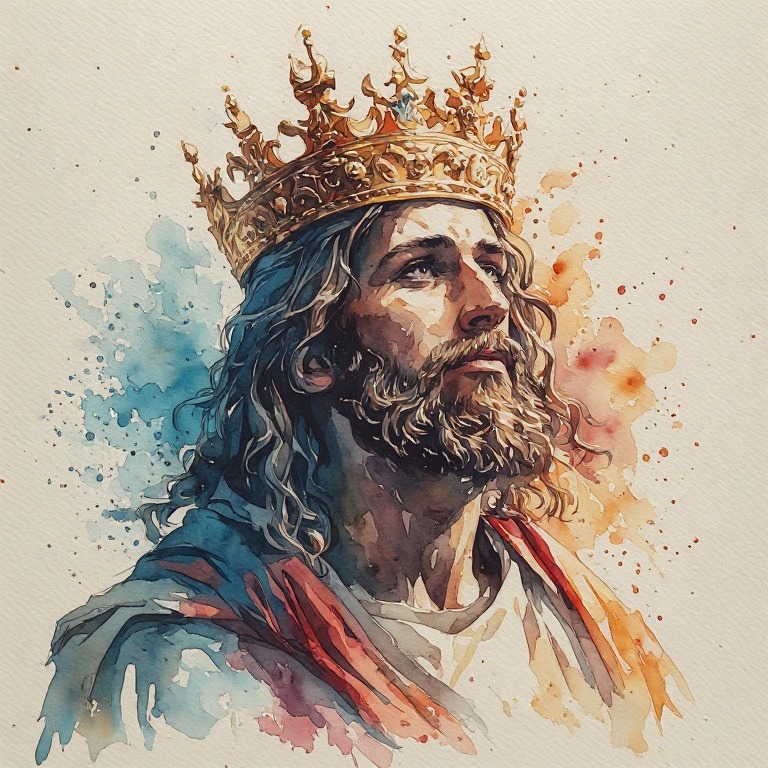
In every generation, sacred language carries two burdens: the weight of its original meaning and the pressure of whatever cultural moment tries to repurpose it. The phrase “Christ is King” is one of the oldest confessions in the Christian tradition — a declaration of allegiance, humility, and moral order. It predates every modern political movement, every American controversy, and every online subculture by nearly two millennia. Its meaning is stable, devotional, and historically unambiguous.
But symbols do not live in isolation. They live in cultures, and cultures drift.
Ted Cruz’s recent comments were not an attack on the confession itself, nor an attempt to police Christian speech. They were an attempt — imperfect, but structurally sound — to name a new cultural phenomenon: the co‑optation of a sacred phrase by a fringe antisemitic subculture that uses it as a coded signal rather than a confession of faith. In other words, Cruz was trying to distinguish the ancient meaning from the modern mutation.
This distinction matters.
Confession: A Statement of Moral Alignment
In its historic sense, “Christ is King” is a vertical statement. It points upward, not sideways. It is a claim about divine authority, not human enemies. It binds the speaker to a moral order that demands humility, repentance, and service. It is not a political slogan, a tribal badge, or a weapon.
Confession is stable because it is anchored in tradition. It does not change with the news cycle or the algorithm.
Co‑opted Code: A Signal Detached From Meaning
Online extremist subcultures operate differently. They do not create symbols; they hijack them. They take language with moral weight and strip it of its architecture, turning it into a signal for in‑group identity. In these circles, “Christ is King” is not a theological statement. It is a wink — a way of pairing hostility toward Jews with a veneer of Christian language.
This is not confession.
This is not Christian Nationalism.
This is code.
And code spreads quickly, especially among young men who are drawn to anything that feels transgressive or insider‑only. The danger is not that the confession becomes politically incorrect. The danger is that its meaning becomes polluted by association.
Cruz’s Intervention: A Warning, Not a Redefinition
Cruz’s argument was simple:
A sacred phrase is being misused, and conservatives should not allow extremists to steal their language.
He was not redefining the confession.
He was not condemning Christians who use it devotionally.
He was not claiming the phrase is inherently antisemitic.
He was naming a mutation — a drift — and urging his audience to guard the boundary between faith and fringe.
In Restorationist terms, Cruz was performing a basic act of stewardship: identifying a failure mode before it becomes a systemic collapse. When a symbol with moral gravity is repurposed as a weapon, the responsible response is not silence. It is clarity.
The Broader Pattern: When Symbols Lose Their Grammar
The rainbow is the clearest parallel. For millennia it symbolized covenant, restraint, and divine promise. In modern culture it has been repurposed as a symbol of identity and political advocacy. The conflict is not about the symbol itself but about ownership of meaning.
The same mechanism is at work here.
When extremists attach a sacred phrase to hostility, they are not participating in the Christian tradition. They are stealing its vocabulary to launder their ideology. And when that happens, leaders have a responsibility to say so — not to shame the faithful, but to protect the integrity of the confession.
Why This Matters
If sacred language can be hijacked without objection, then nothing with moral weight is safe from drift. Confession becomes code. Meaning becomes signal. And the moral grammar that once anchored a community becomes a tool for tribal warfare.
Cruz’s warning, at its core, was an attempt to prevent that collapse.
He was not attacking the confession.
He was defending it.
And in a culture where symbols are constantly being stripped of meaning and repurposed for political theater, that kind of clarity is not only legitimate — it is necessary.