
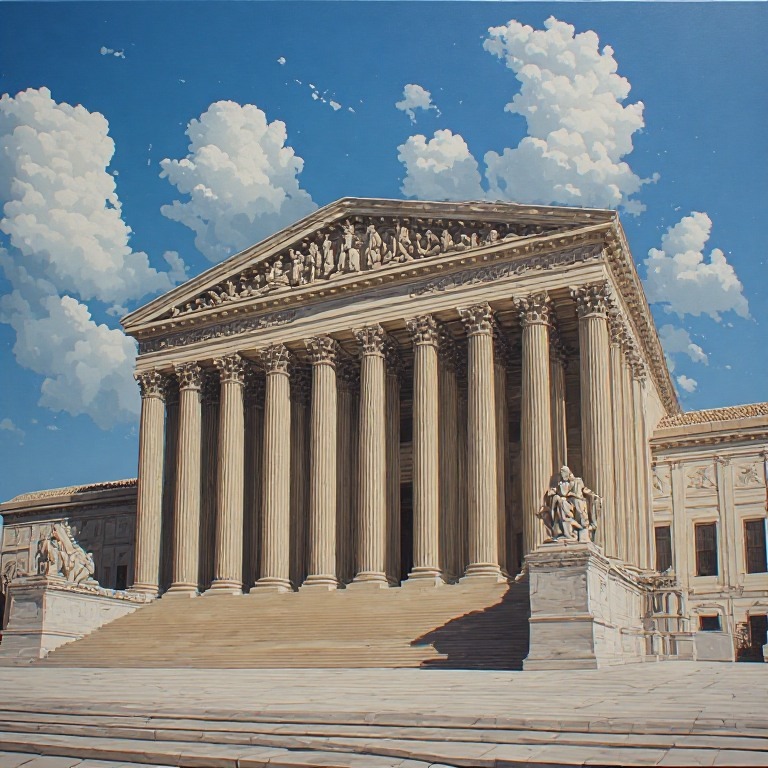
Tariffs at SCOTUS: The Stunning Legal Showdown Over Emergency Powers and Trade Authority
Restoring Balance: Emergency Powers, Trade Authority, and the Drift of American Governance
A Restorationist Essay
Introduction: A Presidency Begins With an Emergency Declaration
When the President invoked the International Emergency Economic Powers Act (IEEPA) to address foreign economic threats, he entered a legal and constitutional landscape shaped by decades of institutional drift. The move was not unprecedented. For more than forty years, administrations of both parties have relied on emergency powers to respond to foreign crises. But this latest use of IEEPA quickly exposed a much deeper tension among the three branches of government.
Congress holds the constitutional authority to regulate commerce with foreign nations. The President, meanwhile, is the nation’s singular representative on the world stage. And the Supreme Court sits between them, tasked with interpreting statutes written for a very different era.
That is why the Tariffs at SCOTUS debate matters so much. It is not simply about one policy choice or one administration’s approach to economic pressure. It is about the limits of executive power, the scope of congressional delegation, and the role of the courts in preserving constitutional balance.
The President’s use of IEEPA to impose tariffs brought this tension into sharp focus.
The Legal Fault Line: What IEEPA Does — and Does Not — Authorize
IEEPA was enacted in 1977 to give the executive branch tools to respond to “unusual and extraordinary threats” originating abroad. It authorizes the President to block transactions, freeze assets, restrict imports or exports, and prohibit financial dealings.
But the statute does not explicitly authorize tariffs.
That distinction matters. Courts have long treated tariffs as a form of taxation, and taxation is a power Congress must clearly delegate. When the President used IEEPA to impose tariffs, challengers argued that the statute’s language simply did not support that action. In response, the appeals court agreed, holding that IEEPA does not grant “wide-ranging authority to impose tariffs.”
Now the Supreme Court must decide whether the statute can bear the weight the executive branch has placed upon it.
The issue in the Tariffs at SCOTUS showdown is not whether tariffs are good or bad policy. It is a question of statutory interpretation and constitutional structure. What did Congress actually authorize, and how far can the President go when a law is stretched to meet a modern crisis?
Why the President Filled the Vacuum: The Drift of Trade Authority
To understand how we got here, we have to look backward.
For most of American history, Congress directly managed tariffs and trade policy. But as global commerce became more complex, Congress increasingly delegated authority to the executive branch through statutes such as Section 232, which allows national security tariffs; Section 301, which permits retaliation against unfair trade practices; and Trade Promotion Authority, which streamlines trade agreements.
These delegations were not accidental. They reflected a basic truth: Congress is slow, deliberative, and deeply factional. Modern trade negotiations require speed, secrecy, technical expertise, and unified direction. Congress, fractured by procedural gridlock and competing interests, often cannot provide that.
As a result, the executive branch became the de facto manager of trade policy. Emergency powers filled the remaining gaps. Over time, what began as a temporary solution hardened into a governing habit.
This is the deeper story behind Tariffs at SCOTUS. The case is not only about what IEEPA permits. It is also about what happens when the legislature retreats from responsibility and the executive fills the vacuum.
Congress’s Retreat From Trade: A Structural Problem, Not a Partisan One
The Founders warned that factions could paralyze the legislature. In the modern era, that warning has become a reality. Congress struggles to negotiate complex trade agreements, respond quickly to foreign economic threats, maintain technical expertise, and act cohesively in the face of global competition.
Too often, Congress receives trade agreements only after the most important decisions have already been made. The executive branch negotiates, and Congress reacts.
Even if the Supreme Court ultimately limits the President’s use of IEEPA, Congress remains far from being able to wield trade authority effectively in its current form. The institutional machinery no longer matches the demands of the modern world.
That is why the Tariffs at SCOTUS dispute cannot be solved by litigation alone. A court can interpret a statute, but it cannot rebuild an entire governing system. If the structure is broken, the remedy must be structural as well.
The Restorationist View: Rebuilding a System That Works
A Restorationist approach does not cling to emergency powers as a permanent solution. It also does not romanticize a Congress that no longer functions exactly as the Founders envisioned. Instead, it asks a practical question: how do we realign authority so that each branch can fulfill its role effectively?
If the Supreme Court rules against the President, the answer should not be panic. It should be reconstruction.
A restorationist framework might include clear statutory authority for the executive to manage trade in defined circumstances, congressional guardrails that set principles without micromanaging technical details, modernized trade statutes that reflect twenty-first-century economic realities, and a rebalanced emergency-powers regime where emergencies are temporary rather than perpetual.
It would also strengthen the Commerce Department and the U.S. Trade Representative as the nation’s technical trade engines.
This is not about expanding or restricting one president’s power. It is about repairing a system that has drifted out of alignment with the world it must govern.
Repairing What’s Broken: A Restorationist Blueprint
The first principle of repair is simple: stop forcing Congress to do what it cannot do.
The Founders designed Congress for deliberation, not negotiation; for oversight, not execution; for principles, not tactics. Modern trade requires speed, secrecy, unified direction, technical expertise, and the ability to respond to foreign governments in hours, not months. Congress cannot do those things well, and it was never built to do them. Forcing Congress to manage modern trade is like asking a lighthouse to plow a field.
The second principle is to put trade authority where it belongs: in the executive branch.
The President is the nation’s singular representative abroad. The Commerce Department provides the technical engine. Together, they are the only structure capable of negotiating trade agreements, imposing tariffs strategically, responding to foreign coercion, protecting supply chains, ending conflicts through economic pressure, and defending American workers and industries.
The third principle is that Congress must step back, but not step away.
Congress should not negotiate trade, design tariff schedules, approve every action, micromanage the executive, or rely on emergency powers as a workaround. But Congress should set national principles, define legitimate purposes for tariff use, establish guardrails, require transparency, and retain the power to override misuse.
In other words, Congress should become the constitutional compass, not the mechanic.
The fourth principle is to replace emergency powers with normal powers.
The current system forces presidents to use emergency declarations because Congress never modernized trade authority. That is governance by loophole, not design. A healthier system replaces perpetual emergencies, statutory ambiguity, and judicial guesswork with clear authority, modern statutes, and durable frameworks.
The President should not need an emergency declaration to defend American interests.
A Modern Trade Authority for the Tariffs at SCOTUS Era
At the center of any lasting reform should be a modern trade statute, perhaps something like a Strategic Trade and Economic Security Act. Such a law could explicitly authorize tariff use for defined national purposes, empower the President to act quickly, assign Commerce the technical execution, require periodic reporting, include long-term sunset reviews, and allow Congress to override misuse by simple majority.
This would replace the patchwork of Section 232, Section 301, and IEEPA with a coherent system.
Under this model, Congress defines the legitimate purposes of tariff power. Tariffs might be used to end or prevent conflicts through economic pressure, force foreign governments to negotiate in good faith, counter foreign coercion or aggression, level the playing field in import and export relationships, protect critical industries and supply chains, and respond to cyber-economic attacks or digital coercion.
But Congress does not define the tactics. It does not set tariff rates, design schedules, approve each action, negotiate terms, or run economic models. That belongs to the President and the Commerce Department.
Congress defines the why. The executive handles the how.
That division of labor is not a rejection of constitutional design. It is an adaptation of it.
Why This Approach Works
This framework prevents abuse without paralyzing the executive. The President cannot use tariffs for unrelated purposes, but he can act quickly when the purpose fits the statute.
It also reflects what actually works. The system is grounded in real-world outcomes: ending conflicts, forcing negotiations, leveling trade, and protecting supply chains.
Just as importantly, it restores Congress’s constitutional role. Congress sets national principles, defines legitimate objectives, and retains override power.
And it ends the emergency-powers dependency that has distorted governance for decades. No more loophole-driven policymaking. No more perpetual crises. No more judicial guesswork.
Most of all, it creates a durable system for the next fifty years, not just the next election cycle.
Conclusion: A Moment of Decision
The Supreme Court’s ruling in Tariffs at SCOTUS will not merely determine the fate of a single tariff action. It will illuminate a much larger structural question: who should wield trade authority in a world where Congress is gridlocked, the executive must act quickly, and the laws governing economic power were written half a century ago?
A Restorationist answer does not fear the Court’s decision. It sees it as an opportunity. If the statute is too narrow, then Congress should rewrite it. If the executive has overreached, then the law should be clarified. Either way, the goal is the same: restore clarity, rebuild institutional balance, and align constitutional design with modern reality.
This is not a crisis. It is a crossroads.
And in the Tariffs at SCOTUS showdown, crossroads are where restoration begins.