
Prelude
This essay advances a single, integrated argument: that human freedom is not a first-response phenomenon but a second-round capacity — cultivated, earned, and architecturally real. Drawing on four converging intellectual traditions, it demonstrates that the inner life of the human person is structured, layered, and governed by competing systems whose relationship determines the quality of moral agency. The ancient philosophers — Heraclitus, Plato, Aristotle, and Epicurus — already intuited a divided psyche in which appetite and reason contend. The Stoics refined this intuition into a practical discipline, locating genuine freedom not in the prevention of automatic response but in the disciplined governance of assent. Modern neuroscience has confirmed what the ancients suspected: the brain’s subcortical systems respond before the prefrontal cortex can deliberate, making the first movement of consciousness neurobiologically involuntary. The Restorationist model synthesizes these traditions into a coherent framework in which the “restraint interval” — the cultivable space between impulse and action — becomes the site of genuine moral development, personal transformation, and what may properly be called second-round free will.
I. The Ancient Intuition of a Divided Self
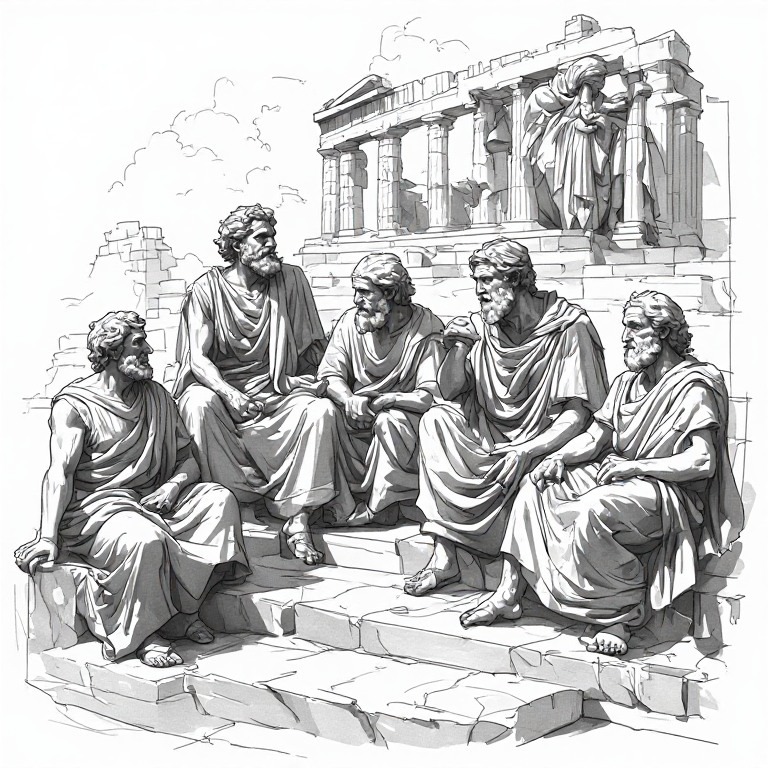
The history of Western thought begins not with a unified picture of the human mind but with a diagnosis of its divisions. Long before the advent of cognitive science, the ancient philosophers observed with remarkable precision that the inner life of the human being is structured in layers — that desire and reason do not always speak with one voice, that the person who knows what is good does not always do it, and that something in the soul both strives toward and retreats from its own higher purposes. This ancient intuition of a divided self is not a minor footnote in the history of ideas; it is the conceptual foundation upon which all subsequent theories of the will, moral psychology, and self-regulation have been erected.
The earliest and most cryptic witness to this insight is Heraclitus of Ephesus, who wrote in fragments at the turn of the fifth century BCE. Heraclitus held that all things are governed by the logos — a rational principle of order and proportion that runs through the structure of reality, including the structure of the human soul. Yet Heraclitus was equally attentive to the role of tension in this order. His famous doctrine of the “unity of opposites” — that the bow is defined by its straining against itself, that war and peace are expressions of the same underlying tension — applies with particular force to the inner life. The soul that yields wholly to appetite becomes, in his phrase, “moist,” and the moist soul is the soul that has lost its logos, its share in the universal rational order (Heraclitus, Fragment 118). What Heraclitus perceives, beneath the metaphorical surface, is that the self is not a simple unity: it is a dynamic equilibrium between competing impulses, and its health depends not on the elimination of one pole but on the proper tension between them. This proto-dualism — appetite and logos in productive contest — anticipates with remarkable clarity the architectures that later thinkers would develop with greater systematic rigor.
Plato, writing in the fourth century BCE, gave this intuition its most enduring structural form. In the Republic, Socrates proposes that the soul is composed of three distinct parts: the rational part (logistikon), which seeks truth and exercises deliberative judgment; the spirited part (thumos), which generates fierce emotion, pride, and honor; and the appetitive part (epithumētikon), which craves physical satisfaction — food, drink, sex, money, and comfort. The soul of a person well-ordered by philosophy is one in which reason governs spirit, and spirit helps reason govern appetite; the soul of the unjust or pleasure-driven person is one in which this hierarchy has been inverted, with appetite commanding where it should obey (Plato, Republic, IV.436–441). Plato’s tripartite model is not merely a metaphysical curiosity. It is the first systematic recognition that the human being is constitutively plural — that what we experience as “the self” is in reality a negotiation among internal factions with different goals, different time horizons, and radically different relationships to pleasure and pain. The person who “gives in” to desire is, for Plato, not acting as a unified agent but as a government that has allowed the mob to overrule the senate.

It is Aristotle, however, who brings the most practically consequential analysis to the problem of the divided will. In the Nicomachean Ethics, Aristotle introduces the concept of akrasia — commonly translated as “weakness of will” — to describe the perplexing phenomenon of the person who acts against their own better judgment (Aristotle, Nicomachean Ethics, VII.1–10). The akratic individual is not ignorant of the good; they know it, endorse it, and yet find themselves doing otherwise. For Aristotle, this is not a contradiction to be explained away but a datum to be taken seriously, for it reveals that knowledge is insufficient to produce virtuous action. The crucial distinction he draws is between appetite (orexis) and deliberate choice (prohairesis): the former is immediate, sensory, and pre-rational; the latter is reflective, discursive, and bound to the agent’s considered view of the good. Virtuous action requires not only that the agent know the good but that their character — the habituated disposition of the soul — be aligned with that knowledge so that appetite itself has been trained to desire what reason endorses.
This concept of habituation (ethos), from which the Greek word for character and the English word for ethics both derive, is one of Aristotle’s most important contributions to moral psychology. Virtue, he argues, is not innate but acquired; it is formed by doing virtuous acts repeatedly until the appropriate feeling — neither too much nor too little — arises naturally in the appropriate circumstances. The courageous person does not suppress fear; they feel the right amount of fear in the right situation and act well in spite of it (Nicomachean Ethics, II.1–5). This insistence on the trainability of inner response — not merely the cultivation of right belief but the reshaping of affective response through practice — will prove to be one of the most prescient insights in the entire Western intellectual tradition, finding its echo two millennia later in the neuroscientific doctrine of neuroplasticity.
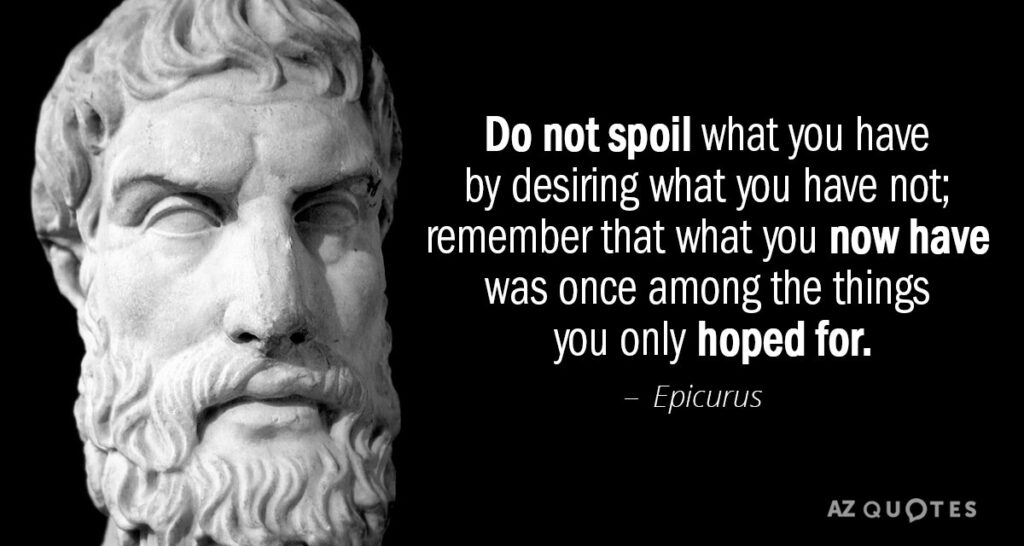
Epicurus, working in the generation after Aristotle, approached the divided self from a different but complementary angle. Where Aristotle was primarily interested in the formation of character within a political community, Epicurus was concerned with the liberation of the individual from the tyranny of disordered desire. The highest good for Epicurus was ataraxia — a state of tranquil equanimity, freedom from anxiety and agitation — and the path to it ran directly through the disciplined training of desire. His school taught that most human suffering arises not from actual deprivation but from the structure of unchecked desire itself: the person who craves wealth, fame, or sensory excess is not made happy by its attainment but is rather trapped in an escalating cycle of wanting (Epicurus, Letter to Menoeceus). The Epicurean remedy was the careful education of appetite — learning to desire what is genuinely satisfying, simple, and available — not through ascetic renunciation but through philosophical reflection on the nature of pleasure itself. What Epicurus adds to the picture developed by Plato and Aristotle is a therapeutic dimension: the cultivation of inner freedom is not merely a moral or civic duty but a form of self-healing, a restoration of the soul to its natural condition of ease.
Taken together, these four thinkers — Heraclitus, Plato, Aristotle, and Epicurus — bequeath to subsequent intellectual history a set of observations that are, at their core, empirical rather than merely speculative. They are reporting, with the tools available to them, what careful introspection reveals: that the self is layered, that its layers are sometimes in conflict, that the first movement of the soul is not always its best, and that something in the human being can — through practice, philosophy, and the formation of character — govern its own responses. The ancients did not have the vocabulary of neuroscience, but they had the phenomenology. What they described from the inside, modern science would eventually describe from the outside.
II. The Stoic Architecture of Assent
If the ancient philosophers were the diagnosticians of the divided self, the Stoics were its engineers. Working in the tradition inaugurated by Zeno of Citium and developed through successive generations into one of antiquity’s most formidable philosophical schools, the Stoic thinkers did not merely observe the conflict between impulse and reason — they developed a precise, technically articulated model of the inner life and a rigorous set of practices for its governance. It is in the Stoic tradition, above all, that we find the most philosophically sophisticated anticipation of what neuroscience would later formalize: the distinction between the automatic first movement of the soul and the free act of rational assent that follows it.
The central concept in Stoic moral psychology is the hegemonikon — the “ruling faculty” or “governing part” of the soul, identified by most Stoic writers with reason itself. For Marcus Aurelius, the Roman emperor whose private philosophical notebook has survived under the title Meditations, the hegemonikon is the innermost citadel of the self — that part of the person which cannot be touched by external fortune, bodily illness, or social humiliation, provided it remains aligned with reason and the universal logos (Marcus Aurelius, Meditations, IV.3, VIII.7). What Marcus returns to again and again, with the obsessive regularity of a man genuinely struggling with his own impulsiveness and grief, is the practice of checking his inner speech — of noticing when his hegemonikon is being “dragged along” by passion and returning it deliberately to the governance of reason. The Meditations are, among other things, the world’s most intimate record of someone practicing what Stoics called the “discipline of assent”: the trained refusal to immediately validate the emotional impression that arises in response to events.
The philosophical foundation for this discipline was laid with the greatest clarity by Epictetus, the slave-turned-philosopher whose lectures, recorded by his student Arrian in the Discourses and condensed in the Enchiridion, remain among the most practically useful texts in the Western canon. The cornerstone of Epictetus’s entire system is what has become known as the “dichotomy of control”: the recognition that some things are “up to us” (eph’ hēmin) and some things are not, and that virtually all human suffering arises from the failure to distinguish between the two. What is up to us, Epictetus insists with uncompromising precision, is our own faculty of choice — our prohairesis: the will’s proper domain, encompassing our judgments, impulses, desires, and aversions as they arise from within our own rational faculty (Epictetus, Enchiridion, 1). What is not up to us includes the body, reputation, property, and — most crucially — the automatic impressions (phantasiai) that arise in consciousness before deliberation has had any opportunity to intervene.
Here lies one of the most profound and technically precise observations in the history of philosophy: the Stoic recognition of what they called propatheiai, or “pre-passions” — the involuntary, automatic first movements of the soul that arise in response to an impression before rational assent has been given. Seneca, in one of his Letters, provides a clear account: he notes that even the philosopher will pale at sudden danger, will feel a start of fear at a loud noise, will experience a contraction of the chest upon hearing bad news (Seneca, Letters to Lucilius, 57). These are not failures of philosophy; they are, Seneca insists, neurologically inevitable — the body’s mechanical responses to the world, preceding any act of rational will. The Stoic claim is emphatically not that the philosopher does not feel these first movements. It is that the philosopher has cultivated the capacity to pause before that first movement hardens into a full passion — before the involuntary start becomes consented-to terror, before the flash of anger becomes sustained rage.
“The first movement is involuntary, a kind of preparation for passion, a threatening of passion. The next movement is combined with a wish and a slight deliberation. The third is now violent; it has overcome reason and must be carried away with the passion.”— Seneca, On Anger, II.4 (paraphrased)
This passage reveals with striking precision something that neuroscientists would not formally articulate until the late twentieth century: that the inner life is temporally structured, and that the transition from automatic response to full emotional engagement is not instantaneous but sequential. The Stoics were describing, in the language of ancient moral philosophy, what we now understand as the window between subcortical activation and cortical processing — the brief interval during which, if the practitioner has cultivated the relevant skills, rational governance becomes possible.
Seneca’s contribution to the Stoic architecture of the will is particularly notable for its emphasis on time, attention, and what we might call the practiced pause. His letters to Lucilius return repeatedly to the theme of reclaiming one’s time from the tyranny of distraction, urgency, and reactive social life. “Omnia, Lucili, aliena sunt, tempus tantum nostrum est” — “Everything, Lucilius, belongs to another; time alone is ours” (Letters to Lucilius, I). This is not merely an exhortation to productivity. It is a philosophical claim about the structure of selfhood: the person who has not reclaimed their time from the press of external demand has not yet constituted themselves as a genuine moral agent. Attention — the capacity to hold a moment, to resist the automatic acceleration from impression to reaction — is the precondition of Stoic freedom. Without it, the hegemonikon is perpetually reactive, perpetually swept along by whatever impression happens to be loudest.
Marcus Aurelius extends this teaching into the practical governance of a life under enormous external pressure. Writing as emperor — surrounded by petitioners, military crises, flatterers, and enemies — he works in his private notes to maintain what he calls the “inner citadel”: the space of rational self-governance that cannot be invaded by circumstance. His practice involves the constant return to a few foundational exercises: the view from above (imagining one’s situation from a cosmic perspective to restore proportion), the analysis of impressions (stripping the emotional coating from a situation to see it as a bare event), and the reminder that all suffering arises not from events but from the judgments we make about events (Meditations, IV.7). What Marcus is describing is not an abstract philosophical position but a set of cognitive-affective practices — disciplines of attention, evaluation, and reframing — that structurally anticipate the techniques of modern cognitive-behavioral therapy, mindfulness-based stress reduction, and emotional regulation training.
The Stoic contribution to the intellectual architecture of this essay can be stated precisely: the Stoics identified the “crack” of freedom within a causally determined system. They did not claim that the sage is unmoved, unaffected, or beyond the reach of involuntary response. They claimed that between the involuntary first movement and the full expression of passion lies a trainable interval — a sliver of time in which the disciplined practitioner can interpose rational judgment. This is not a trivial observation. It is, as we shall see, the very observation that modern neuroscience has now confirmed from an entirely different direction.
III. Neuroscience Confirms the Layered Self
The neuroscientific revolution of the late twentieth and early twenty-first centuries has produced, among its many findings, a picture of the brain that is startlingly consistent with the architecture of the self described by ancient and Stoic philosophy. This convergence is not coincidental, nor does it depend upon a selective reading of the science. It arises from the fact that both traditions are examining the same phenomenon — the structure of human response — from different epistemic positions: the ancient thinkers from within conscious experience, and the neuroscientists from without, through imaging, lesion studies, and computational modeling. What they have converged upon is a shared topology of the self: layered, temporally structured, with subcortical systems leading and cortical systems following.
The foundational discovery in this area was made by the neuroscientist Joseph LeDoux in his research on the amygdala’s role in fear processing. LeDoux identified what he described as a “low road” of neural processing: a rapid subcortical pathway through which sensory information — particularly threatening stimuli — is relayed directly from the thalamus to the amygdala without first passing through the cortex for interpretation (LeDoux, The Emotional Brain, 1996). This low road allows the amygdala to generate a fear response — triggering the release of stress hormones, activating the fight-or-flight cascade, and producing the characteristic physiological markers of emotional arousal — in a matter of milliseconds, well before the cortex has had time to evaluate whether the threat is real, proportionate, or relevant. The “high road,” which runs through the cortex, is more deliberate and accurate but correspondingly slower; it arrives, in effect, after the first response has already been dispatched.
Daniel Goleman, drawing directly on LeDoux’s work in his widely influential 1995 book Emotional Intelligence, popularized the concept of the “amygdala hijack” to describe the phenomenon in which a strong emotional stimulus overwhelms cortical governance, producing a response that is automatic, disproportionate, and — in retrospect — regretted. The amygdala hijack is not a pathological failure; it is the default architecture of the mammalian brain operating under pressure. It is, in neurobiological terms, the exact phenomenon that the Stoics described as the propatheia that precedes rational assent — the involuntary first movement of the soul that arises before the hegemonikon can intervene. What Seneca noted of the philosopher who pales at sudden danger is now explicable in terms of thalamo-amygdala activation: the Stoic sage is not immune to the low road. No one is. But the trained practitioner has cultivated the capacity to recognize the hijack and to invoke cortical reappraisal before the response becomes action.
The work of Antonio Damasio adds a dimension that is as important as LeDoux’s, and considerably more counterintuitive. In his landmark study of patients with prefrontal lesions — most famously the case of Phineas Gage, the railroad worker whose prefrontal cortex was destroyed by an iron rod in a 1848 accident, and more systematically in patients with ventromedial prefrontal damage studied in Damasio’s own clinic — Damasio found that the destruction of emotional processing capacity does not, as classical rationalist theory would predict, improve rational decision-making. It catastrophically impairs it (Damasio, Descartes’ Error, 1994). Patients who lost the capacity for emotional response became unable to make even simple decisions — not because they lacked information, but because they could not prioritize among options, could not assign weight to outcomes, and could not feel the wrongness of obviously bad choices. Damasio’s “somatic marker hypothesis” proposes that the body — specifically the somatic feedback system that generates felt emotional states — provides the evaluative infrastructure without which rational deliberation has no orientation. Emotion, far from being the enemy of reason, is its necessary precondition.
This finding has profound implications for the essay’s central argument. If Damasio is correct — and the evidence from lesion studies, decision-making research, and computational neuroscience increasingly suggests that he is — then the project of the will cannot be the suppression of the limbic system. An organism without emotional response is not more rational; it is more helpless. The goal of self-regulation, therefore, must be not the elimination of subcortical signal but its proper integration with cortical deliberation — a relationship in which the somatic markers inform the rational will without overwhelming it. This is precisely the distinction the Restorationist model will articulate as “restoration not suppression,” and it finds its neurobiological warrant directly in Damasio’s work.
A third and still more encompassing framework comes from the computational neuroscientist Karl Friston, whose “free energy principle” and its associated account of “predictive processing” have in the past decade become among the most discussed ideas in theoretical neuroscience. Friston proposes that the brain is fundamentally a prediction machine: rather than passively receiving sensory input and reacting to it, the brain continuously generates probabilistic models of the world and updates these models on the basis of incoming sensory data (Friston, The Free-Energy Principle: A Unified Brain Theory?, 2010). What we experience as perception is not a direct registration of reality but a brain-constructed prediction, weighted by prior expectations — what Friston calls “priors.” The brain’s goal is to minimize the difference between its predictions and the sensory data it receives — to minimize “free energy” or prediction error.
The implications of predictive processing for moral psychology are far-reaching. If the brain responds not to the world as it is but to the world as it predicts, then the emotional and motivational responses that the limbic system generates are not pure reactions to external stimuli but are shaped by the accumulated history of prior experience — by the priors that a person’s life has written into their predictive models. The person who grew up in an environment of threat will carry priors that generate threat-responses even in neutral situations. The person who has cultivated wisdom — through practice, philosophical reflection, or therapeutic work — is in effect updating their priors, reshaping the predictive models through which all subsequent experience is filtered. Neuroplasticity, the brain’s lifelong capacity for structural and functional change in response to experience, is the biological mechanism through which this updating occurs. Aristotelian habituation, understood in the light of predictive processing, is nothing less than the progressive recalibration of the brain’s generative models.
What neuroscience has collectively established, then, is a picture of the self that is temporally structured, subcortically initiated, and cortically completed — a picture in which the first movement is automatic and the second movement is, in principle, free. The convergence with the ancient and Stoic accounts is not merely poetic. It is structural. The brain has a “low road” and a “high road,” a limbic system and a prefrontal cortex, a system of involuntary response and a system of deliberate appraisal. The question of moral development — the question that has occupied philosophers since Heraclitus — is the question of how the relationship between these systems can be cultivated, trained, and restored to its proper order.
IV. The Restorationist Synthesis
The Restorationist model, as developed in this essay, is not a discovery of anything entirely new. It is, rather, a naming and a synthesis: an articulation of the convergent structure that runs through the ancient philosophical tradition, the Stoic practice of self-governance, and the findings of contemporary neuroscience. To call it “Restorationist” is to make a deliberate conceptual choice — one that prioritizes the language of proper relationship and renewed order over the more familiar languages of either suppression or liberation. The Restorationist does not seek to overcome the self’s lower faculties, nor to emancipate the self from all governance; the Restorationist seeks to restore each layer of the self to its proper function and its proper relationship to the others. This is not an ideology but a structural claim about the architecture of a well-functioning human being.
The model rests on four interconnected tenets, each of which requires careful articulation: the First Round, the Restraint Interval, Second-Round Free Will, and Restoration not Suppression. Together, these four concepts constitute a coherent account of how genuine human freedom is possible within a causal, embodied, neurobiologically constrained self.
The First Round
The first tenet of the Restorationist model is the recognition that all human beings, without exception, experience an automatic first-round limbic and appetitive response to stimuli — and that this is neurobiologically inevitable and morally neutral. When the amygdala fires before the prefrontal cortex can deliberate; when the Stoic philosopher pales at sudden danger; when Aristotle’s akratic individual finds appetite surging before reason has composed its argument — this is not sin, not weakness, not failure of character. It is the signature of a biological architecture that evolved under conditions of radical uncertainty, where survival depended on fast response rather than careful deliberation. The predator in the brush does not wait for the prefrontal cortex to complete its cost-benefit analysis.
To recognize the First Round as morally neutral is not to excuse all behavior that flows from it. It is, rather, to locate the proper site of moral evaluation: not in the arising of the impulse, which is beyond voluntary control, but in what is done with it. This distinction — between the arising of desire and the endorsement of desire — runs continuously through the intellectual traditions this essay has examined. It is Epictetus’s distinction between the involuntary impression and the voluntary assent; it is Seneca’s distinction between the involuntary start and the consented-to passion; it is LeDoux’s distinction between thalamo-amygdala activation and full cortical engagement. The Restorationist model makes this distinction explicit as a moral principle: the First Round is not the person’s act. What follows is.
The Restraint Interval
If the First Round is the arena of the automatic, the Restraint Interval is the arena of the genuinely human. Between impulse and action — between the neurological first movement and the behavioral response — lies a space that is small in time but vast in moral significance. This interval is the site of the Stoic pause; it is the moment in which Aristotle’s person of practical wisdom (phronimos) applies their habituated judgment; it is the window within which the prefrontal cortex, if adequately trained and not overwhelmed, can modulate the amygdala’s initial signal; it is the “crack” of freedom that the Stoics identified within the causal structure of the inner life.
The crucial claim of the Restorationist model is that this interval is trainable. It is not a fixed feature of the nervous system but a capacity that can be developed — widened, deepened, and made more reliable — through the consistent practice of the relevant disciplines. These disciplines include, but are not limited to, the contemplative practices of the Stoic tradition (the morning review, the evening examination of conscience, the practice of negative visualization and proportionate judgment); the Aristotelian formation of character through repeated virtuous action; the modern therapeutic practices of mindfulness-based cognitive therapy, whose mechanisms of action are increasingly understood in terms of prefrontal modulation of amygdala reactivity; and the broader project of philosophical self-examination that Socrates famously declared to be the only life worth living.
The neuroscientific warrant for the trainability of the Restraint Interval comes primarily from research on neuroplasticity and on the specific effects of contemplative practice on brain structure and function. Studies of long-term meditators have shown measurable increases in cortical thickness in prefrontal regions associated with attention and emotional regulation, as well as reduced amygdala reactivity to emotionally provocative stimuli. The brain’s predictive models — its priors, in Friston’s framework — are genuinely altered by sustained practice. The interval between impulse and action does not merely feel wider for the trained practitioner; it is, in a neurobiologically meaningful sense, wider: the neural circuitry that governs the transition from subcortical arousal to behavioral response has been structurally modified by the accumulated experience of pausing, evaluating, and choosing otherwise.
Second-Round Free Will
The third tenet of the Restorationist model is its most philosophically ambitious: the claim that genuine human freedom is a second-round phenomenon — not an original condition of the self but an achieved capacity, cultivated in the Restraint Interval and exercised in what follows. This concept of “second-round freedom” synthesizes three of the most important ideas encountered in this essay: the Stoic prohairesis, the Aristotelian phronesis, and the neuroscientific principle of neuroplasticity. Each of these concepts points toward the same fundamental insight from a different direction.
Epictetus’s prohairesis — the faculty of will or rational choice — is not, for him, a natural given. It is a capacity that must be exercised, protected, and progressively purified. Most people, Epictetus observes, never discover their prohairesis at all; they mistake their desires, their opinions, and their reactive emotions for their true selves, and they live accordingly — buffeted by circumstances, enslaved to appetite, unable to exercise the sovereignty that is, in principle, theirs. The philosopher’s task is to discover and inhabit the prohairesis — to become, for the first time, genuinely free. Freedom, for Epictetus, is not a starting condition but an arrival. It is the product of a long, deliberate, and demanding education of the self.
Aristotle’s phronesis — practical wisdom — is similarly an achieved rather than an innate capacity. It is the cultivated ability to perceive the morally relevant features of a situation, to deliberate well about what a person of good character would do, and to act accordingly — not as a mechanical application of a rule but as an expression of a character that has been formed, over time, by the accumulation of well-chosen actions. The phronimos, the practically wise person, does not calculate at each decision point from scratch; their habituation has, over time, aligned their perceptions, their desires, and their judgments so that the virtuous response arises with something closer to naturalness — not the spurious naturalness of unreflective impulse, but the earned naturalness of a disposition refined by long practice.
Neuroplasticity, the third strand of this synthesis, provides the biological mechanism through which both prohairesis and phronesis become possible. The brain is not fixed at birth or adolescence; it continues to reorganize its functional architecture in response to experience throughout the lifespan. The repeated practice of pausing, evaluating, and choosing deliberately — whether through Stoic exercises, Aristotelian habituation, mindfulness practice, or psychotherapeutic work — literally restructures the neural networks that govern the relationship between impulse and action. Second-round freedom is not a metaphor. It is a description of what happens when the brain’s architecture has been genuinely altered by the sustained practice of self-governance. The freedom is real, it is earned, and it is — in the most precise sense — architecturally grounded.
Restoration, Not Suppression
The fourth and final tenet of the Restorationist model is, in some respects, its most distinctive: the insistence that the goal of the entire enterprise is restoration rather than suppression. This tenet arises directly from Damasio’s work on the somatic marker hypothesis, but it has deep roots in the ancient tradition as well. The Epicurean goal of ataraxia is not the elimination of feeling but the elimination of disordered feeling — the restoration of the self to a condition of tranquil satisfaction made possible by the proper ordering of desire. The Aristotelian goal of virtue is not the suppression of emotion but its appropriate expression — feeling the right thing, at the right time, toward the right person, to the right degree. Even the Stoic tradition, often caricatured as a philosophy of emotional suppression, explicitly recognizes through the doctrine of propatheiai that the first movement of the soul cannot and should not be prevented.
Damasio’s neurological findings make the case for this position with clinical precision: the brain without emotional response is not more rational but less functional. The organism that suppresses its somatic markers does not achieve wisdom; it achieves paralysis. The implication for the Restorationist model is direct: the relationship between the limbic system and the prefrontal cortex must be understood not as one of master and slave, higher and lower, but as one of collaboration under proper governance. The limbic system provides the evaluative signal — the sense that something matters, that an outcome has weight, that a choice carries consequence — without which rational deliberation is empty. The prefrontal cortex provides the temporal scope, the capacity for reflection and reframing, and the ability to override immediate signal in favor of longer-term evaluation. Neither system is sufficient alone. The properly integrated self is one in which emotion informs rather than commands the rational will — in which the limbic signal is heard, weighed, and appropriately incorporated into deliberate choice.
Restoration, then, names the process by which the self is returned to this proper integration — a process that requires neither the suppression of desire nor its uncritical expression, but rather the patient, disciplined cultivation of the relationship between its constitutive layers. This is what the ancient philosophers were reaching for, what the Stoics practiced with such scrupulous precision, what neuroscience has now confirmed as biologically real, and what the Restorationist model seeks to articulate as a coherent practical philosophy of the self.
V. Practical Implications
An integrated model of the will — one that takes seriously both the ancient philosophical traditions and the findings of contemporary neuroscience — is not merely a theoretical achievement. It carries substantial practical implications for several of the most important domains of human life: moral education, psychotherapy, leadership formation, and what may broadly be called spiritual development. Each of these domains is transformed when the architecture of the will is properly understood.
In moral education, the Restorationist model challenges the dominant modern assumption that ethical formation is primarily a matter of imparting correct values or developing critical reasoning skills. If genuine moral agency is a second-round phenomenon — if it depends not on knowing the good but on having cultivated the inner architecture that makes acting on that knowledge possible — then moral education must attend directly to the formation of character in the Aristotelian sense. Schools and families that wish to develop genuinely ethical persons must provide not merely instruction in moral principles but sustained practice in the disciplines of attention, self-examination, and delayed response. The Restraint Interval must be taught, exercised, and progressively widened through accumulated experience. This has concrete curricular implications: programs in social-emotional learning, contemplative education, and character formation are not soft supplements to a rigorous academic curriculum but are, in the light of the model advanced here, its most foundational elements.
In psychotherapy, the Restorationist model offers a unifying framework that bridges what are often treated as competing approaches. Cognitive-behavioral therapy, with its emphasis on identifying and restructuring maladaptive thought patterns, addresses the cortical level of the self — the beliefs and appraisals that mediate between stimulus and response. Somatic and body-based therapies, with their attention to the physiological signatures of emotional experience, address the subcortical level. Mindfulness-based approaches, which train the practitioner to observe impulses without immediately acting on them, work directly on the Restraint Interval itself. The Restorationist framework reveals these approaches not as rivals but as complementary interventions at different levels of the same layered architecture. The therapist who understands the model can sequence and combine approaches in a principled way, targeting the specific level at which a given client’s self-regulatory capacity has been disrupted.
In leadership, the implications are equally concrete. Leaders who operate from First-Round reactivity — who are perpetually in amygdala hijack, who confuse the speed of response with the quality of judgment — produce organizations that mirror their own dysregulation: anxious, reactive, and poorly adapted to complexity. Leaders who have cultivated the Restraint Interval — who can receive difficult information without immediately discharging it as reactive behavior, who can distinguish between the somatic signal of urgency and the deliberative judgment of importance — create conditions under which others can also think clearly, act deliberately, and contribute their best capacities. In this sense, leadership development and the cultivation of second-round freedom are not merely correlated; they are, at the deepest level, the same project.
Finally, in the domain of spiritual formation — across traditions as diverse as Christian contemplative practice, Buddhist meditation, Jewish ethical mussar, and Sufi spiritual discipline — the Restorationist model offers a philosophical vocabulary that illuminates practices whose efficacy has been known empirically for centuries but whose mechanisms have often remained opaque. The contemplative traditions have long understood that transformation of the self requires something more and different from intellectual assent to true propositions; it requires the slow, patient restructuring of the inner life at the level of felt response, habitual attention, and embodied disposition. What the Restorationist model adds is a precise account — grounded in both ancient philosophy and contemporary neuroscience — of what is actually happening in this process and why it must take the time that it takes.
VI. Conclusion: Freedom as Achievement
The oldest error in the philosophy of freedom is the assumption that it is a starting condition — that the human being arrives in the world, or in any given moment, already free; that the question of freedom is merely a question of the absence of external constraint. Against this assumption, the intellectual traditions examined in this essay mount a convergent case. The ancient philosophers observed that the self is plural and conflicted — that appetite and reason contend for governance of the human being, and that the outcome of that contest is never guaranteed by nature. The Stoics refined this observation into a precise moral psychology: the first movement of the soul is involuntary; freedom begins not with the impression but with the disciplined governance of assent. Contemporary neuroscience has provided the biological architecture through which these observations become explicable: the limbic system leads, the prefrontal cortex follows, and the interval between them is the sole locus of anything that deserves to be called voluntary action.
The Restorationist model synthesizes these traditions into a single coherent claim: that genuine human freedom is a second-round achievement, built at the intersection of ancient insight and modern science, cultivated through the persistent disciplining of the Restraint Interval, and grounded in the progressive restoration of the proper relationship between the self’s constitutive layers. This freedom is not the absence of impulse — that would be pathology, as Damasio’s patients demonstrate. It is not the mere knowledge of the good — that would be insufficient, as Aristotle’s account of akrasia reveals. It is not the suppression of feeling — that would be a violence against the self’s necessary infrastructure. It is, rather, the earned capacity to respond rather than react; to let the somatic marker inform without commanding; to inhabit the pause between stimulus and response with sufficient presence of mind to choose, deliberately and wisely, what comes next.
“Between stimulus and response there is a space. In that space is our power to choose our response. In our response lies our growth and our freedom.”— Attributed to Viktor Frankl; widely cited in the psychological and philosophical literature
To reclaim freedom as an achievement rather than an assumption is to take seriously both the grandeur and the difficulty of the human condition. It is to acknowledge that the architecture of the will is real, that it can be built or neglected, that the quality of a human life depends in significant measure on the quality of the inner governance that the person has had the discipline — and the good fortune — to develop. It is also, ultimately, to restore the ancient connection between philosophy and practice: to insist that the love of wisdom is not merely an intellectual exercise but a demanding, lifelong project of self-formation, conducted in the Restraint Interval, repeated in every moment of genuine moral choice, and oriented always toward the second round — toward the freedom that waits on the far side of the first, automatic, inevitable, and morally neutral response of the human animal to its world.
The Architecture of the Will is, in the end, not a metaphor. It is a description. And descriptions, when they are accurate, change what we see — and, in changing what we see, make possible what we build.
— End of Essay —
Primary Sources Cited
Aristotle. Nicomachean Ethics. Trans. W.D. Ross. Oxford University Press, 2009.
Aurelius, Marcus. Meditations. Trans. Gregory Hays. Modern Library, 2002.
Damasio, Antonio. Descartes’ Error: Emotion, Reason, and the Human Brain. Putnam, 1994.
Epictetus. Discourses and Selected Writings. Trans. Robert Dobbin. Penguin Classics, 2008.
Epicurus. Letter to Menoeceus. In The Epicurus Reader. Trans. Brad Inwood and L.P. Gerson. Hackett, 1994.
Friston, Karl. “The Free-Energy Principle: A Unified Brain Theory?” Nature Reviews Neuroscience 11 (2010): 127–138.
Goleman, Daniel. Emotional Intelligence: Why It Can Matter More Than IQ. Bantam Books, 1995.
Heraclitus. Fragments. Trans. T.M. Robinson. University of Toronto Press, 1987.
LeDoux, Joseph. The Emotional Brain: The Mysterious Underpinnings of Emotional Life. Simon & Schuster, 1996.
Plato. Republic. Trans. G.M.A. Grube, revised by C.D.C. Reeve. Hackett, 1992.
Seneca. Letters to Lucilius (Epistulae Morales). Trans. Richard Mott Gummere. Loeb Classical Library, 1917–1925.
Seneca. On Anger (De Ira). In Moral Essays, Vol. I. Trans. John W. Basore. Loeb Classical Library, 1928.