Virtue Is the Best Price of Freedom
Freedom is one of the most celebrated words in human history, but it is also one of the most misunderstood. Many people assume freedom means being able to do whatever we want, whenever we want, without interference. Yet that definition is too shallow to sustain a society, and too weak to preserve a civilization. True freedom requires something far more demanding: self-control, responsibility, discernment, and virtue. That is why virtue is the best price of freedom. It is the inner strength that makes outer liberty possible.
Without virtue, freedom does not remain freedom for long. It quickly turns into impulse, disorder, and dependence. A people who cannot govern themselves will eventually be governed by someone else. The loss of virtue is not just a private moral issue; it becomes a public and political one. When individuals lack restraint, governments grow larger, rules multiply, and liberty begins to shrink.
Why Virtue Is the Best Price of Freedom
The idea that virtue is the best price of freedom is not merely a philosophical slogan. It is a practical truth about human nature. Every free society depends on people who can choose what is right over what is easy, what is true over what is convenient, and what is lasting over what is immediate.
Freedom asks more of people than any other form of social order. A monarchy or dictatorship can survive for a time even if citizens are careless or undisciplined, because power is concentrated at the top. But a republic works differently. It distributes power among the people, and therefore depends on the people’s ability to exercise that power responsibly. If citizens are ruled by appetite, anger, or greed, then the nation will eventually require stronger controls to manage what self-government failed to contain.
That is the heart of the argument: virtue is the best price of freedom because liberty without discipline cannot endure. A society may speak constantly about rights, but if it neglects character, those rights become fragile. Freedom survives only when people have the moral habit of choosing well when no one forces them to.
The Biblical Foundation for Freedom and Virtue
The Bible understood this long before political theory gave it language. Scripture repeatedly shows that the human struggle is not merely between different opinions, but between impulse and restraint, wisdom and folly, obedience and rebellion. The book of Proverbs warns that “a fool gives full vent to his spirit,” a vivid description of the danger of ungoverned desire. When a person cannot rule his own passions, he becomes vulnerable to destruction from within.
The New Testament presents the same truth in a different form. Paul speaks of the renewal of the mind, pointing to the deliberate transformation that enables a person to think clearly and live rightly. Biblical freedom is never the absence of restraint. It is the victory of internal restraint over external compulsion. In other words, the goal is not to remove all limits, but to develop people who can live under the right limits willingly.
This is why virtue is the best price of freedom in a biblical sense as well as a civic one. The person who cannot say no to temptation will eventually lose the ability to say yes to what matters most. And when that happens across an entire culture, the results are predictable: confusion, decline, and a growing need for control.
John Adams and the Moral Foundations of a Republic
John Adams understood this reality clearly. When he warned that the Constitution was made only for a moral and religious people, he was not offering a decorative comment about faith. He was describing the conditions under which republican government can survive.
His point was simple but profound. A republic does not succeed because its leaders are always wise or because its laws are perfectly written. It succeeds because its citizens possess the habits of self-government. They can tell the truth, keep their promises, accept limits, and act for the common good rather than only for themselves.
This is why virtue is the best price of freedom in a republic. If citizens abandon discipline, the government must step in to manage the consequences. If enough people live recklessly, society becomes burdened with regulations, enforcement, and bureaucracy. In time, the nation may still call itself free, but it will no longer function like one.
The Role of Classical Education
Classical education once aimed to form people capable of living in freedom. It was never meant to produce mere specialists or information collectors. It sought to shape the whole person: mind, will, and character. Students were taught not only what to think, but how to think; not only what is useful, but what is good; not only how to succeed, but how to live responsibly.
This kind of education recognized that knowledge without virtue is dangerous. An intelligent person without restraint can do far more damage than an ignorant one. Power, intellect, and opportunity all become corrosive when they are disconnected from moral formation. Classical education therefore treated discipline, courage, honesty, humility, and duty as essential, not optional.
That approach matters because freedom is not sustained by cleverness alone. It requires people who can bear responsibility. It requires citizens who can endure hardship, defer gratification, and pursue truth even when it is inconvenient. A society that neglects this kind of formation may still produce capable workers, but it will struggle to produce free citizens.
Why Self-Government Matters More Than Ever
Modern culture often wants the benefits of liberty without the burden of virtue. We want rights without responsibility, autonomy without accountability, and personal choice without consequences. But human nature does not work that way. When people refuse to govern themselves, someone else must do it for them.
That is why the decline of virtue always has political consequences. A population lacking self-control will increasingly look to government to solve problems that character should have prevented. It will ask the state to protect it from the fallout of its own decisions. And as dependency grows, freedom contracts.
This is not an ideological claim. It is a reality of human behavior. Virtue limits government because virtuous people require less external control. Vice expands government because vice creates disorder, and disorder invites intervention. If we want fewer regulations, less bureaucracy, and more liberty, then we must recover the habits that make self-government possible.
Virtue and Civic Strength
Virtue is not about pretending to be morally superior. It is about becoming capable of living well with freedom. It is the foundation of trustworthy citizenship. Honesty, courage, restraint, humility, and responsibility are not merely personal blessings; they are civic necessities.
A republic cannot remain strong if citizens cannot be trusted. Institutions begin to weaken when the people inside them are guided primarily by self-interest. Laws can limit some behavior, but laws alone cannot create a free people. Only virtue can do that. Only virtue can make liberty durable.
This is why virtue is the best price of freedom in every generation. It is what allows people to act rightly when no one is watching, to preserve order without coercion, and to build a society where trust is still possible.
The Future of Freedom Depends on Character
The future of freedom will not be decided only in legislatures, courts, or elections. It will also be decided in homes, schools, churches, and ordinary daily habits. Every society runs on one of two fuels: either people restrain themselves, or the government restrains them. There is no third option.
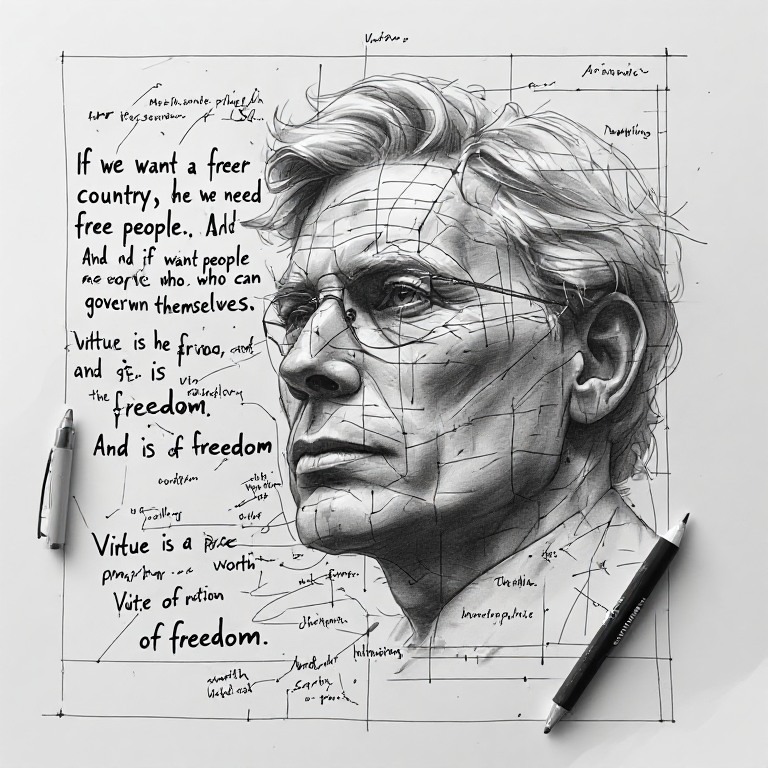
If we want a freer country, we must want more virtuous people. That means teaching children self-control, honoring truth, rewarding responsibility, and recovering the idea that character matters. It means remembering that liberty is not sustained by desire alone, but by discipline.
John Adams was right. A republic requires moral citizens. Not perfect citizens, but formed citizens—people who can think before reacting, control their impulses, and place long-term good above short-term gain. If we lose those habits, no constitution can save us.
So the lesson is clear. Virtue is the best price of freedom because it is the discipline that protects liberty from within. It is what keeps power limited, what keeps citizens capable, and what keeps a republic from sliding into something less free. If we want freedom to endure, we must be willing to pay that price. And no price is more worth paying.