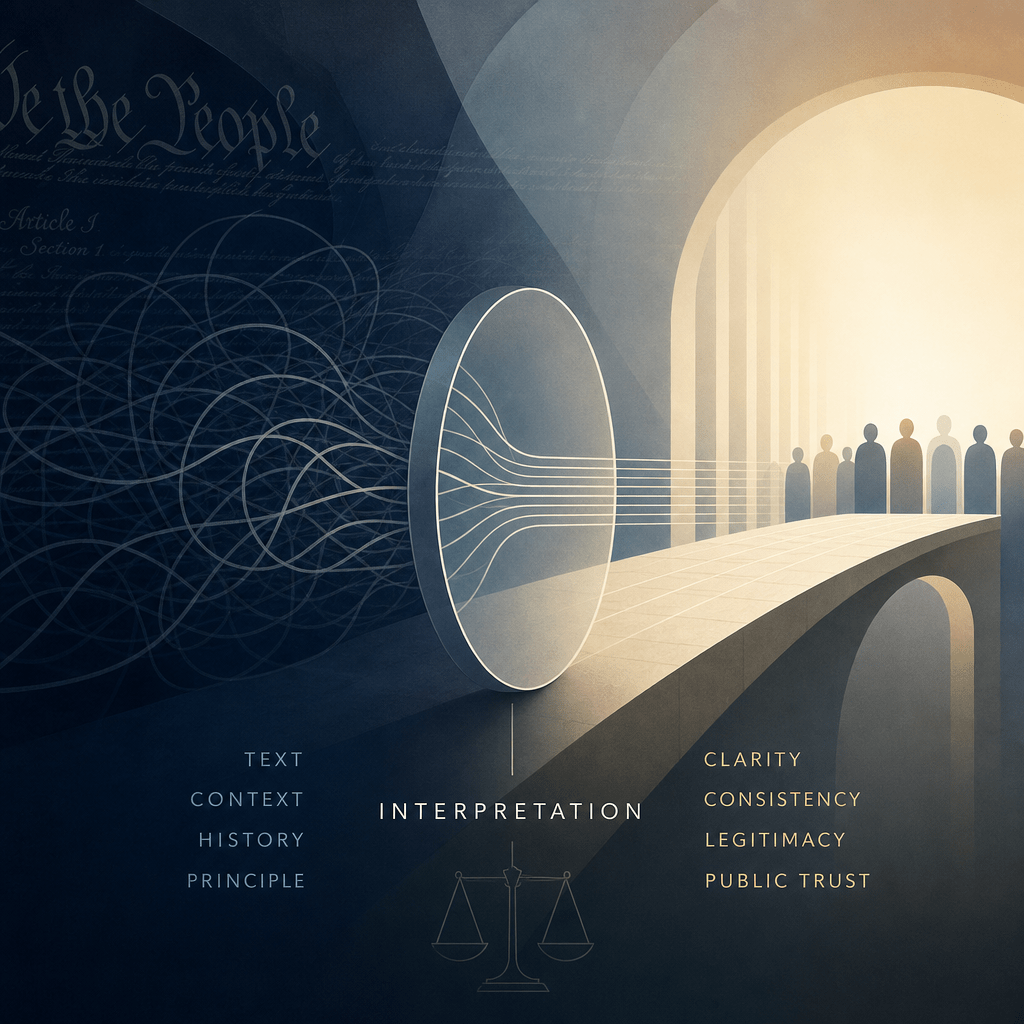
Constitutional Interpretation and Public Trust: Why Clarity Matters
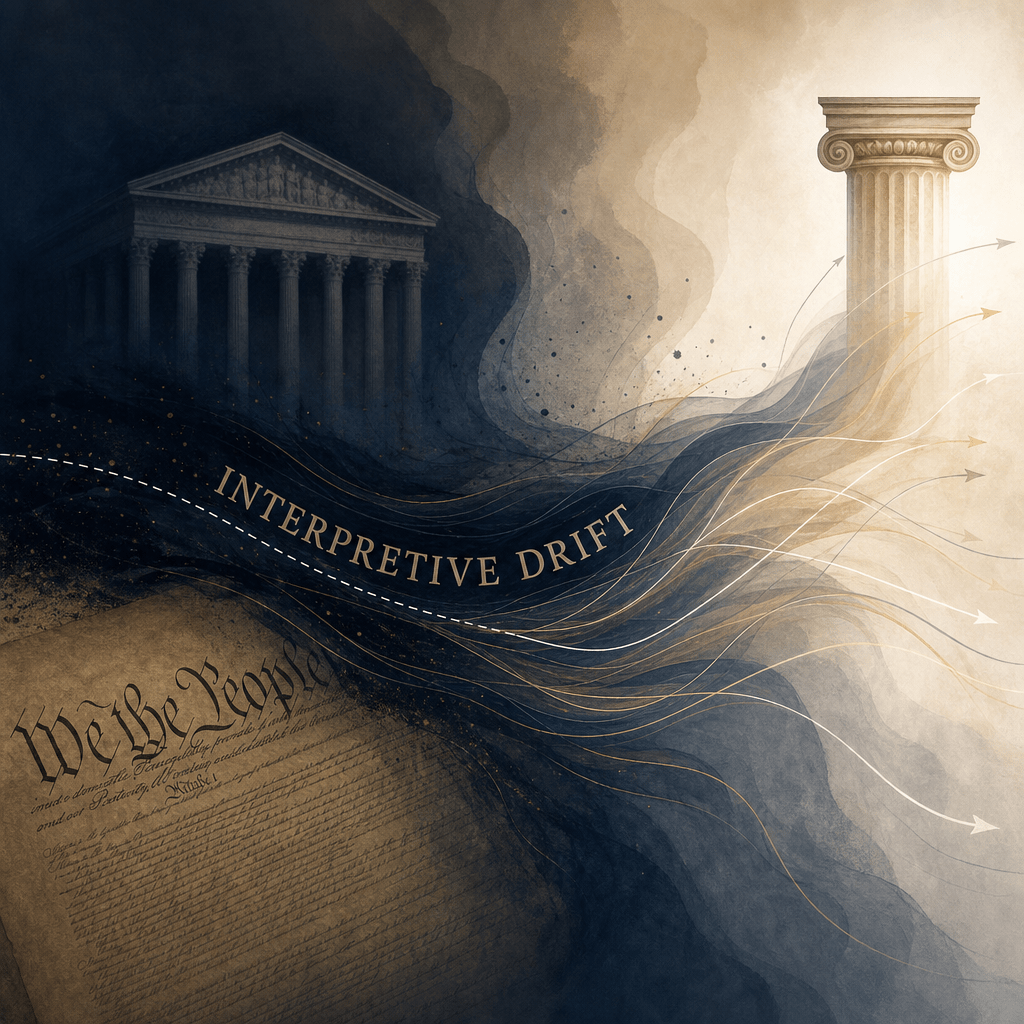
The Constitution does not drift on its own. It drifts when Constitutional Interpretation becomes looser, precedent hardens into error, and institutions stop demanding clarity. Over time, the public begins to experience constitutional language as unstable. Once that happens, trust erodes.
What was once understood as a fixed framework starts to look negotiable. That is how drift becomes normal, and why confidence in the law begins to collapse. In that environment, Constitutional Interpretation is no longer just a legal method; it becomes a test of whether words still have force.
When Meaning Stops Being Stable
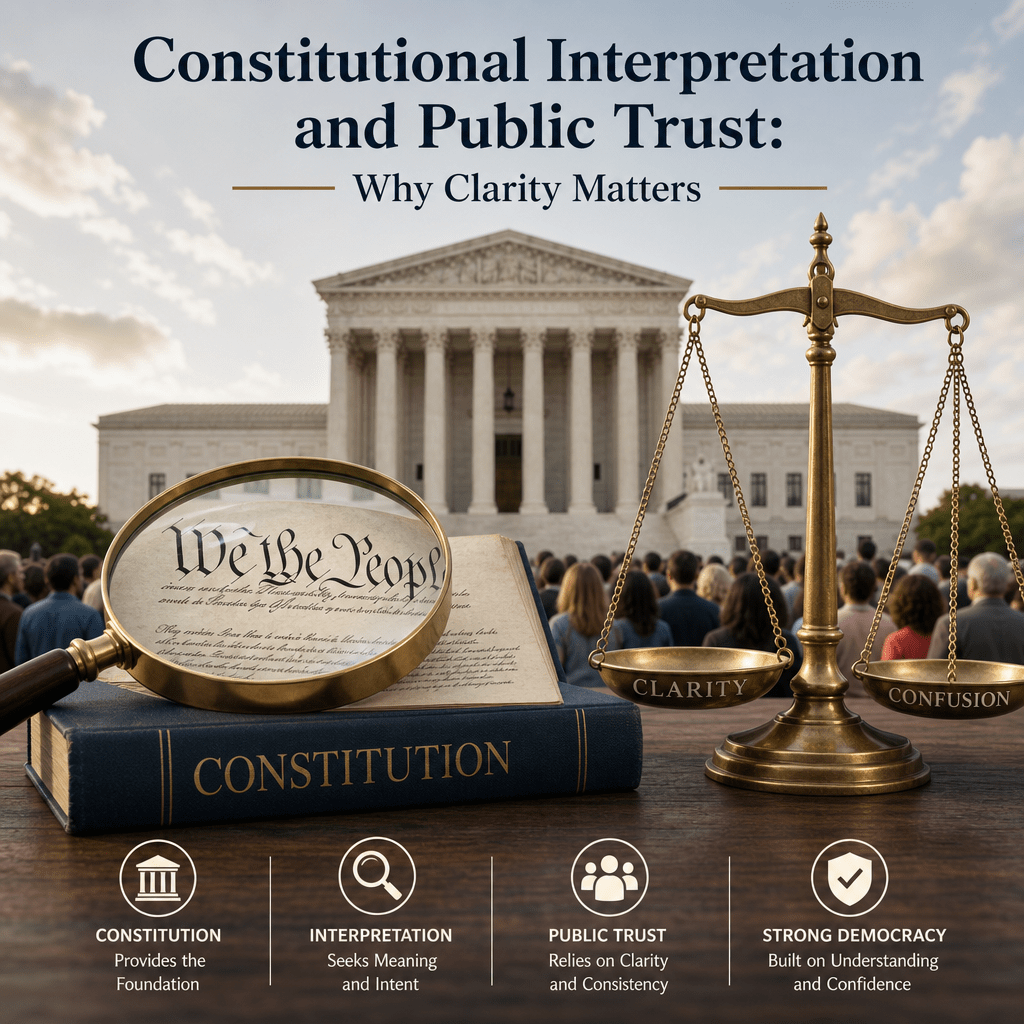
Constitutional interpretation is never a neutral exercise. It either preserves meaning or alters it. That distinction matters because a constitutional republic does not survive on text alone. It survives on a shared discipline of words, stable definitions, and the willingness of judges to honor the limits of the Constitution as written.
When that discipline weakens, drift begins.
Drift rarely arrives in one dramatic moment. It accumulates through rulings that stretch terms, doctrines that expand by habit, and precedents that slowly detach from the original meaning of the text. What begins as a narrow interpretation becomes wider. What was once an exception becomes routine. What should have remained bounded starts to look flexible.
After enough repetition, the altered meaning no longer feels like change. It feels normal. That is one of the deepest dangers in constitutional life: repeated deviation can become a substitute for legitimacy.
Constitutional interpretation therefore matters most when the pressure to blur meaning is highest. The temptation is often to smooth over conflict, preserve institutional comfort, or postpone difficult definitions. But a system that depends on delay eventually trains people to accept uncertainty as a feature rather than a flaw. Once that happens, Constitutional Interpretation stops being a discipline of limits and becomes a practice of accommodation.
That pattern is easier to see when a court begins to treat uncertainty as a permanent state rather than a problem to solve. The longer a constitutional question remains blurred, the more likely it is that the blur itself will be mistaken for wisdom. And when that happens, Constitutional Interpretation no longer protects the Constitution’s meaning. It manages the public’s tolerance for ambiguity.
The result is not simply doctrinal confusion. It is a deeper change in civic expectations. People start asking not what the Constitution says, but what a court might later decide it means. That is how drift becomes habit.
For a useful contrast, see Interpretive Drift: How the Marshall Court Rewrote the Constitution, which shows how meaning can shift gradually while still appearing legitimate in the moment. For a broader reference on interpretive method, the Cornell Legal Information Institute’s overview of constitutional interpretation offers a clear starting point.
Words Have Meaning
One of the most important principles in constitutional government is simple: words have meaning.
Terms like commerce, necessary, proper, citizen, state, sovereignty, and liberty were not written as empty vessels waiting to be refilled later. They were anchors. The Constitution was designed as a system of meaning, not a blank slate for judicial creativity.
Once judges begin to treat those terms as elastic, interpretation turns into revision. Law stops functioning as a stable guide for public order and starts functioning as a tool of institutional preference.
That shift is subtle at first, but its effects are deep. Citizens may not be able to explain the exact doctrinal change, but they can sense when the legal system no longer speaks clearly. They can sense when the old boundaries are no longer enforced, even if the new boundary has not been openly announced.
The point is not that constitutional language never requires judgment. It does. The point is that judgment should clarify what the text can bear, not transform words into something they were never meant to support. Without that restraint, constitutional interpretation begins to float free of the very language it is supposed to read.
That is why vocabulary matters so much in constitutional law. If the meaning of a term can shift whenever pressure mounts, then legal stability is no longer built into the system. It has to be negotiated case by case. A republic cannot remain confident in its own framework if its defining words can be stretched beyond recognition.
This is also where legal education matters. Judges, lawyers, and citizens all inherit expectations about what the Constitution is allowed to mean. If those expectations are formed by repetition rather than by disciplined reading, the public comes to accept movement where there should have been restraint. Once that happens, the text becomes harder to trust even when it is quoted correctly.
In other words, the problem is not simply that meanings change. The problem is that a culture can forget that meaning was ever supposed to be stable.
Constitutional Interpretation and Public Trust
Public trust depends on predictability. If citizens believe the Constitution means one thing today and another thing tomorrow, confidence in the whole system weakens. A court does not have to admit error for the public to feel it. It only has to refuse clarity long enough.
This is where ambiguity becomes dangerous. Not every uncertain ruling is destructive, but repeated uncertainty teaches people to stop expecting precision. When that happens, constitutional interpretation is no longer seen as an act of fidelity. It becomes just another arena of power.
That change is corrosive. People begin to think:
- the text is flexible enough to mean almost anything
- precedent matters more than principle
- outcomes matter more than interpretation
- the Constitution is less a law than a debate platform
Once that mindset spreads, even good decisions are received with suspicion. That suspicion does not come from cynicism alone. It often comes from repeated exposure to legal language that seems to shift after every major controversy. The more often meaning appears negotiable, the harder it becomes to persuade the public that legal rules still constrain power.
This is why Constitutional Interpretation matters so much in public life. It does not merely describe a judicial task; it describes the condition under which the public can still believe the law is stable, readable, and fair. If that condition breaks down, the public begins to treat constitutional reasoning as rhetoric instead of law.
That shift also affects institutional legitimacy. Courts do not remain trusted simply because they exist. They are trusted when their reasoning shows that the Constitution still has boundaries. If those boundaries blur, trust weakens even among people who agree with the result of a particular case.
This is also why constitutional interpretation has to be evaluated not only by what it resolves, but by what it teaches. Every unclear ruling sends a message about whether meaning is settled or negotiable. Over time, those lessons shape civic expectations more deeply than one famous opinion ever could. In that sense, Constitutional Interpretation is part of the public’s education in law.
If that education is muddy, trust suffers even when the outcome of a case is not immediately controversial. The public notices patterns, not just doctrines. It notices when a court is willing to explain itself and when it prefers to leave the hardest question untouched.
How Drift Erodes Trust
Public trust depends on predictability. If citizens believe the Constitution means one thing today and another thing tomorrow, confidence in the whole system weakens. A court does not have to admit error for the public to feel it. It only has to refuse clarity long enough.
In practice, that refusal may appear in several forms. Sometimes a court narrows a ruling so much that it avoids the central issue. Sometimes it leaves a contradiction in place and assumes later cases will repair it. Sometimes it treats a contested doctrine as settled simply because it has been repeated often enough. Each of those habits can contribute to drift.
None of them is dramatic in isolation, but together they create a system where the public cannot tell whether the law is being applied, adjusted, or rewritten. At that point, Constitutional Interpretation is no longer seen as an act of fidelity. It becomes just another arena of power.
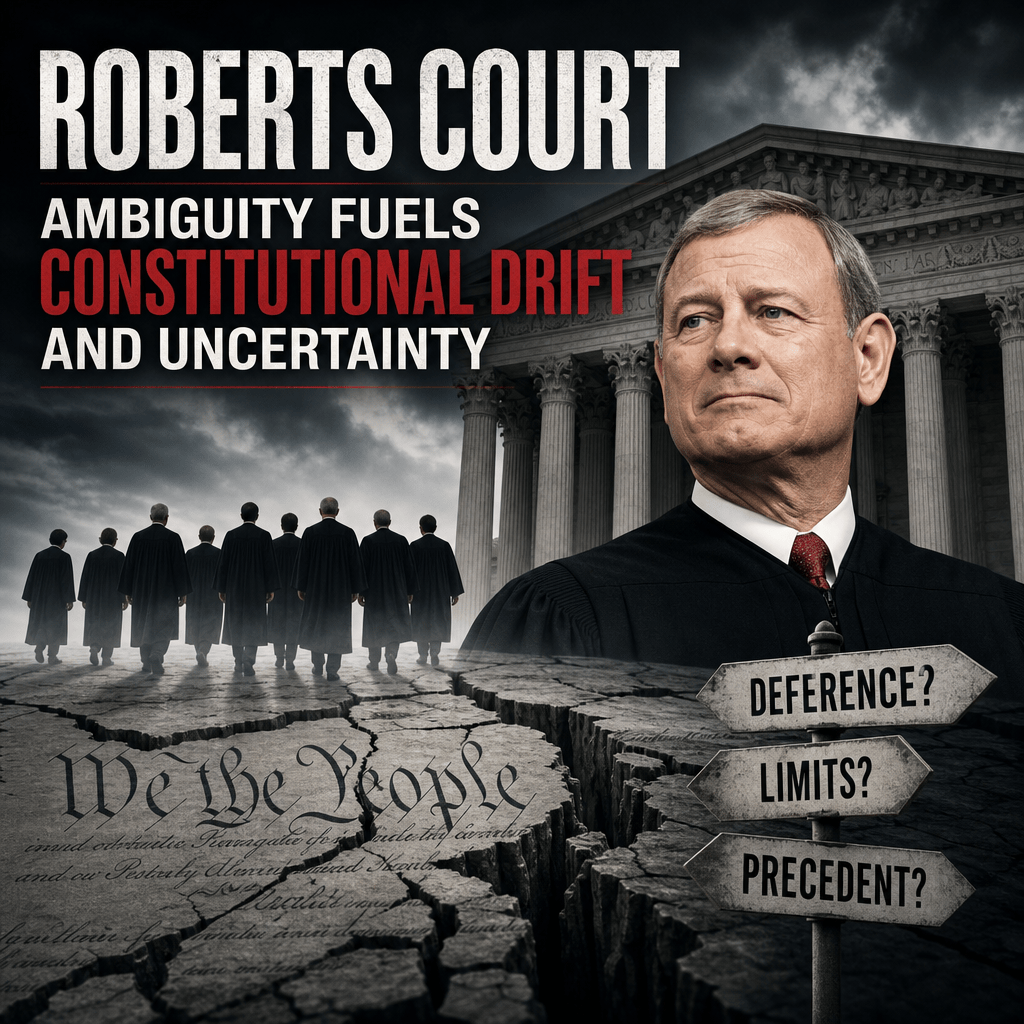
This is where ambiguity is not harmless. Silence can become a policy choice, and policy choices can reshape constitutional expectations. That concern is closely related to Robert’s Court Ambiguity: 5 Powerful Reasons It Is Bad for Constitutional Clarity. Ambiguity can protect comfort in the short term, but it often does so by leaving the harder task of defining limits unresolved.
When ambiguity becomes routine, the public learns a set of damaging lessons:
- the text is flexible enough to mean almost anything
- precedent matters more than principle
- outcomes matter more than interpretation
- the Constitution itself is less a law than a debate platform
Once that mindset spreads, even good decisions are received with suspicion. That suspicion is not irrational. It is often a response to years of watching legal language drift away from the ordinary meaning of its terms.
The more the system tolerates interpretive looseness, the harder it becomes to convince the public that the law is still anchored to anything real. In that sense, constitutional interpretation is not only about doctrine. It is about trust formation. If the public sees recurring ambiguity, it begins to assume that clarity is optional and that legal meaning can be adjusted to fit the moment.
The problem grows worse when institutions treat this pattern as normal. Once drift is normalized, public trust becomes harder to restore because people stop believing the system even wants precision.
That is why a single vague opinion can do more damage than it first appears to. It teaches the public how much uncertainty the system is willing to tolerate. Over time, those lessons add up to a constitutional culture that no longer expects its own language to be decisive.
The Cost of Avoiding Clarity
Courts sometimes avoid clarity in the name of restraint, prudence, or institutional caution. But restraint becomes a problem when it turns into a refusal to define constitutional boundaries.
When courts decline to resolve serious conflicts, lower courts improvise. States diverge. Litigants keep pressing unresolved theories. The public sees a constitutional order that cannot clearly state its own limits.
That silence is not neutral. It can function as drift.
And drift, when repeated, teaches the public to accept uncertainty as governance. Citizens stop assuming the law is meant to be fixed and start assuming it is meant to be managed.
That change has practical costs too. Lawyers, lawmakers, and ordinary citizens all spend more time guessing what the law permits. Uncertainty leaks into political debate, agency action, business planning, and everyday civic life. Each of those areas becomes less stable when constitutional meaning is treated as provisional rather than settled.
In short, constitutional interpretation that avoids clarity does not preserve peace. It postpones conflict while increasing confusion. It may protect a court from immediate criticism, but it often leaves the legal system less intelligible than it was before.
This is especially harmful because clarity itself is a form of fairness. When rules are understandable, people can comply with them, challenge them, and organize their lives around them. When rules are vague, power shifts toward whoever can best exploit the uncertainty. That is not a minor defect in legal administration. It is a constitutional problem.
A system that refuses to define itself eventually invites every actor to define it in practice. At that point, constitutional interpretation no longer restrains power; it becomes one more place where power is negotiated.
Why This Matters Beyond the Courts
The damage does not stay inside the courtroom. Constitutional drift spreads into politics, culture, and civic life. When meaning becomes unstable, institutions lose moral authority. People begin to suspect that legal language is only a mask for power.
A constitution can endure disagreement. It cannot endure the loss of meaning.
If the public no longer believes constitutional terms are stable, then the law loses its ability to guide behavior, settle conflict, and command respect. At that point, the problem is not just a controversial ruling. The problem is a culture that no longer expects the Constitution to be read with seriousness.
This subject also connects to broader concerns about institutional confidence. When institutions drift, skepticism is often a rational response to repeated inconsistency. That is why trust cannot be demanded; it has to be earned through disciplined interpretation.
The civic consequences of drift are easy to miss at first:
- political actors stop speaking as if words constrain them
- legal disputes become fights over narrative rather than meaning
- citizens disengage because they no longer trust the rules are stable
- the Constitution becomes a symbol instead of a governing framework
At that stage, the legal culture has changed in a deeper way than many realize. The system still uses the same words, but they no longer carry the same discipline. That is the hidden cost of constitutional drift: the public may still hear the language of law while losing confidence that the language means what it says.
The issue also extends beyond high-profile cases. School curricula, civic commentary, legislative debates, and administrative practice all transmit assumptions about constitutional meaning. If those settings repeat loose definitions without correction, they normalize instability. The result is a broader civic habit of treating law as something fluid rather than fixed.
That is why constitutional drift should concern anyone who values ordered liberty. When the meaning of the framework becomes uncertain, every institution that relies on it feels the strain. Trust in courts weakens, but so does trust in the broader legal order that depends on courts being intelligible.
Restoring Public Confidence
The answer is not to demand that courts never adapt in any sense. The answer is to insist that adaptation never become a euphemism for replacement.
To restore trust, constitutional interpretation must return to a few basic commitments:
- Clarify the text rather than detach from it
- Preserve continuity rather than shield error
- Treat precedent carefully rather than worship it blindly
- Use restraint as fidelity, not avoidance
Citizens do not need perfection. They need coherence.
They need to know that constitutional terms still mean something, that courts are bound by something larger than convenience, and that drift is not the same thing as progress.
Restoring public confidence also requires a healthier understanding of precedent. Stare decisis can preserve stability, but only when it serves the text rather than replacing it. A precedent that merely repeats error does not become wiser because it is old. It becomes harder to correct.
That is why the legal culture must distinguish between continuity and camouflage. Continuity preserves order. Camouflage hides the fact that meaning has shifted. A court may call the second one restraint, but the public often experiences it as avoidance.
Constitutional interpretation can recover credibility only when it is willing to name error, explain limits, and preserve the distinction between what the Constitution says and what institutions would prefer it to say.
That recovery will not happen through rhetoric alone. It requires a sustained habit of clarity in opinion writing, legal education, and public argument. The more often the language of law is used carefully, the more likely the public is to believe it still carries weight.
It also requires patience. Public confidence does not return overnight after years of mixed signals. It returns when the law repeatedly demonstrates that its words still anchor its meaning. That process may be gradual, but it is possible when institutions decide that clarity is not a weakness but a duty.
In that respect, constitutional interpretation is part of civic repair. It does not merely decide disputes. It helps restore the assumption that disputes can be decided by reference to law rather than to preference.
Conclusion
Constitutional Interpretation is not just a technical legal task. It is one of the main ways a constitutional republic teaches its citizens whether meaning still matters.
If the law is to recover public trust, it must recover public intelligibility. The public needs to see that words still anchor law, that courts still respect limits, and that the Constitution is not a moving target.
Public trust erodes when constitutional interpretation becomes disconnected from stable meaning. And once that trust is lost, it is very difficult to restore.
The Constitution remains strongest when Constitutional Interpretation is disciplined enough to preserve words, principled enough to resist convenient revision, and clear enough for the public to recognize that the law still has boundaries.
For a deeper look at the relationship between drift and constitutional legitimacy, see The Restorationist Project • Education Series. In that sense, Constitutional Interpretation is not only about what courts decide. It is about whether the public can still trust the Constitution to mean what it says.

Leave a Reply