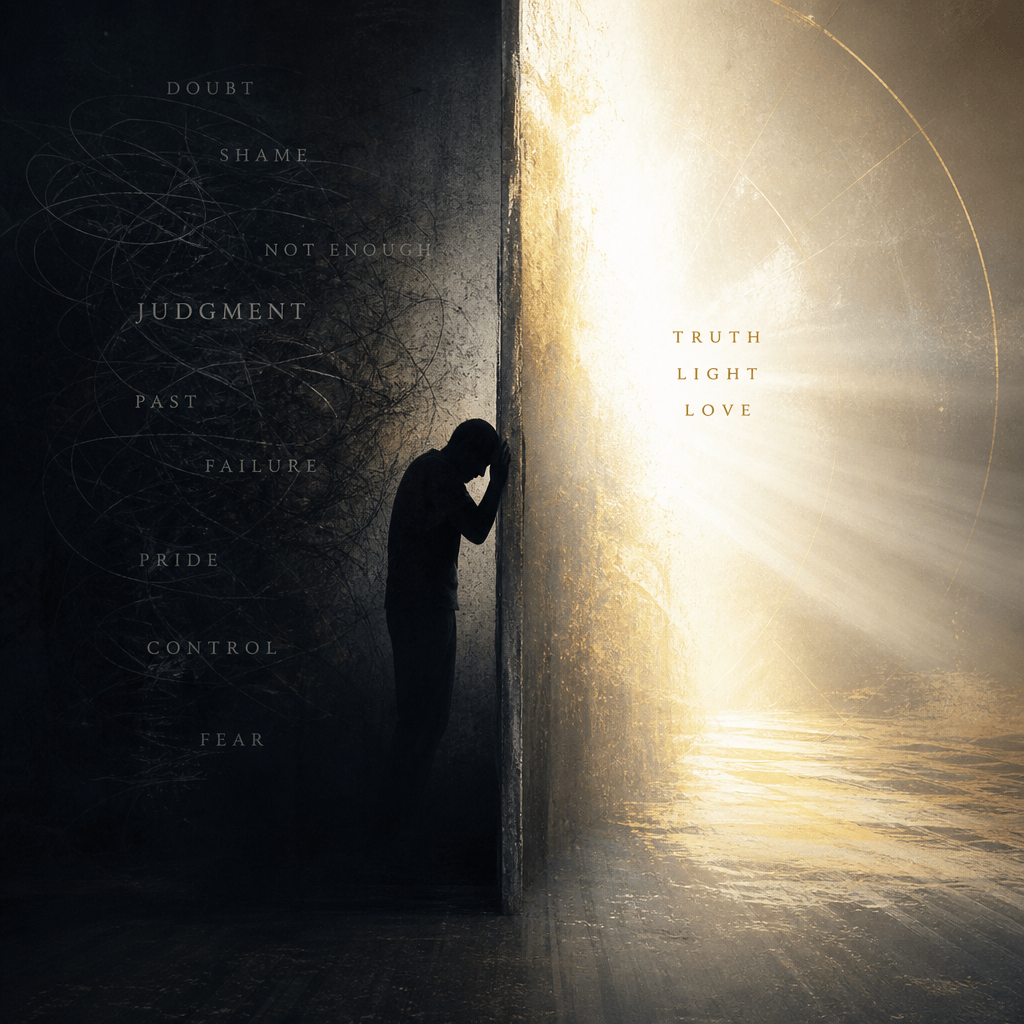
There is a reason people turn away from God, and it is almost never because they think He is unreal. Most people believe more than they admit. They sense the divine in quiet moments, in crisis, in beauty, and in the sharp sting of conscience. The deeper issue is not disbelief. It is exposure.
The Fear of God is often less about punishment and more about being known. Human beings do not merely fear that God exists. We fear what He sees.
That is why the question is rarely, “Is God real?” The more honest question is, “What happens if I am truly seen?”
- Hiding Has Always Been the Human Reflex
- Eden: The First Moment of Exposure
- Sovereignty Anxiety: What We Really Resist
- The Modern World’s Better Hiding Places
- Why God’s Gaze Feels So Threatening
- A Restorationist View of Healing
- The Cost of Living Hidden
- Seeing, Naming, and Returning
- The Courage to Be Seen
Hiding Has Always Been the Human Reflex
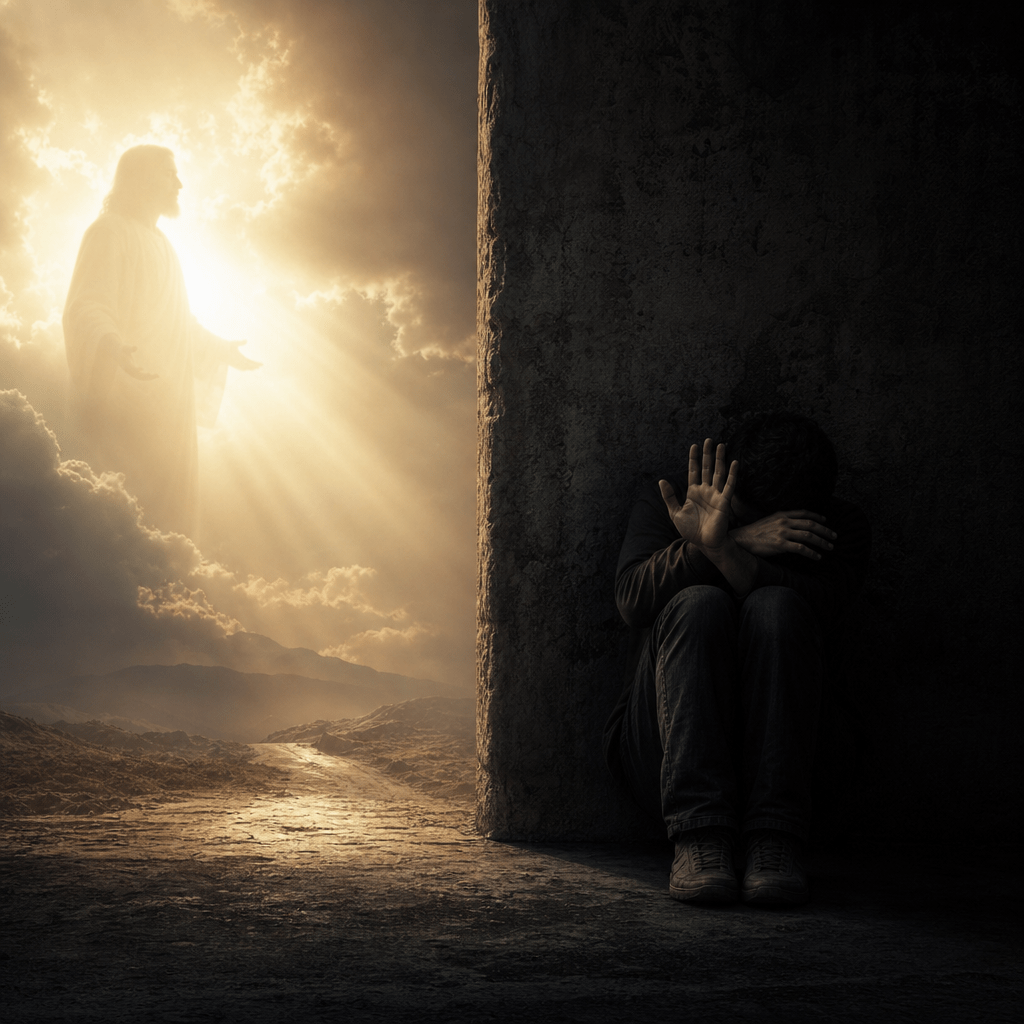
From the beginning, Scripture shows the same instinct: hide.
Adam hid among the trees. Cain deflected. Israel turned to idols. Modern people hide behind achievement, irony, politics, distraction, and carefully curated identities. The tools change, but the pattern remains.
We do not run because God is absent. We run because God is present.
And presence is uncomfortable when we have spent years building a life around concealment.
That is also why the Fear of God is so often misunderstood. People imagine it as a fear of divine temper, but much of the fear is actually the dread of being fully known. We can manage impressions with one another. We cannot manage reality before God.
For a deeper reflection on why people resist being seen at all, see Fear of Being Seen: Stunning Truth Behind Hiding.
Eden: The First Moment of Exposure
The first humans did not flee because God threatened them. They fled because they suddenly saw themselves clearly. Their eyes were opened, and with that opening came shame, fracture, and the unbearable awareness that something had gone wrong inside them.
That is the birthplace of hiding.
Not simple guilt, but exposure.
To be seen without filters is to confront the gap between who we are and who we know we should be. That kind of truth feels dangerous because it threatens the story we have built to survive. We would rather manage appearances than face reality.
The logic is ancient, but it still governs modern life. The Fear of God rises when we sense that truth is not merely observing us from a distance. Truth is near. Truth is personal. Truth names what we would rather leave unnamed.
Why Truth Feels Like Death
Truth can feel like death when identity has been built on illusion.
If I admit the truth, then:
- I am not as in control as I think
- My motives are not as clean as I claim
- My wounds are not invisible
- My self-made image is fragile
- My hidden life is not hidden from God
This is why the Fear of God often takes the form of avoidance. We are not afraid that God is false. We are afraid that He is accurate.
That accuracy can feel merciless when we have invested heavily in self-protection. Yet accuracy is also the first condition of healing. A physician cannot restore what the patient refuses to reveal.
According to Britannica’s overview of conscience, conscience has long been understood as an inward moral awareness, which helps explain why exposure can feel so immediate and personal.
Sovereignty Anxiety: What We Really Resist
People rarely reject God because they have logically disproven Him. More often, they resist Him because His reality would require too much.
If God is real, then I am not sovereign. My desires are not ultimate. My pain does not excuse everything. My private identity is not final. My hidden places are not protected.
That is a hard surrender.
This is what might be called sovereignty anxiety: the fear that if God is truly Lord, then the self cannot remain the final authority. We do not merely fear God’s power. We fear His right to name us.
That is why the Fear of God is not simply fear of judgment. It is fear of displacement. We sense that if God speaks honestly, then the version of ourselves that sits on the throne will have to step down.
Some readers find this theme echoed in the constitutional and cultural pressures of modern life, where authority is often resented even when it is needed. Similar questions about power, legitimacy, and hidden order appear in The Administrative State: Stunning Constitutional Crisis.
The Modern World’s Better Hiding Places
Today’s hiding places are more sophisticated, but they are not new.
We hide in:
- productivity
- activism
- digital noise
- outrage
- curated virtue
- curated rebellion
- constant entertainment
These are modern fig leaves. They cover, but they do not heal.
Even religion can become a hiding place when faith is kept theoretical, inspirational, and safely distant from real obedience. We want God near enough to comfort us, but far enough not to examine us.
Inspiration Without Exposure Changes Nothing
A faith that only inspires us will not transform us.
Transformation begins where concealment ends. That is why shallow spirituality is so appealing: it lets us feel close to God without allowing God close to us.
But restoration cannot happen in the dark.
It is one thing to think about divine truth as an idea. It is another to let it judge our habits, our loyalties, our resentment, and our self-deception. The Fear of God grows when we realize that faith is not merely about reassurance. It is about truth that changes us.
For another angle on why modern people stop reflecting deeply and instead react, you may also find Why People Stop Thinking: A Physiological Explanation for Modern Argument Failure useful as a companion essay.
More Ways We Hide From the Truth
Hiding does not always look like denial. Sometimes it looks like overwork, constant commentary, or an endless need to stay ahead of silence. A person can be busy all day and still be hiding.
Some people hide behind intelligence. If they can explain everything, they do not have to surrender anything. Others hide behind cynicism, because irony can keep the soul at a distance from conviction. Still others hide behind moral language, using good causes to avoid personal repentance. The pattern is the same: keep the self protected, keep the truth managed, keep the light at bay.
The modern world rewards this kind of concealment because it is efficient. It allows a person to function publicly while remaining untouched privately. But the cost is fragmentation. When the public self and the private self no longer match, the inner life becomes a construction site of compromise.
The Fear of God intensifies in that condition because the soul knows, even if only dimly, that a divided life cannot remain whole forever. Eventually the hidden things ask to be named.
That is why moments of grief, illness, failure, or loss often interrupt our strategies. They strip away the cover stories. They make silence unavoidable. They bring us back to the question we have been avoiding: what if the problem is not that God is absent, but that we have been unwilling to be seen?
Why God’s Gaze Feels So Threatening
To be seen by God is to have motives named, pride confronted, wounds touched, and lies exposed. That sounds frightening because we assume exposure leads to condemnation.
Yet in Scripture, exposure is often the beginning of mercy.
God does not uncover in order to destroy. He uncovers in order to heal.
The real danger is not God’s gaze. The real danger is the false self we keep protecting from it.
When the soul is overbuilt with defenses, even grace can feel like a threat. That is because grace insists on reality. It refuses to pretend that bondage is freedom or that a fragmented life is whole.
The Fear of God is therefore not irrational. It is a sign that the soul understands what is at stake. If God sees clearly, then hiding is over. If hiding is over, then change becomes unavoidable.
This is also why people often resist deep moral reflection. A truly honest look inward can feel like a loss of control, and many modern arguments are designed to avoid that loss. In that sense, How Do Emotions Hijack the Brain’s Reasoning Centers offers a useful physiological companion to this spiritual theme.
A Restorationist View of Healing
A Restorationist essay on this subject comes to a simple conclusion: God does not transform what we hide. He transforms what we surrender.
And surrender begins with visibility.
To be seen is to be known.
To be known is to be healed.
To be healed is to be restored.
The Fear of God is the fear of losing the version of ourselves we have carefully built. But that version is not our truest self. It is often a defense mechanism, a survival strategy, a mask.
What we fear losing may be exactly what God intends to remove.
This is not destruction for destruction’s sake. It is refinement. It is the removal of what is false so that what is true can live. In that sense, divine exposure is not punishment first. It is restoration first.
The larger pattern belongs to the moral and spiritual life, but it also connects to a wider question about what kind of civilization a people can sustain when truth becomes optional. That larger frame is explored in Civilization And The Examined Life.
What We Avoid Is What Will Save Us
This is the great paradox of spiritual life:
- What we fear is what we need
- What we avoid is what will heal us
- What we hide is what God restores
The invitation of God is not to perform better. It is to come into the light.
That invitation is difficult because the light is not selective. It reveals what is noble and what is corrupt, what is wounded and what is defended, what is sincere and what is merely religious. But the very comprehensiveness of that light is what makes it trustworthy.
The Fear of God begins to loosen when we accept that God’s truth is not intended to humiliate the person He loves. It is intended to free that person from the exhausting labor of maintaining a lie.
The Cost of Living Hidden
Hiding may feel safe, but it carries a cost.
When people remain hidden long enough, they begin to live in fragments. The public self and the private self drift apart. Conviction weakens. Relationships become performative. Prayer becomes vague. Conscience becomes negotiable. The soul learns to divide itself just to survive.
That division can harden into a way of life. A person may appear competent, moral, even spiritual, while internally living far from honesty. The tragedy is not only that they are hidden from others. It is that they have learned to hide from themselves.
And when self-deception deepens, the Fear of God intensifies, because God threatens the structure that concealment built.
Yet that fear can become a turning point. The moment we admit that we are hiding is the moment we can begin to stop. The moment we stop performing is the moment truth can work.
Real spiritual freedom is not the freedom to remain untouched. It is the freedom to be restored. In that way, the longing for wholeness in the soul is not unlike the human longing for order in public life, which also appears in Two Freedoms, One Nation.
Seeing, Naming, and Returning
Restoration begins with three movements: seeing, naming, and returning.
First, we see ourselves honestly. Then we name what is true without excuses. Finally, we return to God without hiding behind the old defenses.
That is not weakness. It is courage.
Many people imagine courage as the refusal to feel fear. In spiritual life, courage is often the willingness to face what fear has protected. The Fear of God does not disappear because we become more confident in ourselves. It begins to fade when we become more confident in God’s purpose.
God’s gaze is not invasive curiosity. It is holy attention. He sees the wound because He intends the remedy. He sees the lie because He intends the truth. He sees the mask because He intends the face beneath it.
That is why confession matters. Not because God needs information, but because we need honesty. Once the thing is named, it loses some of its power to rule us in secret. The hidden pattern can no longer pretend to be harmless.
The examined life is not a life of endless self-criticism. It is a life in which truth has permission to do its work. That life is sobering, but it is also strangely light, because pretense is exhausting and concealment is heavy.
The Courage to Be Seen
The good news is that being seen by God is not the end of hope. It is the beginning of it.
We do not need to fear a God who sees everything if His purpose is restoration. His truth is not a weapon aimed at the fragile places of the soul. It is a scalpel, precise and healing, cutting away what kills in order to preserve what lives.
People hide because God is real. And because God is real, truth is unavoidable.
But truth in God’s hands is not cruelty. It is mercy with a steady hand.
The moment we stop hiding, restoration begins.
That is the final word of this essay on the Fear of God: not terror, but transformation. Not concealment, but communion. Not the preservation of the false self, but the birth of the true one.
If you want to keep reading on the spiritual life, you can also revisit the broader arc of this work through The Field of Knowing, which expands the question of how truth, awareness, and transformation meet.
How the Fear of God Shapes the Examined Life
The Fear of God becomes clearer when we stop treating it as an abstract doctrine and start seeing it as a lived experience. It shows up when a person senses that excuses will not hold, that self-justification has limits, and that reality is more durable than image. The examined life begins there.
An examined life is not a life that never struggles. It is a life that refuses to call concealment wisdom. It asks hard questions about motive, habit, and allegiance. It notices where the heart is divided. It listens for the places where conscience has been muted. In that sense, the Fear of God is not an obstacle to maturity. It is often the doorway into it.
This is why so many spiritual breakthroughs begin with discomfort. The first honest moment can feel like loss, but it is usually the loss of illusion. Once illusion goes, clarity can enter. And once clarity enters, the soul can finally stop spending its energy on self-protection.
The Fear of God also reorders what we think strength means. Strength is not the ability to keep the mask in place. Strength is the willingness to let truth have the final word. That is why surrender is not passivity. It is trust under pressure. It is the decision to believe that being known by God is safer than being hidden from Him.
When people resist that kind of truth, they often build lives around lesser loyalties. They become loyal to comfort, reputation, efficiency, or the approval of the moment. But those loyalties eventually collapse under the weight of reality. The Fear of God exposes that collapse before it becomes complete.
And that exposure can be a gift. It tells us where healing needs to begin. It tells us where we have been living in fragments. It tells us that the self we have been defending is not the self that will survive into wholeness. The Fear of God is therefore not the end of human dignity. It is the beginning of human honesty.
So the question is not whether we will be seen. We already are. The question is whether we will keep resisting the light or finally let it reach the hidden places. That decision shapes everything that follows.
For readers who want to trace that theme further, the same pattern of hiddenness and renewal appears in related essays on conscience, perception, and moral responsibility, including the broader reflections in The Field of Knowing and the civilizational questions in Civilization And The Examined Life.