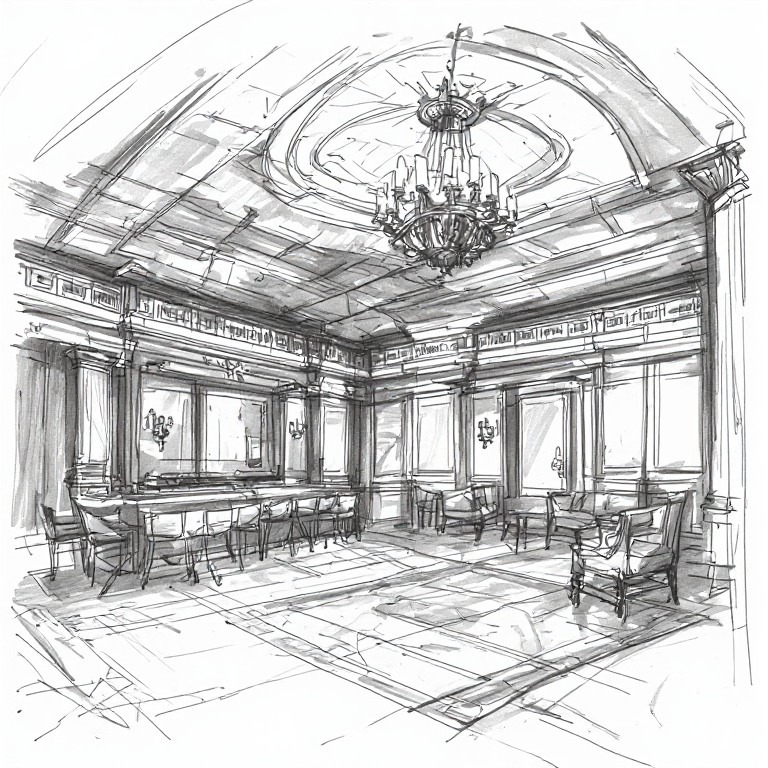
The Ballroom Becomes the Battlefield: How a Security Crisis Turned a Construction Project Into a Constitutional Test

Page Two: The Architecture of Authority — When the White House Becomes a Constitutional Gray Zone
This second page continues the argument begun earlier today, extending the analysis from the political fracture over the ballroom to the deeper constitutional ambiguity that has now surfaced. The reporting makes clear that the fight is no longer about funding alone; it is about who has the authority to shape, modify, or reconstruct the physical seat of the executive branch. Senator Hawley’s remark that there is a “legal question” about whether Congress must authorize major reconstruction on White House property is not a throwaway line. It points directly to the structural ambiguity that has existed since the founding: the White House is federal property, but it is not a federal agency. It is the President’s residence, the executive’s operational headquarters, and the Secret Service’s protective domain. No statute cleanly defines where congressional authority ends and presidential authority begins.
This ambiguity becomes decisive in moments like this. A federal judge may issue an order, and Congress may object, but neither can easily reverse physical actions already taken by the executive branch. National security does not grant the President the power to overrule the judiciary, yet it does create a zone of deference in which the executive can move faster than the courts can respond. When the Secret Service declares that a structural change is required for the protection of the President or the line of succession, the judiciary rarely intervenes. Not because it lacks authority, but because it lacks the operational footing to contradict a security assessment. The assassination attempt only sharpens this dynamic. It does not give the President new legal powers, but it strengthens the practical justification for rapid action and increases the reluctance of other branches to interfere.
This is where the political rhetoric becomes revealing. Democrats insist that private funding “invites corruption,” but the phrase functions less as a moral warning and more as a signal of lost leverage. When federal funds flow, Congress controls the valves. When private funds flow, those valves are bypassed. The tollbooths go quiet. The usual intermediaries lose their place in the chain. This is not a gleeful accusation but a reluctant, pessimistic realism — an admonition forced upon me by the same voices who repeat the same warnings about impropriety while standing nearest to the cookie jar. The objection is not merely ethical; it is architectural. Private funding removes Congress from the financial circuitry of the project, and with it, the influence that comes from controlling appropriations.
Senator Hawley’s position, in contrast, reflects a different principle: if the White House is the President’s operational headquarters, then the President may possess inherent authority to modify it for functional or security reasons without waiting for Congress. This is not a claim that Congress has no role, but a recognition that the boundary of that role is undefined. Past presidents have made significant structural changes without prior congressional approval, and courts have rarely been asked to adjudicate the limits of presidential authority over the White House grounds. The current dispute is one of the first times the judiciary has been drawn into this gray zone, and even now, the executive’s ability to act first threatens to render the legal debate moot.
This is the deeper story: the physical world moves faster than the legal world. The executive branch, especially under the banner of national security, can create facts on the ground that the other branches must later interpret, resist, or rationalize. Congress can object, but it cannot un‑demolish a wing of the White House. A judge can issue an order, but cannot compel the Secret Service to compromise its protective assessments. The President cannot override the judiciary, but can operate in the spaces the judiciary is reluctant to enter. And private funding accelerates all of this by removing the last procedural chokepoint Congress controls.
Page One described the ballroom as a fait accompli. Page Two reveals why: the architecture of authority itself is asymmetrical. The President acts; the other branches react. The physical structure becomes the argument. The demolition becomes the leverage. And the crisis becomes the accelerant. What remains is a constitutional landscape reshaped not by theory, but by concrete, steel, and the speed of executive action.