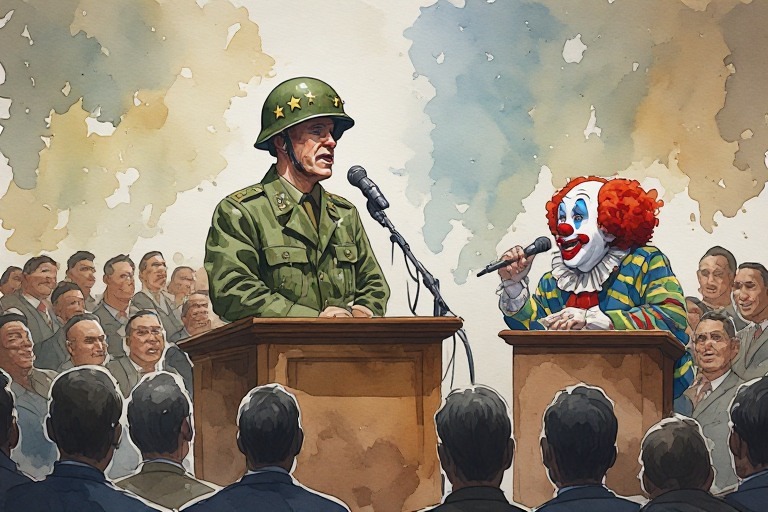
There’s a whole world of Americans who look at politics and see a stage play — a polished performance, a set of rules, a script everyone is supposed to follow. And then there’s the rest of us, the people who work with our hands, who solve real problems, who know what it means to get dirty and keep going. We don’t see leadership as a performance. We see it as a mudfight — because real leadership always has been.
This essay explains what so many people miss, and why the political class and its observers still can’t understand why someone like me responds to plain talk, rough edges, and dirty fingernails.
1. They Believe Politics Is a Ceremony, Not a Job
For decades, politics has been treated like a formal event:
- polished speeches
- careful etiquette
- scripted talking points
- polite disagreements
To them, politics is supposed to be dignified. To us, politics is supposed to be effective.
They think leadership is about posture. We think leadership is about results.
When someone breaks the script, they see a breach of decorum. We see a man finally talking like the rest of us.
2. They Mistake Plain Speech for Vulgarity
A lot of people have lived their entire lives in environments where:
- conflict is avoided
- language is sanitized
- humor is regulated
- offense is a crisis
So when a leader uses nicknames, jokes, or blunt assessments, they hear:
- cruelty
- danger
- impropriety
But people like me hear:
- honesty
- accuracy
- confidence
- someone who isn’t afraid of the truth
We grew up in shops, garages, job sites, and barracks where ribbing is normal and humor is how you survive. They grew up in conference rooms where every word is a liability.
We’re not laughing at cruelty. We’re laughing at recognition.
3. They Don’t Understand the Culture of Work
People who work with their hands know something the political class often forgets: real leadership is messy.
It’s:
- grease under the nails
- sweat on the brow
- arguments that get loud
- decisions made under pressure
- mistakes owned, not hidden
Leadership isn’t a clean suit and a perfect sentence. Leadership is a foreman who shows up, gets dirty, and calls things as he sees them.
So when a political figure talks like a foreman instead of a focus group, we respond to it. Not because it’s polished — but because it’s real.
4. They Think They’re Too Good for the Mud
This is the cultural divide in one sentence:
They think mud is beneath them. We think mud is where the real work gets done.
They want politics to stay clean, polite, and predictable. We know nothing important in life has ever been clean, polite, or predictable.
They stand on the porch and complain about the mess. We slap wheels on something and go play in it.
That’s not immaturity. That’s freedom — the freedom to speak plainly, laugh loudly, and live without fear of offending someone who’s never lifted anything heavier than a latte.
5. They Don’t Understand Why Authenticity Matters
To them, authenticity is a branding strategy. To us, authenticity is the whole point.
When someone speaks without a script:
- you know what they mean
- you know where they stand
- you know they’re not hiding behind consultants
- you know they’re not afraid of the truth
People like me don’t need perfection. We need honesty.
We don’t need polish. We need spine.
We don’t need someone who plays by the rulebook. We need someone who throws the rulebook out when it stops serving the people.
6. They’re Missing the Human Element
The political class sees politics as a profession. We see it as a responsibility.
They think leadership is about:
- tone
- etiquette
- optics
We think leadership is about:
- courage
- clarity
- conviction
They’re missing the fact that millions of Americans were starving for someone who didn’t flinch, didn’t apologize for existing, and didn’t pretend weakness was strength.
They’re missing the fact that humor is a form of truth. They’re missing the fact that plain speech is a form of respect. They’re missing the fact that leadership is a contact sport.
Conclusion: The Divide Isn’t Political — It’s Cultural
The people who “don’t get it” aren’t stupid. They’re just living in a different world — a world where politics is a performance and leadership is a costume.
But for people like me, leadership has always been a mudfight. It’s loud, messy, honest, and real. It’s dirty fingernails and straight talk. It’s calling things as they are, not as the script demands.
And until the political class understands that, they’ll never understand why millions of Americans responded to a man who refused to play by their rules.