
Updated with vestibular–inner‑ear insights
There was a time in my life when anxiety didn’t just bother me — it ambushed me. It came out of nowhere, hit hard, and convinced me that something terrible was about to happen even when I was sitting safely in my own truck or walking across a parking lot. My mind could spin out a dozen catastrophic scenarios in seconds, and because of the things I’d lived through, those scenarios felt believable. My brain had a whole library of memories and possibilities to draw from, and anxiety used every one of them against me.
What I didn’t understand then was that anxiety wasn’t reacting to danger. It was reacting to uncertainty. The brain hates not knowing. It hates gaps in the story. When it can’t predict what comes next, it fills the space with fear. That’s the physiology of anxiety. It’s not weakness. It’s not character. It’s the limbic system — the brain’s emotional engine room — doing what it evolved to do: protect you from the unknown.
The limbic system reacts before you even know what’s happening. The amygdala, the brain’s alarm center, fires in a fraction of a second. The thinking brain — the part that reasons, evaluates, and calms — takes several seconds to come online. That gap is the entire problem. By the time your rational mind shows up, the body is already in full emergency mode. The heart is pounding. Breathing has changed. Muscles are tight. The stomach drops. The skin tingles. The body is convinced something is wrong, and the mind scrambles to explain the sensations.
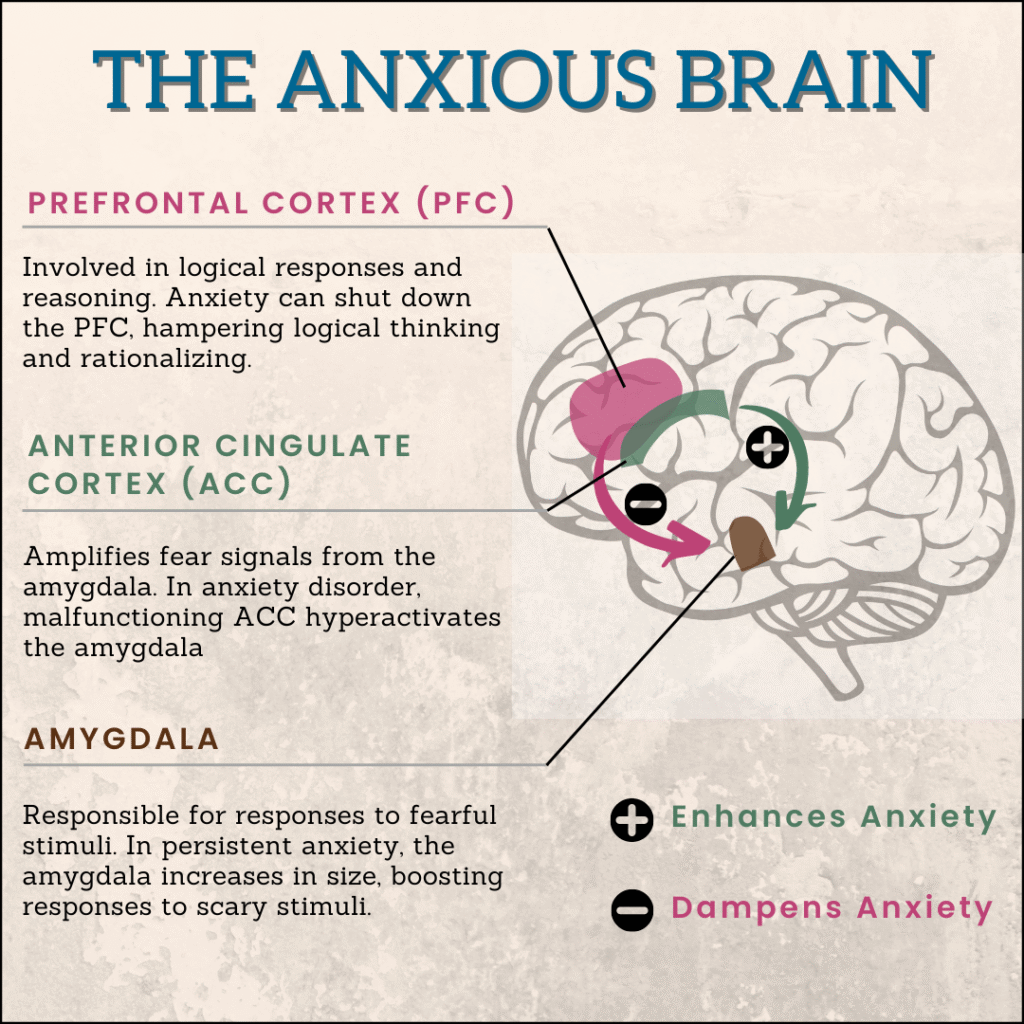
This is why anxiety feels involuntary. The body reacts first. The story comes later.
In my case, gephyrophobia — the fear of crossing bridges — was a perfect example of this hijack. I didn’t choose to fear bridges. I didn’t sit around imagining disasters. The fear hit before I even reached the bridge. The amygdala recognized a pattern, the hippocampus remembered a moment of fear I’d once had, and the hypothalamus flipped the body into fight‑or‑flight. By the time I was halfway across, the physical symptoms were already roaring, and my mind was trying to make sense of them. It wasn’t logic. It was limbic reflex.
And here’s something important: the limbic system can misinterpret normal bodily sensations as danger. A skipped heartbeat, a moment of dizziness, a rush of adrenaline, even a change in breathing — the amygdala can treat these as threats. The body reacts, and the mind follows. This is how a harmless sensation becomes a full‑blown panic episode. The brain isn’t reacting to reality. It’s reacting to uncertainty inside the body.
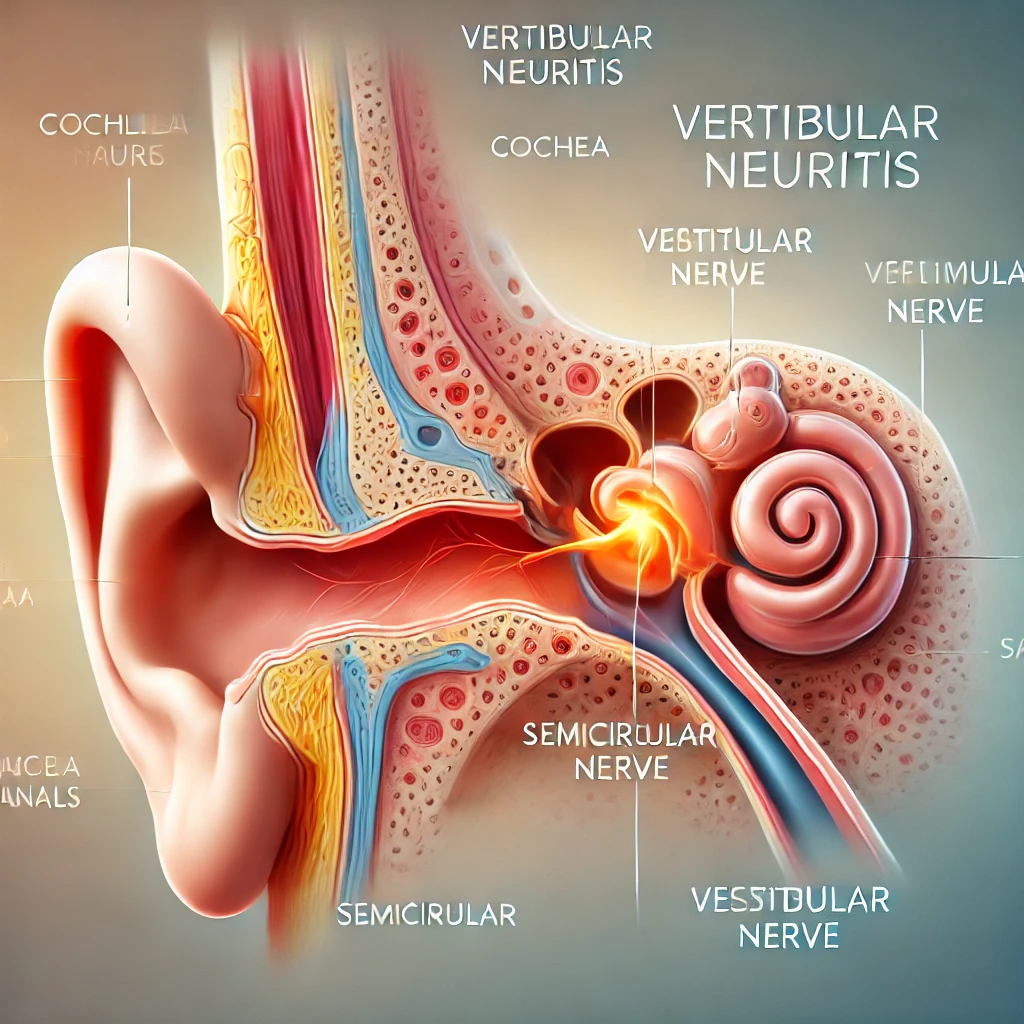
What I didn’t know at the time — and what many people never learn — is that the inner ear plays a major role in this process. The vestibular system, buried deep inside the ear, is responsible for balance, motion detection, and spatial orientation. When its signals don’t match what the eyes see or what the body expects, the limbic system interprets that mismatch as instability. Instability is uncertainty, and uncertainty is the fuel of anxiety. A tiny wobble, a moment of dizziness, a shift in the ground under your feet, or the subtle sway of a bridge can trigger the same alarm circuitry as a real threat. The inner ear whispers, “Something’s off,” and the limbic system shouts, “We’re in danger.”
This is why some people feel a sudden drop sensation, a wave of unreality, or a jolt of panic even when nothing dangerous is happening. Their vestibular system is sensitive, and their limbic system reacts to that sensitivity as if it were a threat. For people who already struggle with anxiety, this connection becomes even stronger. The body reacts, the mind interprets, and the loop tightens.
Avoidance makes this worse. Every time I avoided a bridge, the limbic system learned, “Avoidance kept us alive.” The fear grew not because bridges were dangerous, but because my brain believed avoidance was the solution. The world shrank a little each time. That’s how phobias grow — not through weakness, but through limbic learning.
The turning point came when I finally understood what was happening inside my own head. I realized that the sensations I felt — the tight chest, the racing heart, the sense of doom, even the dizziness — were not signs of danger. They were signs of uncertainty. My brain was guessing. And once I understood that, I could interrupt the loop.
I started by calming the body. Slow breathing, especially with a longer exhale, sends a signal to the nervous system that the threat has passed. It doesn’t matter if the threat was real or imagined. The body responds the same way. Sometimes I counted breaths just to give my mind something to do besides panic. The body settled first. The mind followed.
Then I questioned the story. When the fear rose, I asked myself, “Is this real, or is this my brain guessing?” That simple question forced the thinking brain back online. Anxiety can’t survive in the presence of clear reasoning. It needs imagination. It needs uncertainty. When I challenged the story, the story lost its power.
Finally, I reframed the sensation. Instead of telling myself something was wrong, I told myself, “This is just my limbic system firing a false alarm.” That shift changed everything. The alarm stopped feeling like a warning and started feeling like a glitch. And once you stop believing the alarm, it stops controlling you.
Over time, the limbic system learned a new pattern. The amygdala stopped firing so quickly. The hippocampus stopped dragging old memories into new situations. The hypothalamus stopped flipping the emergency switch. The vestibular jolts stopped triggering panic. The bridge became just a bridge again.
If you struggle with anxiety — especially if you haven’t lived a wide or varied life — understand this: nothing is wrong with you. Your brain is reacting to uncertainty, not danger. Your body is firing alarms in the absence of threat. And because you may have fewer reference points, fewer experiences, or inherited sensitivity, your limbic system may fire even more easily.
But the limbic system can learn. It can unlearn. It can be retrained. Every time you face the fear, breathe through it, and come out the other side, the brain rewires. The alarm gets quieter. The body stops overreacting. The world stops shrinking.
Anxiety is not a flaw in your character. It’s a reflex in your wiring. And wiring can be changed. Once you understand what your limbic system is doing, you can stop treating anxiety like a verdict and start treating it like a signal — one you can learn to quiet.