Scientific, Non‑Political, Non‑Moral
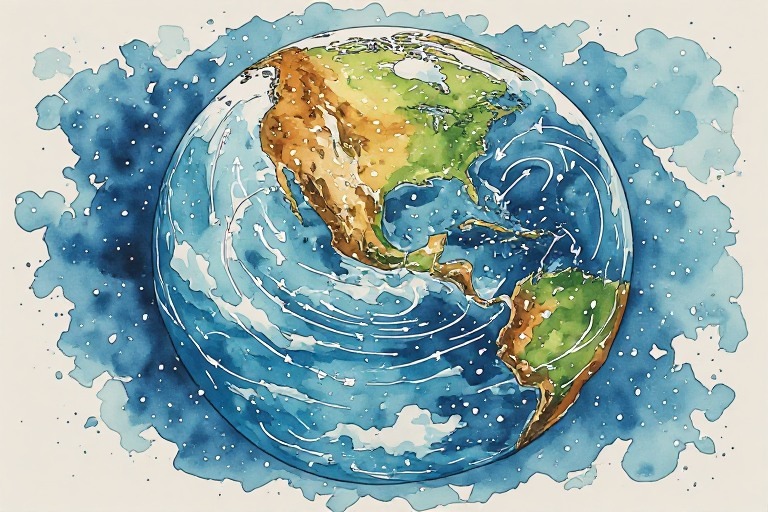
As Earth continues its natural climb toward the interglacial maximum, the effects on human populations become impossible to ignore.
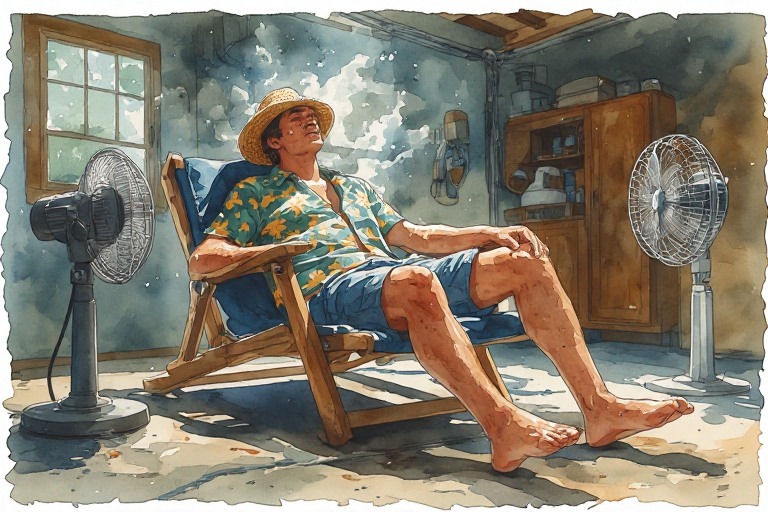
Regions that were never considered tropical—such as the Central United States—are now experiencing heat and humidity combinations that push the limits of human physiology. This is happening because continental interiors warm faster than coastal regions, and warmer air holds more moisture, allowing Gulf humidity to penetrate deep into the Midwest and Plains. When extreme heat combines with high humidity, the body can no longer cool itself through evaporation, producing dangerous wet‑bulb conditions that were once confined to equatorial zones.
People are dying in places that historically saw only dry summer heat, not the lethal, moisture‑laden heat now appearing with increasing frequency. At the same time, glaciers retreat, snowpack declines, and river systems lose stability, creating long-term pressure on freshwater supplies. Food production becomes more volatile as crops face rising temperatures and unpredictable water availability. Sea levels begin their slow but inevitable rise, reshaping coastlines and forcing populations inland.
None of these changes are temporary trends or anomalies; they are the expected consequences of a planet moving toward the warm peak of its natural interglacial cycle—a cycle that has repeated many times before and will continue long after the present era.
As Earth continues its natural climb toward the interglacial maximum, the planet will become progressively hotter, wetter in some regions, drier in others, and more unstable overall. These changes are not theoretical. They have happened in every previous interglacial. The difference today is that billions of people now live in areas that were sparsely populated or uninhabited during earlier warm peaks.
The climate is not becoming hostile because of human activity; it is becoming hostile because this is what Earth does during the warm half of its long natural cycle.
The most immediate effect of the interglacial climb is rising heat. As temperatures increase, heatwaves become longer, more frequent, and more intense. In past interglacials, large animals migrated or died off during these warm peaks. Today, billions of people live in regions where summer temperatures already push the limits of human tolerance. As the planet warms further, more regions will experience days when the combination of heat and humidity becomes dangerous for outdoor work and, in extreme cases, for human survival without cooling. This is not a political prediction; it is a physical reality of how the human body responds to heat.
Water systems also change during interglacial warming. Snowpack melts earlier, glaciers retreat, and rivers fed by mountain ice become less reliable. Lakes shrink under higher evaporation rates. Some regions become wetter as warmer air holds more moisture, while others dry out as rainfall patterns shift. These changes follow the same pattern seen in past interglacials, but today they affect cities, farms, and industries that depend on stable water supplies. As the warming continues, water scarcity becomes one of the defining challenges for human populations.
Food production is directly tied to water and temperature. Crops have specific heat tolerances, and many of the world’s major agricultural regions sit in zones that will experience significant warming. In previous interglacial peaks, ecosystems shifted northward or upslope as temperatures rose. Today, farmland cannot simply migrate. As heat increases and water becomes less predictable, crop yields decline. Some regions will adapt with irrigation, controlled‑environment agriculture, or new crop varieties, but the overall pressure on food systems will grow steadily as the planet approaches its natural warm peak.
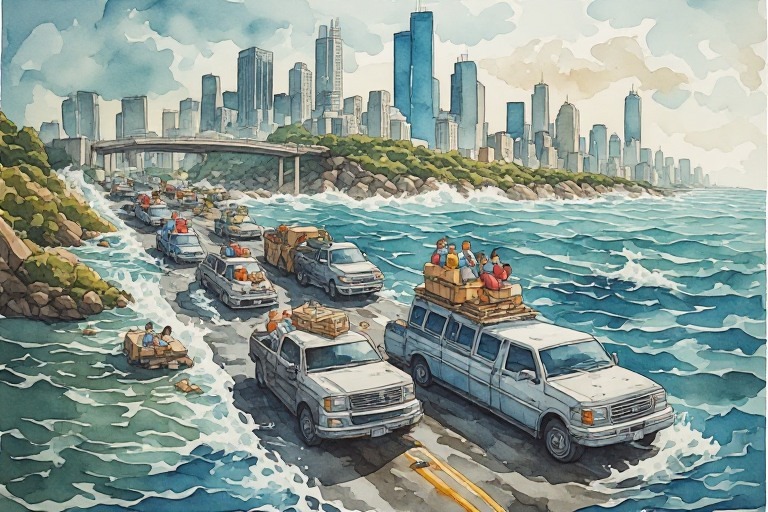
Sea level rise is another unavoidable consequence of interglacial warming. As ice sheets melt, oceans expand. In past interglacials, sea levels rose 60 to 70 meters above today’s levels. That rise did not happen in a single century; it unfolded over many hundreds or thousands of years. But even a few meters of rise — which is well within the natural trajectory — will reshape coastlines, flood low‑lying cities, and force populations to move inland. The long‑term rise toward the interglacial maximum is not something humanity can stop. It is simply the natural endpoint of the warm phase.
The AMOC, Earth’s ocean heat conveyor, adds another layer of complexity. As freshwater from melting ice enters the North Atlantic, the AMOC slows. In past interglacial climbs, it has collapsed entirely. When that happens, weather patterns shift abruptly. Europe cools, monsoons weaken or strengthen unpredictably, and storms become more severe. These changes can occur suddenly, within decades, and they affect regions far from the Atlantic. The AMOC does not collapse because of human activity; it collapses because freshwater disrupts the density‑driven circulation that has operated for thousands of years. Its behavior is part of the natural cycle.
For human populations, the combined effects of rising heat, shifting water systems, declining food stability, sea‑level rise, and potential AMOC disruption create a world that becomes progressively harder to live in as the interglacial maximum approaches. This does not mean humanity will disappear. It means that the conditions under which civilization developed — mild temperatures, stable seasons, predictable water, and low sea levels — will not exist in the same form. People will adapt, move, rebuild, and innovate, just as life has always done during past interglacial peaks. But the scale of modern population makes the transition more challenging than anything seen in earlier cycles.
A person alive today will witness the early stages of this natural transformation. They will see hotter summers, more extreme weather, shifting coastlines, and growing pressure on water and food systems. These changes are not signs of a temporary trend. They are the beginning of the planet’s climb toward the warmest part of its natural cycle — a climb that has repeated many times before and will repeat again long after humanity is gone.
This is the scientific foundation for understanding the effects of the interglacial maximum on human populations. It explains what happens to heat, water, food, coastlines, and weather as Earth moves toward its natural warm peak. Page Three can now build on this foundation to explain how societies respond, how infrastructure must change, and how populations adapt to the long, unavoidable rise ahead.
Leave a Reply