A clear explanation of glacial cycles, interglacial warming, and the AMOC, written for practical working people.
Earth’s climate has never been stable. For the last 2.6 million years, the planet has moved through a repeating rhythm of cold glacial periods and warm interglacial periods. This rhythm is not caused by human beings, industry, or fossil fuels. It is driven by slow, predictable changes in Earth’s orbit and tilt — changes that alter how much sunlight reaches the planet and where that sunlight falls. These orbital shifts create a long climate heartbeat that repeats roughly every hundred thousand years. We are living inside that cycle right now.
During a glacial period, massive ice sheets spread across North America, Europe, and Asia. Sea levels fall hundreds of feet. Temperatures drop, and the planet becomes colder and more stable. Humans lived through the last glacial period, which ended about 11,700 years ago. Our species survived it, but civilization did not exist yet. Farming, cities, and nations came much later.
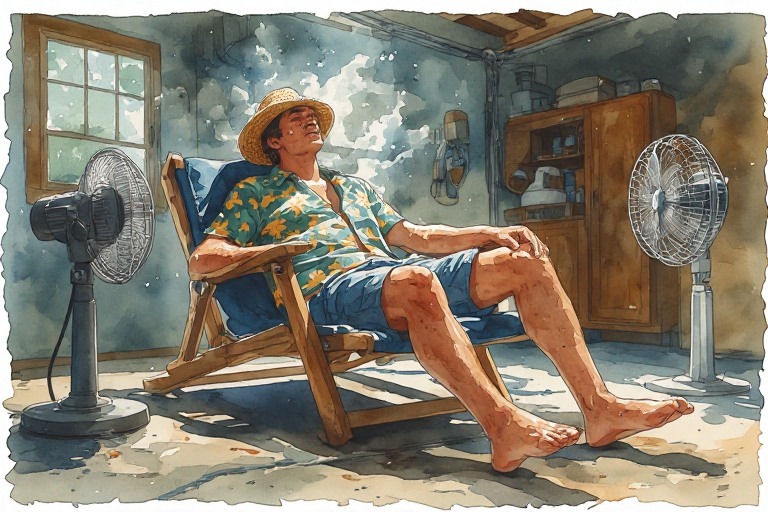
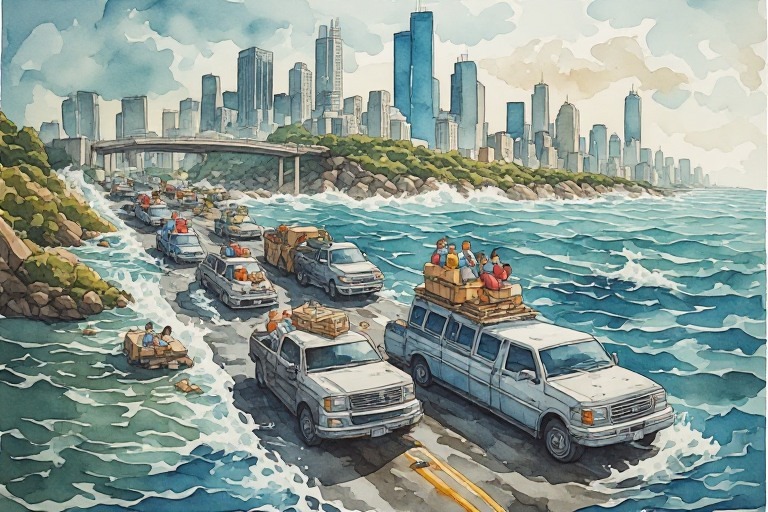
When the orbit shifts again, sunlight increases, and Earth enters an interglacial period — the warm half of the cycle. Ice sheets melt, sea levels rise, and temperatures climb. Weather becomes more extreme, rainfall patterns shift, and heat becomes the dominant environmental force. We are living in the current interglacial, known as the Holocene. Importantly, we are not at the top of it. We are still climbing toward the interglacial maximum, the hottest point in the cycle. No modern human has ever lived through an interglacial maximum. Everything we call “normal life” — agriculture, cities, infrastructure — was built during the cool, stable beginning of this warm phase, not during its peak.
Once warming begins, natural feedbacks push it further. Melting ice exposes darker ground and ocean surfaces that absorb more heat. Warmer oceans release carbon dioxide, which traps additional heat. Thawing tundra releases methane, which accelerates warming even more. Warmer air holds more moisture, increasing storms and humidity. These feedbacks are part of the natural system. Human fossil‑fuel use has added some extra warming, but compared to the scale of the interglacial cycle, human influence does not change the destination. The planet was already heading toward the interglacial maximum long before industrialization began.
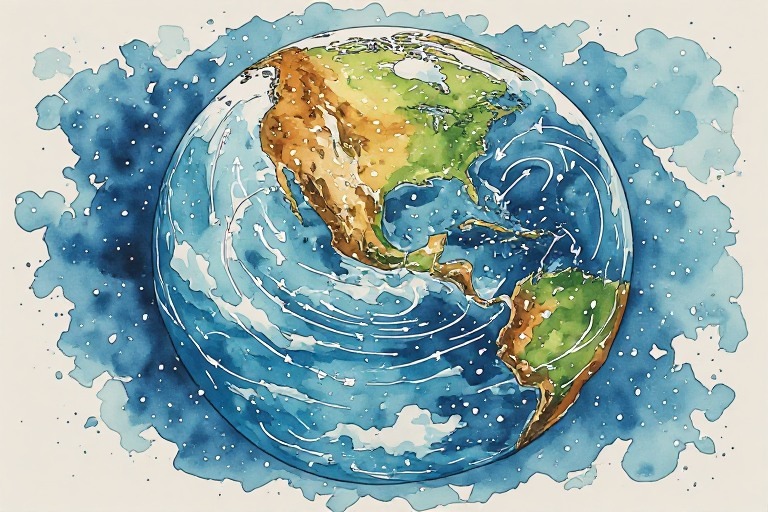
Another part of Earth’s natural system is the Atlantic Meridional Overturning Circulation, or AMOC. This is a massive ocean conveyor belt that moves warm water north and cold water south. It stabilizes climate across North America, Europe, and much of the world. As the planet warms and ice melts, freshwater flows into the North Atlantic. Freshwater is less dense than saltwater, and this disrupts the sinking motion that drives the AMOC. When enough freshwater enters the system, the AMOC slows, and in past interglacial climbs it has collapsed entirely. When that happens, Europe cools sharply, monsoons shift, and global weather becomes chaotic. This is not speculation; it is recorded in ice cores and ocean sediments from previous cycles.
The key point is simple: we are 12,000 years into the current interglacial, and the planet is behaving exactly as it has in every previous interglacial. Temperatures are rising. Ice is melting. Seas are climbing. Weather is becoming more extreme. Every year being hotter than the last is not a temporary trend. It is the expected behavior of a planet moving toward its natural warm peak. Human activity has sped up the climb, but it has not changed the direction or the endpoint. The interglacial maximum is inevitable, cyclical, and unstoppable.
Modern humans have existed for about 200,000 years, but we have only lived through glacial periods and the early stages of interglacial warming. We have never experienced the hottest part of the cycle. We have never seen sea levels 60 to 70 meters higher than today. We have never seen global heat stress at full strength. Civilization was built during the easiest climate conditions Earth ever offers — the cool beginning of an interglacial. We are now leaving that easy period and moving into the natural rise that every interglacial undergoes.
This is the scientific foundation. It explains what the cycle is, why it happens, where we are in it, and why the warming cannot be stopped. Page Two can now build on this foundation to explain what these natural forces mean for global populations, infrastructure, water, food, and the future of human societies.
Leave a Reply