
I have spent years trying to understand why people — including myself — fail to use their heads in arguments. Why do we talk past each other? Why do we ignore evidence? Why do we become so certain we’re right while millions of others are equally certain we’re wrong? How can two vast groups of people look at the same world and find no common ground?
I believe there is an answer, and it comes not from politics or ideology, but from science — specifically psychology and physiology. I am not a doctor, and you don’t need to be one either. What you need is an open mind and a willingness to ask the right questions. In my experience, insight lives in the questions. If you want a good answer, start with a good question.
After observing people for 68 years, I’ve noticed something consistent. Some people rarely get rattled. They stay calm, think clearly, and respond with balanced reasoning. Others — perhaps a majority — react instantly, irrationally, and emotionally. They miss the point of the argument entirely. They fire before they aim.
So I asked myself: Is it possible for people to live in a constant half‑cocked state, ready to unload at the slightest provocation? And if so, is there a physiological reason for this?
The surprising answer is yes.
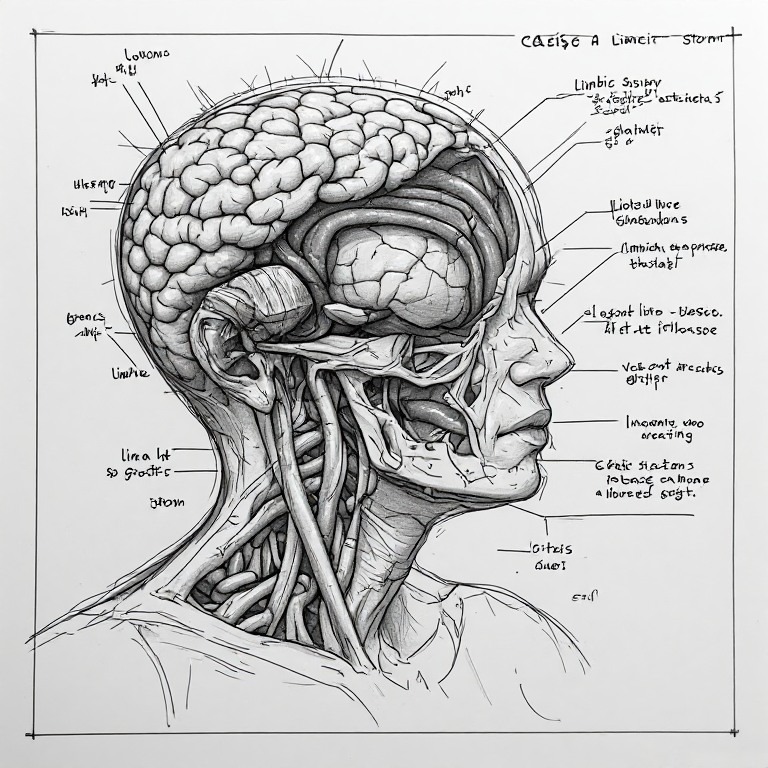
Human beings are still a work in progress. Our brains differ in wiring because of education, environment, trauma, sleep, diet, and countless other factors. But anatomically and chemically, all human brains follow the same pathways. And those pathways determine how much — or how little — the prefrontal cortex, the reasoning and decision‑making center, gets used.
When a person reacts instantly to a news broadcast, a political comment, or opposition at a rally, they reveal something important. If their response is exaggerated, parroted, or built from slogans rather than thought, they are likely experiencing what I call a limbic storm.
A limbic storm is a physiological event. It is visible. It is measurable. And it explains far more about human conflict than most people realize.
During a limbic storm, adrenaline floods the system. The signs are unmistakable:
- the face flushes red
- the eyes widen or “bug out”
- the voice rises
- the person spits, shouts, or shakes
- reasoning disappears
These are not moral failures. They are biological events.
In the pages that follow, I will explain the chemical processes behind a limbic storm, how to recognize one in yourself or others, and — most importantly — how to regain control. Because you can have emotional intelligence, or you can have a limbic storm, but you cannot have both at the same time. The limbic system and the prefrontal cortex cannot run the show simultaneously.
Understanding this is the first step toward restoring clarity, sovereignty, and genuine dialogue in a world that has forgotten how to think.
Comments
One response to “Why People Stop Thinking: A Physiological Explanation for Modern Argument Failure”
Interesting insight