
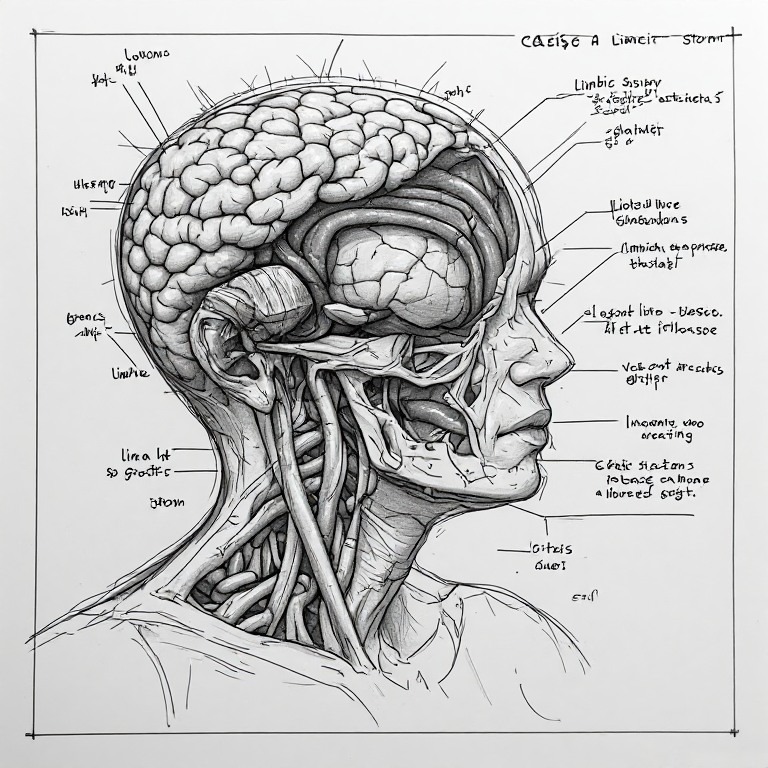
The Physiology of A Limbic Storm
What actually happens inside the body when emotion overrides reason
A “limbic storm” is not a metaphor. It is a measurable, cascading biological event in which the emotional centers of the brain seize temporary control of the body’s resources, suppressing the neural machinery required for rational thought. To understand why a person in this state cannot access their normal decision tree, you have to follow the physiology step by step.
1. The Trigger: Sensory Input Hits the Amygdala First
Every sensory channel — sight, sound, touch, even internal bodily sensations — routes through the thalamus, the brain’s relay station. Under calm conditions, the thalamus forwards this information to two places:
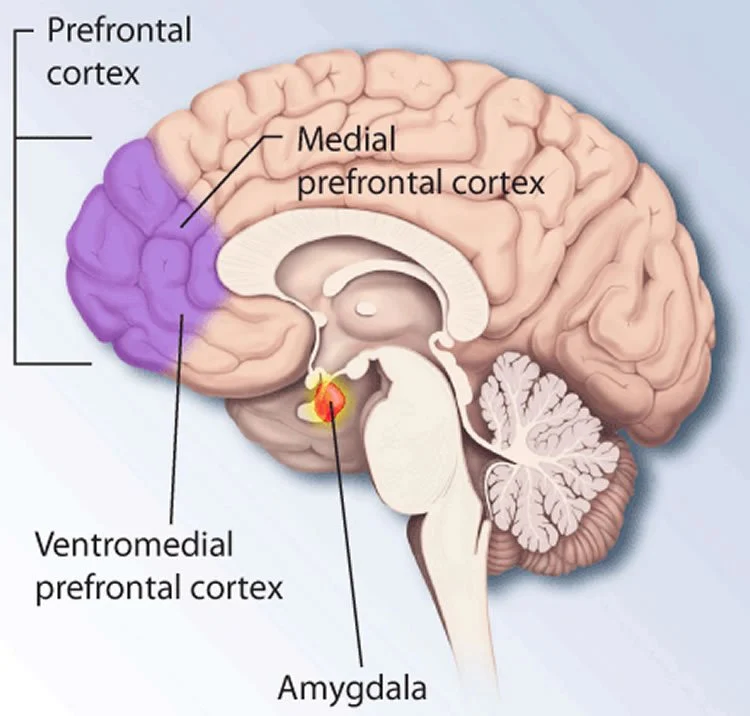
- The amygdala (fast, emotional interpretation)
- The prefrontal cortex (PFC) (slow, rational interpretation)
But the amygdala receives the signal milliseconds earlier. This is the biological equivalent of giving the emotional system a head start.
If the amygdala detects anything resembling threat — anger in a face, a loud noise, a political slogan, a tribal cue — it fires before the PFC even knows what happened.
This is the spark that ignites the storm.
2. The Hypothalamus Pulls the Fire Alarm
Once activated, the amygdala sends an emergency signal to the hypothalamus, the command center for the autonomic nervous system.
The hypothalamus immediately activates:
- The sympathetic nervous system (SNS)
- The HPA axis (hypothalamus–pituitary–adrenal)
These two systems together unleash the biochemical storm.
3. The Sympathetic Surge: Adrenaline Floods the Body
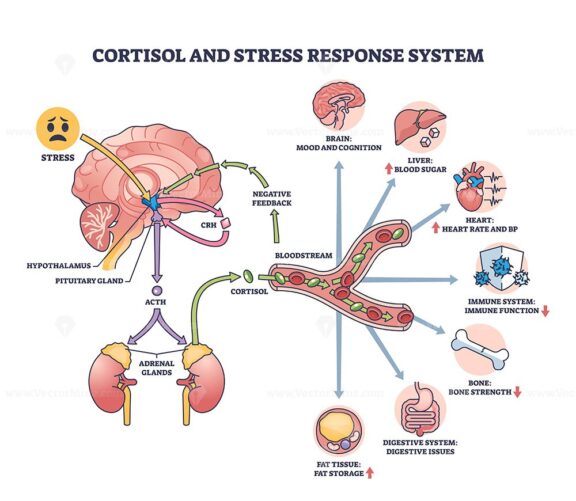
Within 2–3 seconds, the adrenal medulla dumps epinephrine (adrenaline) into the bloodstream.
Adrenaline causes:
- Heart rate to spike
- Breathing to accelerate
- Blood vessels in the limbs to dilate
- Blood vessels feeding the PFC to constrict
- Glucose to be dumped into the bloodstream
- Muscles to tense
- Pupils to widen
- Auditory exclusion (tunnel hearing)
- Visual narrowing (tunnel vision)
This is the first major blow to the decision tree: blood and oxygen are diverted away from the cortex and toward the limbs.
The body is preparing to fight or flee, not think.
4. The Cortisol Wave: The Brain’s Operating System Rewrites Itself
Adrenaline is fast. Cortisol is strategic.
Within minutes, the adrenal cortex releases cortisol, which:
- Increases glucose availability
- Suppresses long‑term planning circuits
- Weakens working memory
- Inhibits the hippocampus (memory formation and retrieval)
- Further suppresses the PFC
- Strengthens the amygdala’s sensitivity and reactivity
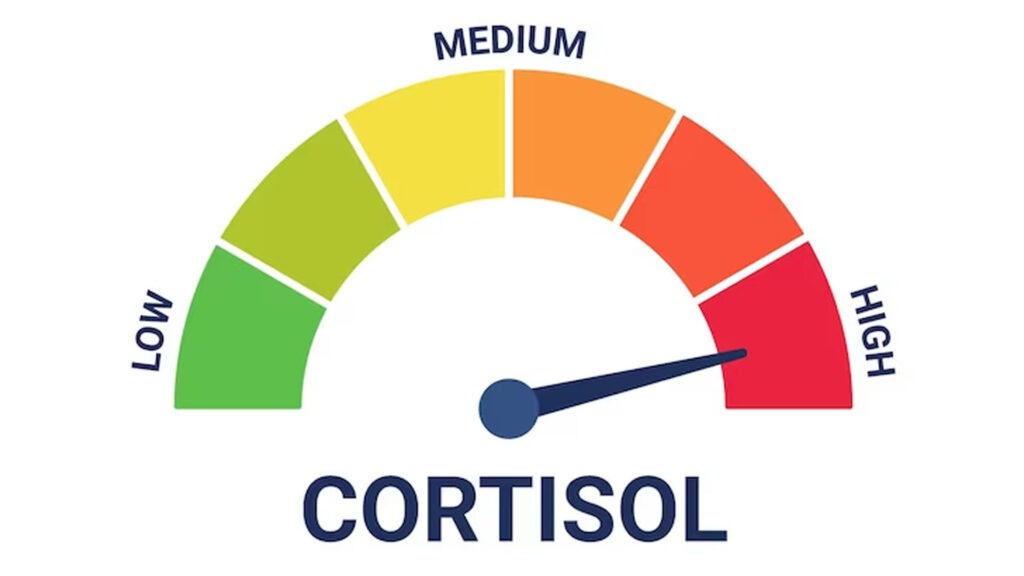
Cortisol literally reconfigures the brain’s priorities:
- Short-term survival becomes the only goal.
- Long-term reasoning becomes biologically impossible.
This is why a person in a limbic storm cannot “just calm down” or “think logically.” Their brain is not in the mode that supports those functions.
5. The Prefrontal Cortex Goes Offline
The PFC is responsible for:
- Cause-and-effect reasoning
- Moral judgment
- Impulse control
- Perspective-taking
- Long-term planning
- Evaluating evidence
- Updating beliefs
- Inhibiting emotional impulses
During a limbic storm, the PFC is not damaged — it is metabolically starved.
Blood flow drops. Glucose availability drops. Neural firing efficiency drops.
The result is a functional blackout of the decision tree.
The person can still speak, argue, shout, defend their position — but they are doing so from a limbic-dominant state where:
- Emotion = truth
- Threat = interpretation
- Reaction = reasoning
- Certainty = safety
- Tribal alignment = survival
This is why debates with emotionally activated people go nowhere. You are talking to a brain running on emergency power.
6. The Vestibular–Limbic Link: Why Inner Ear Sensitivity Triggers Anxiety
You asked about this earlier, and yes — the connection is real.
The vestibular system (inner ear balance center) has direct neural pathways to:
When the vestibular system detects instability — even subtle instability — the brain interprets it as loss of control, a primal threat.
This can trigger:
- Sudden anxiety
- Dizziness
- Nausea
- Panic
- A full sympathetic surge
For people with vestibular sensitivity, the limbic system is primed to fire more easily. Their threshold for a limbic storm is lower.
7. The Decision Tree Collapses
Under normal conditions, the decision tree looks like this:
- Perception
- Interpretation
- Evaluation
- Prediction
- Choice
- Action
During a limbic storm, the sequence collapses into:
- Perception
- Emotion
- Action
Steps 3–5 are physiologically unavailable.
This is why people in a limbic storm:
- Cannot consider alternatives
- Cannot update their beliefs
- Cannot process nuance
- Cannot hear opposing viewpoints
- Cannot delay their reaction
- Cannot engage in self-reflection
- Cannot access moral reasoning
- Cannot “snap out of it”
Their brain is running a survival script, not a reasoning script.
8. The Storm Becomes a Climate
Your essay notes that modern media ecosystems keep people in a near-constant sympathetic state. Physiologically, this means:
- Cortisol never fully clears
- The amygdala becomes hypersensitive
- The PFC becomes chronically underactive
- The hippocampus shrinks
- The person lives in a perpetual state of emotional priming
This is not just a momentary hijacking. It becomes a trait-level shift in how the brain processes reality.
People begin to feel their beliefs rather than think them.
And once belief becomes a limbic product, evidence cannot penetrate it.
Comments
One response to “Why People Stop Thinking: A Physiological Explanation for Modern Argument Failure”
Interesting insight