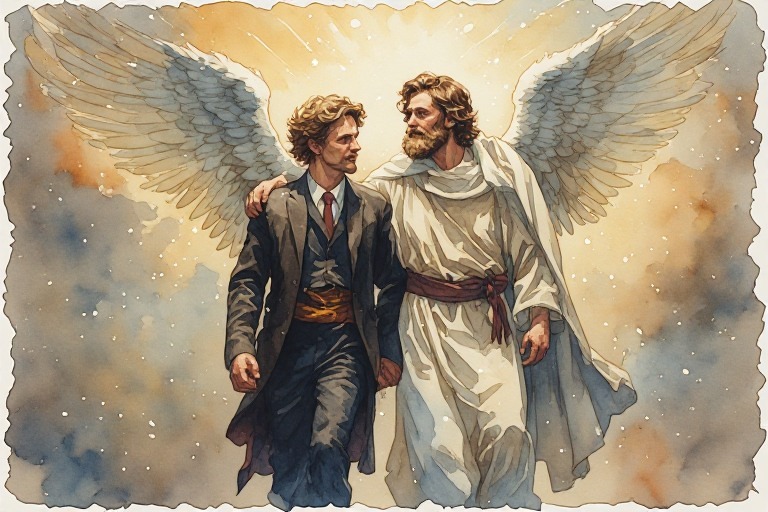
A Restorationist Essay
There is a reason people turn away from God, and it is almost never disbelief. Most people believe more than they admit. They sense the divine more than they confess. They feel the pull of God in moments of quiet, crisis, beauty, or conviction. The problem is not belief.
The problem is exposure.
Human beings do not fear that God exists. They fear what God sees.
From the first pages of Scripture, the instinct is the same: hide. Adam hid among the trees. Cain hid behind deflection. Israel hid behind idols. Modern people hide behind achievement, irony, politics, distraction, and curated identities. The technology changes; the reflex does not.
We fear being seen — truly, accurately, without the protective layers we have spent years constructing.
I. Eden: The Birthplace of Hiding
The first humans did not flee because God threatened them. They fled because they suddenly understood themselves. The moment their eyes were opened, they saw the fracture inside — the gap between who they were and who they were meant to be.
Exposure revealed the truth.
And truth, when we are unprepared for it, feels like death.
This is why hiding is humanity’s oldest instinct. Not because God is cruel, but because God is true. And truth is unbearable to the self that has been built on illusion, self‑protection, and selective honesty.
We hide because we fear the collapse of the story we tell ourselves.
II. Sovereignty Anxiety: The Real Reason People Turn Away
People rarely reject God because they think He is false. They reject Him because they fear what His reality would require.
If God is real, then:
- I am not sovereign.
- My desires are not ultimate.
- My wounds are not excuses.
- My self‑constructed identity is not authoritative.
- My hidden places are not protected.
This is sovereignty anxiety — the fear that God’s presence will dismantle the version of ourselves we have spent years defending.
We do not fear God’s power. We fear God’s accuracy.
III. The Modern Architecture of Avoidance
The modern world has given us more sophisticated places to hide:
- productivity
- activism
- digital noise
- curated virtue
- curated rebellion
- endless distraction
- endless outrage
But these are just upgraded fig leaves — fragile, temporary, incapable of covering what matters.
Avoidance becomes a spiritual strategy:
- keep God conceptual
- keep faith intellectual
- keep prayer shallow
- keep Scripture selective
- keep conviction negotiable
We create a version of Christianity that never requires us to be seen — only to be inspired.
But inspiration does not transform. Exposure does.
IV. Why God’s Gaze Feels Dangerous
To be seen by God is to have every layer peeled back:
- motives named
- wounds touched
- pride confronted
- self‑deception exposed
- false identities dismantled
This is terrifying because we assume exposure leads to condemnation.
But in Scripture, exposure is always the beginning of healing.
God exposes only what He intends to restore.
The danger is not God’s gaze. The danger is the lies we have built to avoid it.
V. The Restorationist Claim: Healing Begins With Visibility
Restorationist theology insists that God does not transform what we hide. He transforms what we surrender. And surrender begins with visibility.
To be seen is to be known. To be known is to be healed. To be healed is to be restored.
The fear of being seen is the fear of losing the self we have built. But the self we have built is the very thing God intends to replace with the self we were meant to become.
The paradox is simple:
What we fear is what we need. What we avoid is what will save us. What we hide is what God heals.
VI. The Final Truth: People Hide Because God Is Real
People do not hide because God is imaginary. People hide because God is true — and truth is the one thing the human ego cannot survive without being remade.
The Restorationist conclusion is this:
People do not hide because God is terrifying. People hide because truth is terrifying — and God is truth.
But truth, in the hands of God, is not a weapon. It is a scalpel.
And the moment we allow ourselves to be seen, the long work of restoration begins.

Leave a Reply