
More on the Fight or Flight Response
Question: If the brain cannot resolve the discrepancy between visual input and vestibular feedback, it may default to panic—What is the term for this default mechanism? It is inherent, built in, or an animal response?
The default mechanism you’re describing is the fight-or-flight response, triggered by a sensory mismatch often referred to as visual–vestibular mismatch or visually induced dizziness. It’s an inherent, evolutionary survival reflex: when the brain perceives conflicting signals about motion or orientation, it interprets them as danger and defaults to panic to mobilize the body for escape or defense.
🔎 Breaking it down
- Visual–Vestibular Mismatch (VVM):
- Occurs when the brain receives conflicting information from the eyes and the inner ear (vestibular system).
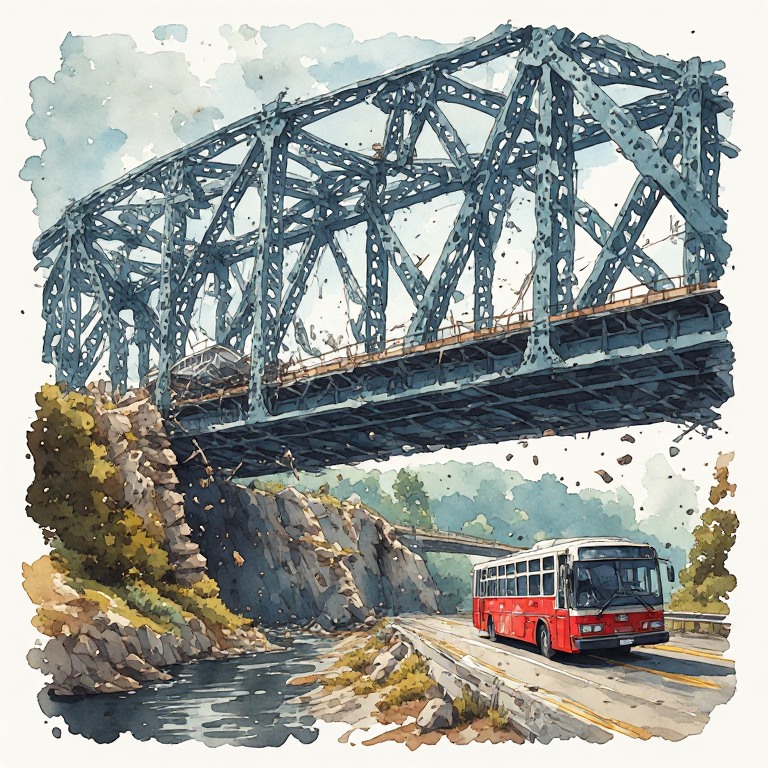
- Example: You see motion (like a movie screen or swaying bridge) but your vestibular system says you’re stationary.
- This mismatch can cause dizziness, nausea, sweating, and anxiety.
- Visually Induced Dizziness / Visual Vertigo:
- Also called supermarket syndrome, space and motion discomfort, or motorist disorientation syndrome.
- It’s essentially the brain’s inability to reconcile sensory inputs, leading to disorientation and panic.
- Fight-or-Flight Response:
- The panic default is not a conscious choice—it’s an automatic limbic system reaction.
- When sensory conflict signals “something is wrong,” the amygdala and autonomic nervous system trigger increased heart rate, rapid breathing, and heightened alertness.
- This is the same mechanism animals use to survive sudden threats, making it a deeply ingrained evolutionary reflex.
🧠 Why panic instead of calm?
- The brain evolved to err on the side of caution.
- When sensory systems disagree, the safest assumption is that danger is present (e.g., poisoning, falling, predator attack).
- Panic mobilizes energy quickly, even if the threat is illusory.
⚖️ Key Terms
| Term | Meaning |
|---|---|
| Visual–Vestibular Mismatch (VVM) | Conflict between visual and vestibular inputs causing dizziness and panic |
| Visually Induced Dizziness | Umbrella term for symptoms triggered by sensory mismatch |
| Fight-or-Flight Response | Evolutionary panic reflex when danger is perceived, even falsely |
So, to answer directly: the “default to panic” is the fight-or-flight response, triggered by a visual–vestibular mismatch. It’s not irrational—it’s an animal survival reflex hardwired into the nervous system.
Vestibular Disorders Association
What would evolutionary biologists call the fight or flight response?
Evolutionary biologists typically refer to the fight-or-flight response as the acute stress response or hyperarousal, a survival mechanism mediated by the sympathetic nervous system. It is considered a deeply conserved adaptation across vertebrates, designed to maximize chances of survival when faced with immediate threats.
🧬 Evolutionary Framing
- Acute Stress Response:
- First described by physiologist Walter Cannon in 1914, this term emphasizes the rapid, systemic changes triggered by perceived danger.
- It includes increased heart rate, blood pressure, glucose release, and heightened sensory awareness.
- Sympathetic Nervous System Activation:
- The response is orchestrated by the autonomic nervous system, specifically the sympathetic division.
- Adrenaline (epinephrine) and norepinephrine are released from the adrenal medulla, preparing muscles and organs for immediate action.
- Hyperarousal:
- In evolutionary biology, this broader term captures the heightened physiological state that can lead to fight, flight, freeze, or other defensive behaviors.
- It is recognized as the first stage of Hans Selye’s general adaptation syndrome, which describes how organisms respond to stress over time.
🐾 Why It’s Evolutionarily Conserved
- Survival of the Fittest: Species that could mobilize quickly in response to predators or environmental threats had a better chance of surviving and reproducing.
- Cross-Species Presence: The mechanism is found in mammals, birds, reptiles, and even some invertebrates, showing its deep evolutionary roots.
- Gene Preservation: By ensuring survival long enough to reproduce, the acute stress response helps pass on genes that encode this reflex.
⚖️ Key Terms Used by Evolutionary Biologists
| Term | Meaning |
|---|---|
| Fight-or-Flight Response | Cannon’s original phrase for the survival reflex |
| Acute Stress Response | Scientific term emphasizing physiological changes |
| Hyperarousal | Broader term including fight, flight, freeze, fawn, faint |
| Sympathetic Activation | Nervous system mechanism driving the response |
In short: evolutionary biologists see the fight-or-flight response not just as panic, but as the acute stress response—a hardwired, adaptive survival mechanism conserved across species.