
Glossary:
Agency Restored
The reframing of vestibular signals through knowledge, trust, and choice. Elevators, aircraft, roller coasters, parachute drops, and rappelling transform butterflies into exhilaration because the threshold is chosen. Restorationist lens: Agency is the fulcrum that tilts thresholds from chaos to wonder. Fear and thrill are two readings of the same vestibular architecture. See also: Bridge Anxiety · Butterflies and Thresholds
Autonomic Surge
The nervous system’s rapid release of adrenaline in response to perceived thresholds. Produces butterflies, rapid heartbeat, tingling extremities, and the stomach-turning flashover. Restorationist lens: The surge is a primal alarm, but also a spark of exhilaration—how the body honors thresholds as either danger or delight. See also: Butterflies and Thresholds
Butterfly Continuum
The range of sensations from stomach “butterflies” to panic, triggered by the same vestibular signal. The difference depends on context, trust, and choice. Restorationist lens: Butterflies are the body’s poem of change—thrill when chosen, dread when imposed. See also: Butterflies and Thresholds
Chosen Thresholds
Vestibular triggers engaged voluntarily, such as elevators, aircraft, roller coasters, parachute drops, or rappelling. Restorationist lens: Chosen thresholds are rehearsals of agency, where butterflies become emblems of wonder. See also: Butterflies and Thresholds
Cybersickness
Nausea, dizziness, and discomfort caused by visual motion in digital environments (VR, games, large screens) that conflicts with the vestibular system’s sense of stillness. Restorationist lens: A modern mismatch—when simulated worlds outpace the body’s equilibrium. See also: Bridge Anxiety
Embodied Agency
The integration of knowledge, trust, and choice that reframes physiological signals into mastery. Restorationist lens: The craftsman’s hand on the rope, the pilot’s trust in instruments—the reclamation of thresholds. See also: Butterflies and Thresholds
Embodied Simulation
The brain’s tendency to adopt another’s perspective, especially in immersive media. POV shots of skyscrapers or cliff edges can trigger physical reactions as though the viewer were present. Restorationist lens: The mind’s rehearsal of thresholds—a vicarious crossing that blurs perception and participation. See also: Bridge Anxiety
Fight-or-Flight Threshold
The point at which the autonomic nervous system activates in response to a sudden change or perceived danger. Restorationist lens: Not a flaw but an inheritance—an evolutionary signal awaiting interpretation. See also: Bridge Anxiety
Flashover Response
The sudden stomach-turning surge radiates through the body when thresholds are crossed or vividly simulated. Restorationist lens: The ignition point of the body—capable of burning as dread or glowing as delight. See also: Butterflies and Thresholds
Otolith Organs
Structures in the inner ear that detect linear acceleration and gravity. They drive the stomach “drop” sensation in elevators, aircraft, roller coasters, and free-fall. Restorationist lens: The body’s seismographs—registering unseen gradients of motion and pressure into visceral signals. See also: Butterflies and Thresholds
Perspective Immersion
The brain’s adoption of another’s viewpoint in media, especially POV shots that simulate presence at heights. Restorationist lens: A test of equilibrium—vicarious exposure that can provoke either mastery or alarm. See also: Bridge Anxiety
Sensory Mismatch
A conflict between visual input and vestibular signals often produces disorientation, nausea, or panic. Restorationist lens: The body’s protest against incoherence—an alarm when perception and equilibrium diverge. See also: Bridge Anxiety
Spatial Disorientation
A loss of accurate perception of position, motion, or attitude—common in aviation when vestibular illusions contradict visual or instrument cues. Restorationist lens: When the map and the terrain disagree, instruments restore agency. See also: Butterflies and Thresholds
Unchosen Thresholds
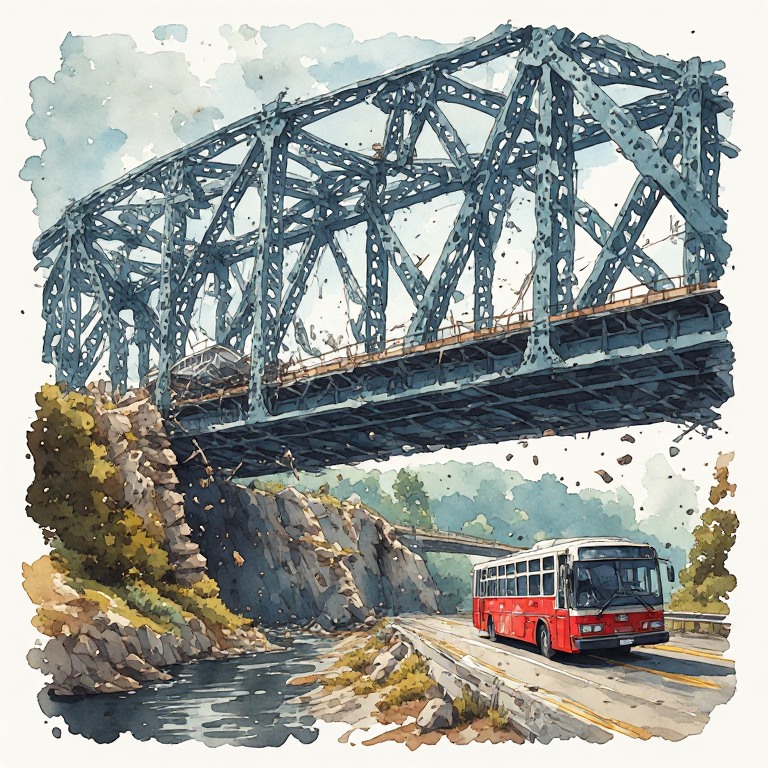
Vestibular triggers imposed without consent, such as bridge crossings or cinematic POV shots of heights. Restorationist lens: Confrontations with chaos—where butterflies become signals of panic. See also: Bridge Anxiety
Vicarious Acrophobia
Height-induced discomfort or fear experienced indirectly through media, like watching extreme heights from a character’s POV. Restorationist lens: Borrowed exposure—proof that thresholds can be crossed by sight alone. See also: Bridge Anxiety
Visual Height Intolerance (vHI)
A spectrum of responses to height exposure, from mild unease to acrophobia, rooted in visual-vestibular conflict. Symptoms include vertigo, weak knees, and panic when equilibrium and visual input can’t be reconciled. Restorationist lens: Not irrational—an intelligent signal of unresolved gradient between perception and orientation. See also: Bridge Anxiety
Visual–Vestibular Conflict
When the eyes perceive motion or exposure (e.g., heights, screen movement) but the vestibular system senses stillness, creating discomfort or disorientation. Restorationist lens: A split narrative—vision tells one story, balance tells another. See also: Bridge Anxiety
Vestibular Illusions
Compelling false sensations of motion, pitch, or roll arising from the vestibular system—especially in flight—capable of misleading perception without reliable visual references. Restorationist lens: Sensations are persuasive; truth requires instruments and discipline. See also: Butterflies and Thresholds
Vestibular Sensitivity
Heightened responsiveness of the inner ear’s balance organs (otoliths, semicircular canals) to motion, gravity, and acceleration—amplifying both fear and thrill responses. Restorationist lens: A tuning fork of thresholds—discordant or symphonic depending on whether agency is imposed or chosen. See also: Butterflies and Thresholds
📖 Glossary Entry: Acute Stress Response
Acute Stress Response (Fight-or-Flight Default)
- Definition: The body’s automatic survival reflex, mediated by the sympathetic nervous system, triggered when the brain perceives threat or sensory mismatch.
- Evolutionary Frame: Conserved across vertebrates, this response mobilizes energy for immediate action—fight, flight, freeze, or other defensive behaviors. First described by Walter Cannon (1914) as the “fight-or-flight” mechanism.
- Physiological Signals: Rapid heartbeat, increased blood pressure, glucose release, heightened sensory awareness, and vestibular disorientation.
- Threshold Lens: Represents the Mismatch Threshold—when visual and vestibular inputs conflict, the nervous system defaults to panic. This is not irrational but an adaptive intelligence: the body errs on the side of caution when equilibrium falters.
- Restorationist Insight: Naming this architecture restores agency. Panic is reframed as a signal, not a curse—a map of unseen gradients where perception and physiology collide.
- Cross-Reference:
- Mismatch Threshold → sensory conflict between vision and vestibular input
- Unseen Gradient → environmental shifts (pressure, orientation) that trigger disorientation
- Vestibular Sensitivity → predisposition to heightened responses at thresholds