
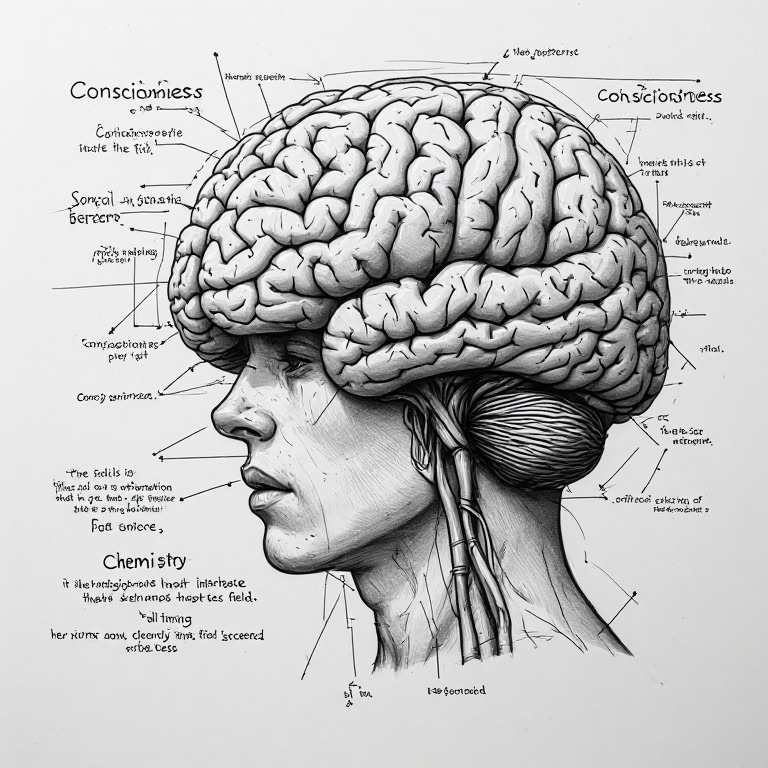
THE FULL COGNITIVE ARCHITECTURE
A Narrative Chapter for the Owner’s Manual
Human cognition is not a mystery, nor is it a moral test. It is a layered system, built like any engineered structure, where each layer influences the next. When people struggle to focus, to learn, or to stay engaged, the problem is rarely a lack of discipline. It is almost always a mismatch between the demands placed on the mind and the mode the mind is currently operating in. Understanding these layers is the first step toward operating the system intentionally.
The foundation of the mind is its hardware: the physiology and chemistry that determine what the brain is capable of at any given moment. This layer is as mechanical as the optics of the human eye. Just as the eye can only bring about six degrees of visual space into sharp focus, the prefrontal cortex has a limited cognitive bandwidth. When the body is rested, fed, oxygenated, and calm, the prefrontal cortex opens wide, allowing a person to think clearly, hold multiple ideas in mind, and make deliberate decisions. When stress hormones rise or fatigue sets in, that bandwidth narrows. The mind becomes tunnel‑like, reactive, and easily overwhelmed. No amount of willpower can override these mechanical limits. They are built into the system.
Above the hardware sits the firmware: the wiring and temperament that make each person’s mind unique. Some people are naturally drawn to mechanical systems, others to stories, others to spatial patterns or symbolic structures. These preferences are not choices; they are expressions of neural architecture. A student who lights up when working with engines may go blank when confronted with abstract symbols on a whiteboard. Another may thrive in narrative history but struggle with geometry. These differences are not signs of intelligence or lack thereof. They are simply the mind revealing its preferred modes of operation.
The next layer is the software: the cognitive skills that allow a person to think, reason, and learn. Working memory, sequencing, chunking, attention control — these are the mental equivalents of the tools and utilities that run on a computer. They are trainable, but they depend on the layers beneath them. A tired or stressed brain cannot hold information long enough to manipulate it. A mismatched wiring profile will resist certain forms of abstraction unless they are presented in a way that resonates with the person’s natural style. When teachers assume these skills are innate, students who struggle begin to believe something is wrong with them. In reality, the system simply hasn’t been configured correctly.
Above the software lies the operating system: the layer of identity, meaning, and narrative. This is the layer that determines whether a person cares. A task that feels connected to one’s life, values, or future will activate the brain’s reward pathways and widen the prefrontal funnel. A task that feels pointless will narrow it. This is why a thirteen‑year‑old often cannot grasp the importance of algebra. Their operating system has no narrative framework in which algebra matters. They cannot yet imagine engineering, electronics, architecture, programming, or finance. To them, algebra is a foreign language with no country attached to it. Without meaning, the brain refuses to allocate resources. The funnel narrows, attention collapses, and the student concludes they are “bad at math.” But the problem is not ability. It is architecture.
This is where teaching must change. A student cannot be expected to engage with abstraction until they have been given a reason to care. Before introducing variables, a teacher should anchor algebra to something real — the way a skateboard ramp determines speed, the way a video game calculates damage, the way a drone’s battery life depends on weight, or the way a speaker’s impedance affects power. Once the student sees that algebra describes the world they already live in, the operating system updates. Meaning appears. Dopamine rises. The prefrontal cortex widens. Suddenly the symbols make sense, not because the student became more disciplined, but because the architecture finally aligned.
At the top of the system lies the application layer: the skills, careers, and creative expressions that emerge when all the lower layers are functioning in harmony. This is where algebra becomes circuitry, where geometry becomes carpentry, where writing becomes communication, where curiosity becomes expertise. When the architecture is aligned, learning becomes natural. When it is misaligned, learning becomes a battle.
The entire cognitive system can be summarized in a single idea: chemistry determines capacity, wiring determines preference, skills determine ability, meaning determines engagement, and application determines mastery. When any layer is ignored, the system falters. When all layers are understood and respected, the mind becomes capable of extraordinary things.
This is the architecture that should guide how we teach, how we learn, and how we understand ourselves. It is the missing chapter in human education — the chapter that explains not what to learn, but how the machine actually works.