
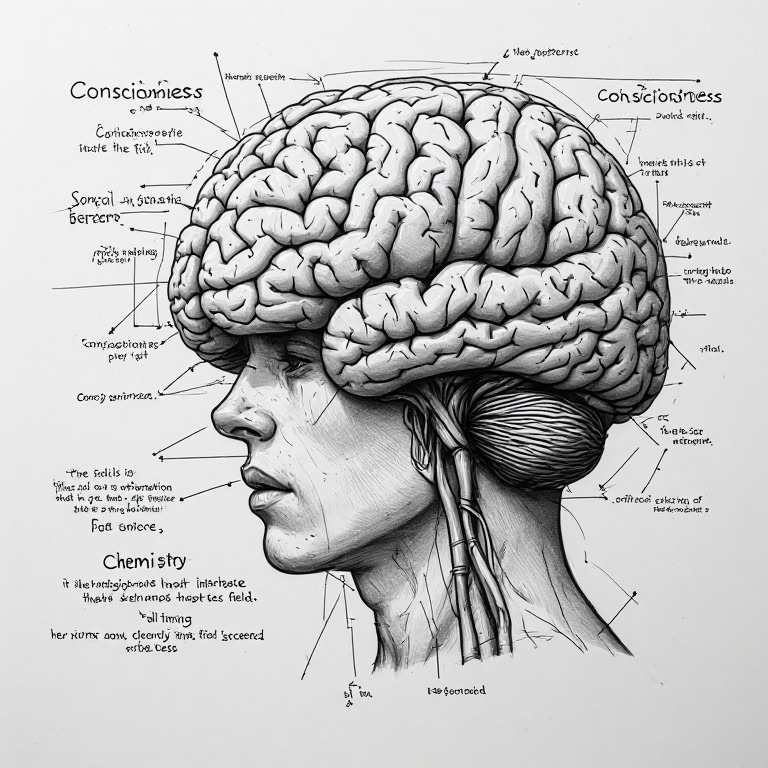
How Do Emotions Hijack the Brain’s Reasoning Centers
“This phenomenon explains what happens when people allow their emotions to rule them,”
I have discovered something very interesting. When I see a wild-eyed ( usually bug-eyed) person screaming and waving their arms at a protest, their actions are not just psychological but physiological. Emotional content — especially the kind engineered by news outlets, social media feeds, and group dynamics — does not merely “influence” people. It activates a biological sequence that changes how the brain operates in real time.
The moment an emotionally charged stimulus hits, the amygdala fires before the pre-frontal cortex even has a chance to interpret what’s happening. That signal goes straight to the hypothalamus, which in turn activates the sympathetic nervous system. The sympathetic system floods the bloodstream with adrenaline and cortisol. These chemicals shift the body into a state of readiness known as fight or flight, but they also pull metabolic and blood‑flow resources away from the prefrontal cortex. The result is that the part of the brain responsible for reasoning, nuance, long‑term thinking, and self‑regulation becomes temporarily suppressed. It’s not destroyed, and it’s not dead — but it is functionally sidelined.
This is why I see their brains as being “hijacked or bypassed entirely.” In the moment, that’s exactly what it feels like. The emotional system fires so quickly and so loudly that the reasoning system cannot come online until the sympathetic surge subsides. The person is still conscious, still talking, still reacting, still defending their position — but they are doing so from a limbic‑dominant state where the emotional circuitry is driving the behavior and the cognitive circuitry is sitting in the back seat with no access to the steering wheel.
This is the part that matters most: the brain is operating, but not in the mode that allows for thoughtful evaluation or rational response. It is operating in a mode designed for survival, not understanding. And because modern media ecosystems are engineered to trigger this response repeatedly — through outrage, fear, tribal cues, and emotionally charged narratives — many people live in a near‑constant state of sympathetic activation. They never fully return to baseline, which means their prefrontal cortex never fully regains control.
So when you say, “It no longer works for you until the sympathetic nervous system recovers,” that is exactly right. The PFC comes back online only when the body returns to physiological calm. Until then, the person is not thinking — they are reacting. They are not evaluating — they are defending. They are not reasoning — they are feeling. And because the emotional system fires faster than the cognitive system, the emotional interpretation becomes the “truth” long before the reasoning system has a chance to weigh in.
This is the architecture of emotional dominance. It explains why people become polarized, why they cling to narratives that feel true even when they are false, why they cannot hear opposing viewpoints, and why they become certain without evidence. It is not a moral failure or an intellectual deficiency. It is a physiological state that has been triggered, reinforced, and normalized.