
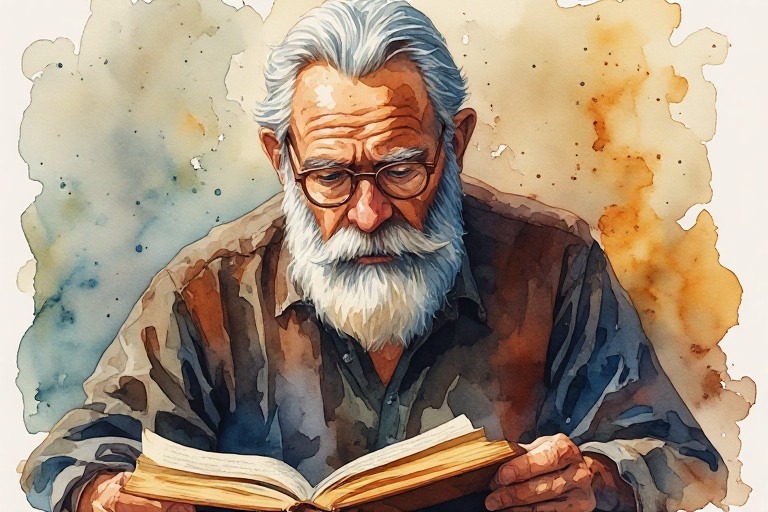
Since I began reading my Bible with seriousness and structure, one truth has risen above all others — a truth so foundational that it reshapes how I see myself, my neighbor, and the world. Genesis democratizes the divine image. Every human being, without exception, is endowed by God with dignity, agency, responsibility, and accountability. This is not a religious preference. It is the most fundamental fact of human existence. And the tragedy of our age is that we have forgotten it.
Modern people search for identity in crowds, movements, governments, and social experiments. They cling to political tribes as if belonging could replace being. They treat dignity as something granted by recognition, visibility, or approval. But Genesis cuts through all of this with a clarity that is almost confrontational: your value does not come from the crowd. It comes from God.
This is the first truth Scripture gives us about humanity. Before laws, before nations, before covenants, before sin, before culture — Genesis establishes the architecture of the human person. It tells us what a human is.
And what it says is revolutionary.
In the ancient world, only kings were considered “images of the gods.” Only rulers carried divine authority. Only elites were seen as moral agents. Everyone else existed to serve. Genesis shatters that hierarchy in a single sentence. It takes the royal title and hands it to everyone. It declares that every human being is the image of God — not metaphorically, not symbolically, but structurally.
From that one declaration flow four universal equalities:
1. Equal Dignity — No one is more human than another. 2. Equal Agency — Every person is a moral actor, not a pawn. 3. Equal Responsibility — No one can outsource their choices. 4. Equal Accountability — Every person answers to the same God.
These are not religious doctrines. They are the operating system of human life. They describe reality as it is, not as we wish it to be.
But when a society forgets these truths, it begins to malfunction. People start believing their worth is measured by their group identity. They treat responsibility as optional. They imagine accountability is something imposed by law rather than woven into existence. They behave as if agency is something granted by movements rather than inherent in their design.
When human beings lose a standard above themselves, they lose the ability to govern themselves. Even secular recovery programs like Alcoholics Anonymous discovered that agency collapses without a “Power greater than ourselves.” This is not theology — it is anthropology. If the self is the highest authority, aspiration shrinks to impulse. If government is the highest authority, aspiration shrinks to politics. Human beings need a higher standard, or there is nothing to aspire to.
This is why our age feels unmoored. We have replaced the Creator with the crowd. We have traded the solid ground of divine image‑bearing for the shifting sand of social identity. We have forgotten the one truth that makes us human.
Genesis does not allow us to hide in the crowd. It does not let us dissolve into the tribe. It does not excuse us from responsibility because others behave badly. It does not permit us to outsource our conscience to political movements. It does not allow us to escape accountability by appealing to public opinion.
Genesis stands at the beginning of Scripture and declares: You are the image of God. You are commissioned. You are responsible. You are accountable.
Whether you believe it or not. Whether you acknowledge it or not. Whether you like it or not.
This is the forgotten fact of being human.
Recovering it is essential to rebuilding a society capable of recognizing the human person, for the work is nothing less than civic, moral, and existential—because a society cannot function if its people do not understand what they are. A republic cannot endure if its citizens do not know the source of their dignity. A culture cannot remain sane if it denies the agency and accountability of the individual.
To remember Genesis is to remember ourselves.
To forget Genesis is to forget what it means to be human.
Further Reading
The Tree, the Friction, and the Ascent of Man
The Ten Commandments, Constitutional Neutrality, and the American Paradox