
I have developed a new understanding of myself after months of asking questions about politics, arguments, irrational fear, phobias, anxiety attacks, crowd behavior, identity, brain chemistry, and physiology. What surprised me was not the variety of topics, but the pattern that emerged across all of them — a pattern that explains how we interpret ourselves and others in our daily orbits. It shapes how we deal with family, coworkers, strangers, and even entire groups. And it is a pattern we all share, anatomically and chemically.
Most people are not aware of how these physiological reactions limit their ability to reason effectively
What I am leading toward is a theory of emotional self‑control — a framework for understanding how our bodies mislead us, and how evolution has not yet caught up to the realities of the 21st century. Long gone is the argument of psychology, “It’s all in your head.” Not really. The physiology incorporates much more than just your head.
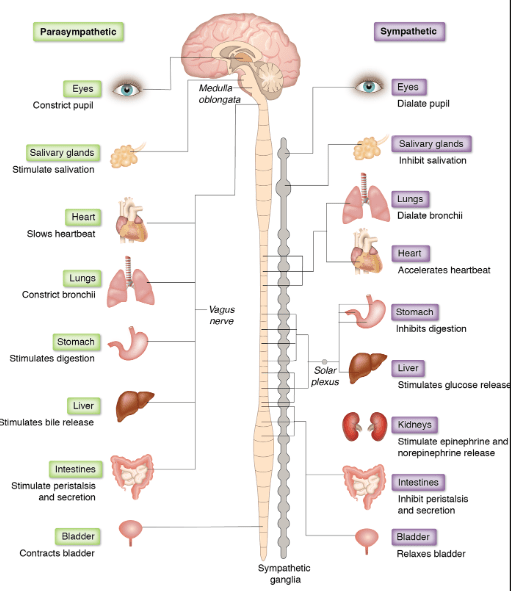
A simple example of this evolutionary mismatch can be seen in a park. Birds scatter as we approach. Squirrels run for the trees. These animals are not thinking; they are reacting through an ancient survival mechanism known as fight or flight. Humans possess the same circuitry. It can save us from genuine danger, but its greatest flaw is its tendency to misfire — to activate in response to thoughts, interpretations, or sensory conditions that pose no real threat.
When this system misfires, it produces fear, dread, and avoidance in everyday life. And avoidance creates its own pattern. Each time we avoid a situation that triggered discomfort, the brain stores that reaction in the limbic system, the region responsible for rapid, emotional threat detection. Over time, the limbic system becomes the body’s first responder to uncertainty, firing before the prefrontal cortex — the part of the brain responsible for reasoning and evaluation — has a chance to engage.
In these moments, the cortex is not simply slow; it is excluded from the process. The limbic system takes over, generating an emotional response that feels overwhelming, involuntary, and self‑reinforcing. With repetition, this pattern can grow to enormous proportions, shaping not only phobias and anxiety attacks but also the way we argue, the way we interpret events, and the way crowds behave.
This is not speculation. It is well‑established neuroscience. Millions of people function daily in a world governed primarily by emotional reflexes rather than cortical evaluation. The troubling part is that many institutions understand this vulnerability. Their methods of influence are built around triggering limbic responses, amplifying uncertainty, and keeping individuals in a state where emotional reactions dominate rational analysis.
Most people are not aware of how these physiological reactions limit their ability to reason effectively. When the limbic system becomes the first responder to uncertainty, individuals fall into limbic‑first reasoning — a mode in which emotional reflexes override analytic thought. In this state, people live inside a conditioned response system that operates largely outside the control of the prefrontal cortex, the region responsible for evaluating sensory input, weighing probabilities, assessing responsibility, interpreting morality, and forming coherent identity. When the limbic system fires first, the cortex is not simply slow; it is bypassed, leaving emotions to determine what feels true rather than what is supported by evidence.
Once a person is held in this limbic‑first mode, the pattern becomes self‑reinforcing. Uncertainty triggers the amygdala; the amygdala triggers emotional interpretation; emotional interpretation bypasses the cortex; and the resulting belief feels self‑evident because it is rooted in physiology, not logic. This becomes self-reinforcing; the feelings of adrenaline creates a false sense of urgency, and the physical discomfort causes a “limbic snowball,” growing and growing. This is the same architecture that underlies phobias, panic attacks, crowd behavior, identity‑based reactions, and group‑level emotional contagion. The mechanism does not change — only the scale does.
A simple childhood moment illustrates this clearly. You approach a cookie jar, check that no one is watching, take a cookie, and get away with it. You return again and again until the behavior becomes routine. Every time you get away with it, you get twice the pleasure. First, dopamine hits you knowing you just snatched a cookie, and then you get to enjoy the spoils of your labor. Then, one time, you turn around with your hand still in the jar, and your mother is standing in the doorway. The reaction is instantaneous. Your stomach drops, your face drains, your chest tightens, and a wave of dread hits before you can form a single thought. That sensation is not guilt or moral reflection. It is a limbic‑first response — a physiological alarm triggered by the sudden collapse of uncertainty into certainty.
Uncertainty is what allowed the behavior. Certainty is what stopped it.
The limbic system does not respond to danger; it responds to instability and ambiguity. When uncertainty disappears, especially in a negative direction, the amygdala fires, and the body reacts before the cortex has a chance to evaluate what is happening. Some avoidance is adaptive and prevents harm, but repeated avoidance of harmless situations teaches the limbic system the wrong lesson. Avoidance becomes conditioning, and conditioning becomes reflex. The same circuits firing repeatedly create a path of least resistance and distort the way people reason, shifting them toward emotional interpretation rather than analytic evaluation.
When the limbic system fires, the shift inside the mind is immediate and profound. The amygdala seizes control of the body’s threat‑response circuitry, and the prefrontal cortex — the center of reasoning, evaluation, and doubt — is pushed offline. In this state, people do not weigh evidence, consider alternatives, or question their assumptions. They experience a surge of physiological certainty, a feeling of being absolutely right even when the facts contradict them. This is not stubbornness or arrogance; it is the biology of a limbic storm. The brain narrows its focus to a single interpretation, suppresses competing information, and locks onto whatever meaning feels most stabilizing in the moment. Reasoning collapses into reflex. Curiosity collapses into defensiveness. Dialogue collapses into reaction. The person is not thinking; they are stabilizing. And because the limbic system operates faster than conscious thought, the emotional conclusion feels self‑evident, as if it were the only possible truth. This is why individuals in a limbic storm argue past evidence, reject correction, and cling to their position with a conviction that appears irrational from the outside. The storm is not psychological drama — it is physiology overriding cognition.
Modern environments often reinforce limbic‑first responses. When individuals are encouraged to withdraw from challenging ideas, uncomfortable discussions, or conflicting viewpoints, they are being trained — often implicitly — to rely on physiological reflex rather than cortical engagement. Covering one’s ears, shutting down, or fleeing from discomfort is not a moral stance; it is a neurobiological pattern being strengthened. This is not a matter of ideology but of how the brain learns. When people repeatedly avoid uncertainty, the brain encodes uncertainty as threat, discomfort as danger, and disagreement as instability. Over time, the limbic system becomes dominant, and the prefrontal cortex plays a smaller role in evaluating information, weighing probabilities, and forming independent judgments.
The result is predictable. Emotional reflex replaces analysis. Group cues replace individual reasoning. Identity‑based reactions replace evidence. Avoidance replaces engagement. The mechanism is identical to the one that produces phobias. The circuitry is the same. Only the context changes.
Whether it is a child caught at the cookie jar, a person avoiding a bridge, a student overwhelmed by a difficult idea, or a crowd reacting to emotionally charged information, the sequence is the same. Uncertainty triggers the amygdala. The amygdala produces a limbic‑first response. The individual reacts emotionally or avoids the situation. The pattern reinforces itself. Phobias, panic, emotional overreaction, and group‑level behavior all arise from the same physiological architecture — the limbic system firing in response to uncertainty.
There is a constructive way to interpret all of this. Exposure to these ideas does not reveal a dark conspiracy; it reveals a biological pattern that has gone largely unnoticed. My aim is to expose readers to this concept so they can regain agency in their lives and use their brains as they were originally intended — with the cortex engaged, the limbic system calibrated, and uncertainty understood rather than feared.