
Past presidential renovations and the missing lawsuits
There is a striking absence in the current debate: any serious comparison with previous presidential renovations. The White House has been altered, expanded, gutted, and rebuilt multiple times, often on a far larger scale than the proposed ballroom — and yet those projects did not trigger the kind of preservation lawsuit now aimed at Trump.
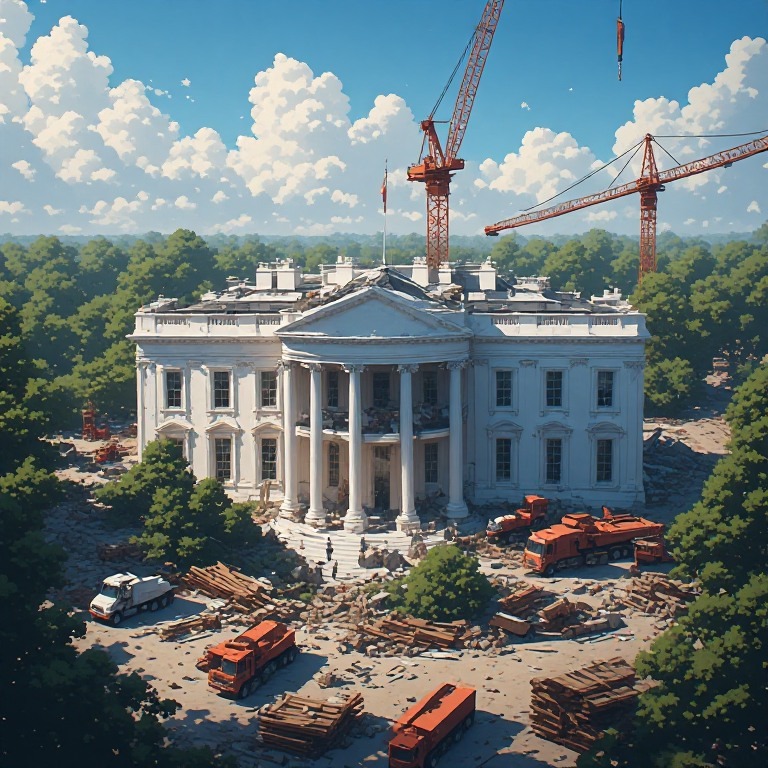
The most dramatic example is the Truman reconstruction. Between 1948 and 1952, the interior of the White House was effectively demolished. Engineers determined the structure was at risk of collapse, and the entire interior was gutted down to a hollow shell. The mansion was rebuilt with a new steel frame, new floors, new walls, new wiring, and new mechanical systems, while the exterior walls were braced and preserved. From the outside, the building looked unchanged; inside, it became almost entirely new construction. There was no preservation lawsuit blocking Truman, no claim that a president had “torn down the White House” in violation of process. The project went forward under congressional authorization and executive control, with the understanding that safety and continuity of use justified extreme intervention.
Since then, other presidents have overseen significant changes: West Wing expansions, Situation Room updates, security upgrades, technological retrofits, grounds alterations, even the addition of major structures like the current West Wing and earlier East Wing expansions in the early twentieth century. These projects involved sensitive architecture and historic fabric, and they certainly modified the presidential complex. Yet they proceeded through a mixture of legislative approval, executive discretion, and administrative handling — not preservation litigation.
What makes the current case different is not that a president is altering the White House. That has been done before, at far greater scale, including literal interior demolition and reconstruction. What is different is the intersection of three factors: modern environmental and preservation statutes, a deeply polarized political climate, and a president whose brand is explicitly tied to construction and deregulation. The legal tools now available to outside organizations did not exist in Truman’s era, and the willingness to deploy them against the White House itself reflects a new phase in how process is used as leverage against executive action.
In that context, the ballroom lawsuit looks less like a principled first stand against unprecedented change, and more like the latest expression of a regulatory apparatus that has grown far beyond its original scope. When the same building that was once gutted and rebuilt from the inside out can now be tied up for months or years over a privately funded addition, the story is not just about one president or one project. It is about how the rules have changed — and how those rules now shape, delay, or defeat even the kind of alterations that earlier generations took for granted as part of governing.