
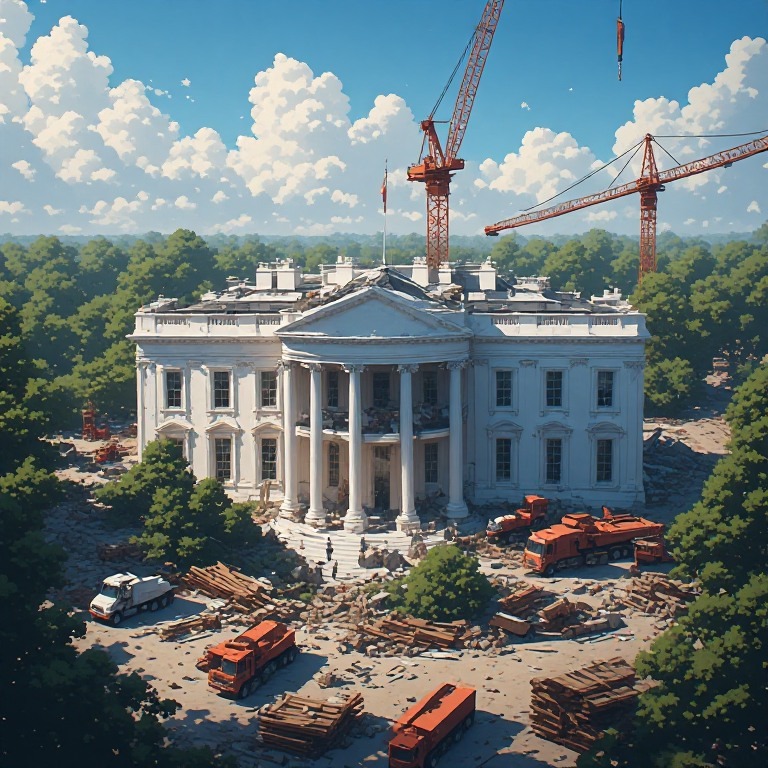
White House Ballroom Project: A Living Timeline
A factual, continuously updated record of the project’s development, demolition, legal challenges, and federal review milestones.
1. Initial Proposal Phase
Early 2025 — President Trump revives the long‑standing idea of adding a large ceremonial ballroom to the White House complex. The administration frames it as a privately funded improvement intended to modernize event capacity and reduce reliance on off‑site venues.
Spring 2025 — Preliminary discussions begin within the Executive Residence and the General Services Administration (GSA). Early statements emphasize that no taxpayer funds will be used.
2. Architect Selection
Mid‑2025 — The administration selects an architectural team to develop conceptual designs for the new ballroom. No finalized plans are released publicly. Federal review requirements under the National Historic Preservation Act (NHPA) and related design‑review statutes are triggered once formal plans are submitted.
3. Pre‑Construction Activity
Late Summer 2025 — Early site assessments and logistical planning begin. The administration asserts that design work is ongoing and that formal submissions to federal review bodies will occur once plans are finalized.
4. Demolition of the East Wing
Autumn 2025 — Demolition of the East Wing begins as part of site preparation for the ballroom project. This action becomes the central point of controversy, with critics arguing that demolition proceeded before required federal reviews were completed.
5. Lawsuit Filed
December 2025 — The National Trust for Historic Preservation files suit in federal court, alleging violations of the NHPA and related review processes. The suit seeks an emergency temporary restraining order (TRO) to halt construction and prevent further demolition.
6. Judge’s Initial Ruling
Mid‑December 2025 — A federal judge denies the National Trust’s request for an emergency TRO, allowing construction to continue for the moment. The judge cites the administration’s claim that the design is not yet finalized and that above‑ground construction will not begin until spring. A full hearing on whether to pause the project is scheduled for January 2026. The administration is instructed to submit finalized plans to federal review bodies by the end of December.