
Make Peace of Mind Fashionable Again
One Size Fits All: The Ten-Minute Reset for Peace of Mind
While writing these 250 posts, I’ve noticed they’ve grown progressively longer. It’s like tax law or government regulations: create one rule, hire a dozen people to enforce it, and soon it becomes a giant snowball rolling downhill.
Too often, I wander into weeds I don’t need to visit, taking the long way around the barn. What I want to write are posts that offer solutions to one of civilization’s great problems: how do we simplify life’s complexities and make peace of mind fashionable again?
The thigh bone’s connected to the shin bone, the amygdala’s connected to the racing-heart bone, and the ankle bone’s connected to the thalamus-knee and prefrontal cortex. I had to get that story right and understand the systems before I could explain the relief.
Funny enough, we don’t need psychologists or massive doses of Xanax to fix the problem. Everything we need is already sitting right between our ears. Since we’re all different, it’s easy to assume each of us needs a different fix for the same problem: a mind that never shuts down, full of constant noise and chatter. But the fix is simple, and this time, one size really does fit all.
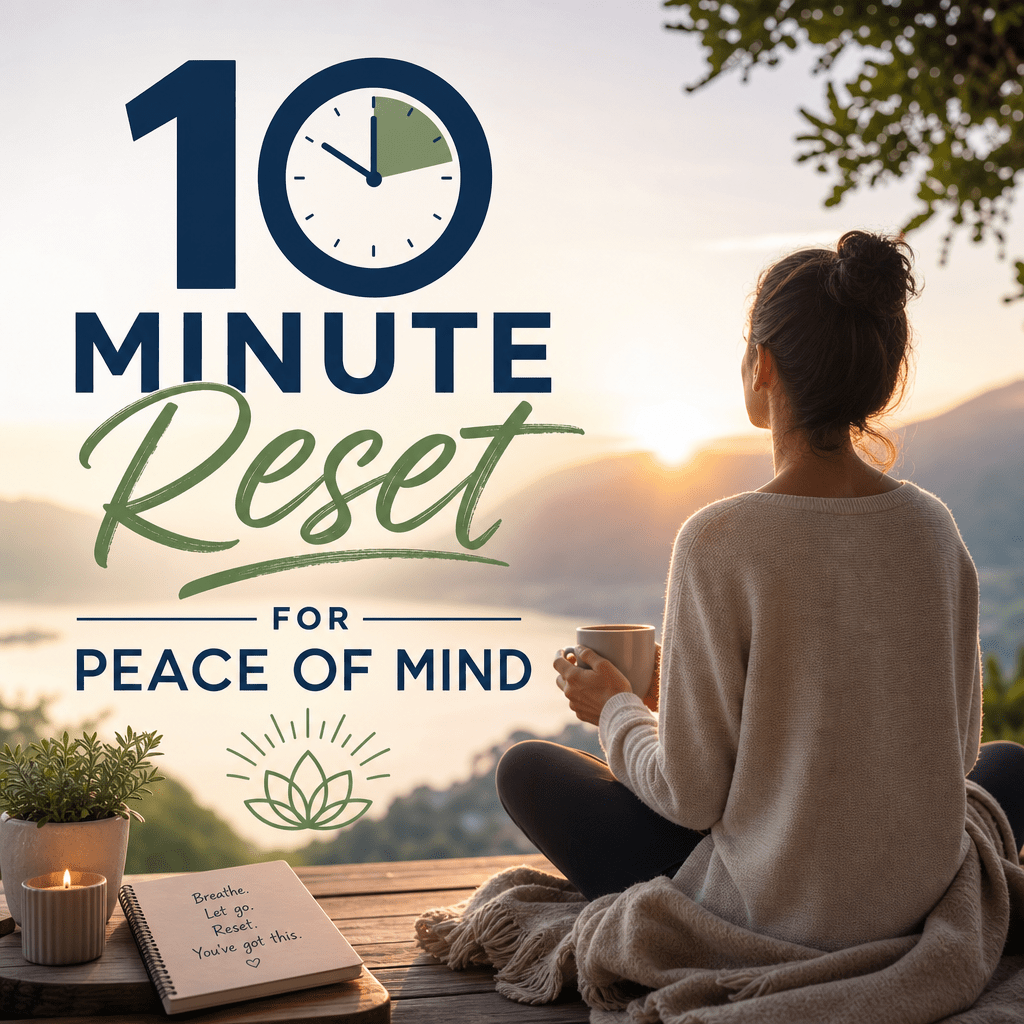
The exercise takes only ten minutes a day, and you can use it anytime your head needs a little clearing. Nothing fancy. No equipment. No special room with bamboo flutes playing in the background. Just you, your nervous system, and a few quiet minutes.
- Settle. Sit still. Unclench your jaw, shoulders, and hands. Take five slow breaths.
- Clear. Silently remind yourself: “I am not just the voice in my head. I am also a body, a mood, a pattern-recognizer, and a witness.”
- Notice. For two minutes, pay attention to your breath, chest, stomach, face, mood, and any tightness or ease. Don’t analyze it. Just notice it.
- Recenter. Ask one simple question: “What is here before I explain it?”
- Close. Choose one intention for the day: speak slower, react less quickly, notice tension earlier, or return to your breath before responding.
Why does this work? Because it gives the nervous system a predictable pause. It weakens the default chatter loop by refusing to feed it right away. It teaches you to recognize quiet as familiar instead of strange. Most important, it turns insight into repetition, and repetition is how new patterns stick.
If you want to make it even simpler, think of it in three parts: reset the body, observe without commentary, and return to one sentence or intention. Then, if you’re the journaling type, write one line afterward: What did I notice? What changed in my body? What did the chatter do when I got quiet?
We’re all adults here—well, some of you are teenagers and young adults—but the point still stands: there’s nothing uncool about having peace of mind or using breathing and focused awareness to quiet anxiety. It’s your head. You’re stuck with it. It’s your body, too, and you’re stuck with that as well. So maybe it’s time to learn how to run the equipment. Your mind is a powerful tool. It can work for you or against you. The good news is that learning to guide it is simple, and the benefits can last a lifetime. Inner peace creates room for better thinking and better living.