We live in an age of cheap words. In our hyper-connected, fast-paced modern world, commitments are made with a casual click and broken with a silent notification. Apologies are automated, obligations are negotiated away, and agreements last only as sure as they remain convenient. We treat external contracts with a cynical transactionalism, but we treat our internal promises with something far worse: complete indifference. We bargain with our diets, hit snooze on our ambitions, and quietly compromise our values when no one else is looking. This subtle, daily betrayal of the self is treated as a minor, harmless flaw.
But it is not harmless. It is a slow, structural rot.
Before giving your word to anyone, you must think deeply about what you are committing to. There is nothing more important than your word, and the most important commitment your word can make is to yourself. When you break a promise to another person, you damage a relationship; when you break a promise to yourself, you damage your very capacity for reality. You teach your subconscious mind that your voice has no authority, that your intentions are meaningless, and that your willpower is an illusion. You become a passenger in your own body, drifting on the currents of immediate impulse, external pressure, and cheap convenience.
True resolve does not bloom from a lifetime of flawless success. It is forged in the raw, painful inventory of the wreckage of broken promises to others and to oneself. Transformation begins only when the accumulated weight of your own self-deception becomes entirely intolerable. In 2015, I reached that definitive threshold. I looked back at a history of fractured commitments and realized that if my word meant nothing to me, I meant nothing to myself. I drew a line in the sand and swore a sacred oath to honor a promise to me. The targets were absolute and uncompromising: drinking, Xanax, and smoking. I severed the ties to those dependencies, and more than a decade later, that line remains uncrossed.
True discipline is born when you finally refuse to break your own bond. It is the moment you realize that an internal promise is not a casual goal, but an absolute, unshakeable boundary.
This act of radical self-mastery is not merely a matter of personal health or lifestyle optimization; it is a profound exercise in sovereignty. To conquer a physical dependency is to wage a private war against your own biology. It requires you to step directly into the center of the limbic storm—that chaotic state where your primitive brain screams for comfort, relief, and immediate gratification—and firmly hold the line. It is a declaration that the conscious, rational self will no longer be bullied by the animal impulses of the body. When you maintain that boundary day after day, year after year, you build an ironclad internal baseline. You prove to your subconscious mind that your word is absolute law.
This private triumph of the individual spirit mirrors the exact architectural philosophy that underpins the classical foundations of a free Republic. The architects of Western liberty—from the Roman stoics to the thinkers of the Enlightenment—understood a fundamental truth that our modern culture has largely forgotten: a free society cannot exist without self-governed individuals. Liberty is not the absence of restraint; it is the presence of self-restraint. It is the capacity to choose the harder right over the easier wrong without needing a tyrant, a policeman, or a master standing over your shoulder to force your compliance.
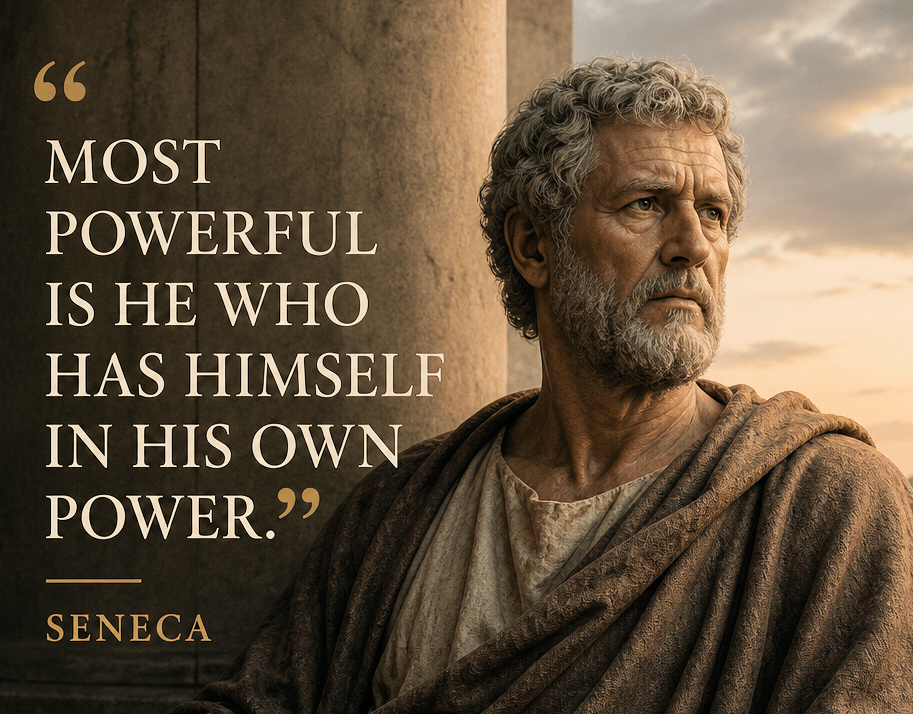
When the Roman philosopher Seneca wrote that “most powerful is he who has himself in his own power,” he was providing the baseline formula for civic freedom. A Republic is, by definition, a collection of self-ruling citizens. If the individuals within that Republic cannot control their own desires, resist their raw impulses, or honor their private obligations, they are structurally incapable of sustaining public freedom. A population enslaved to its immediate appetites—whether those appetites are chemical, emotional, or financial—will inevitably look for an external master to restore order to the chaos they create. They will trade their liberty for security, their sovereignty for convenience, and their citizenship for dependency.
The private oath you make to yourself in the dark is the ultimate training ground for public virtue. When you possess the internal discipline to conquer your own vices, you are practicing the exact form of ordered liberty required to sustain a civilization. You are demonstrating that human beings are not merely reactive animals driven by external stimuli and chemical cravings, but sovereign entities capable of independent, principled action.
Your word to yourself is the ultimate foundation of your character, and your character is the ultimate foundation of your reality. By honoring that line drawn in 2015, you do not just maintain sobriety; you maintain your own internal Republic. You preserve the ultimate right to look at everyday irritations, social pressures, and external storms and realize they have no power over you. You have already looked the truest, most terrifying internal threats in the eye and conquered them through the pure, unyielding force of your own sacred bond.