
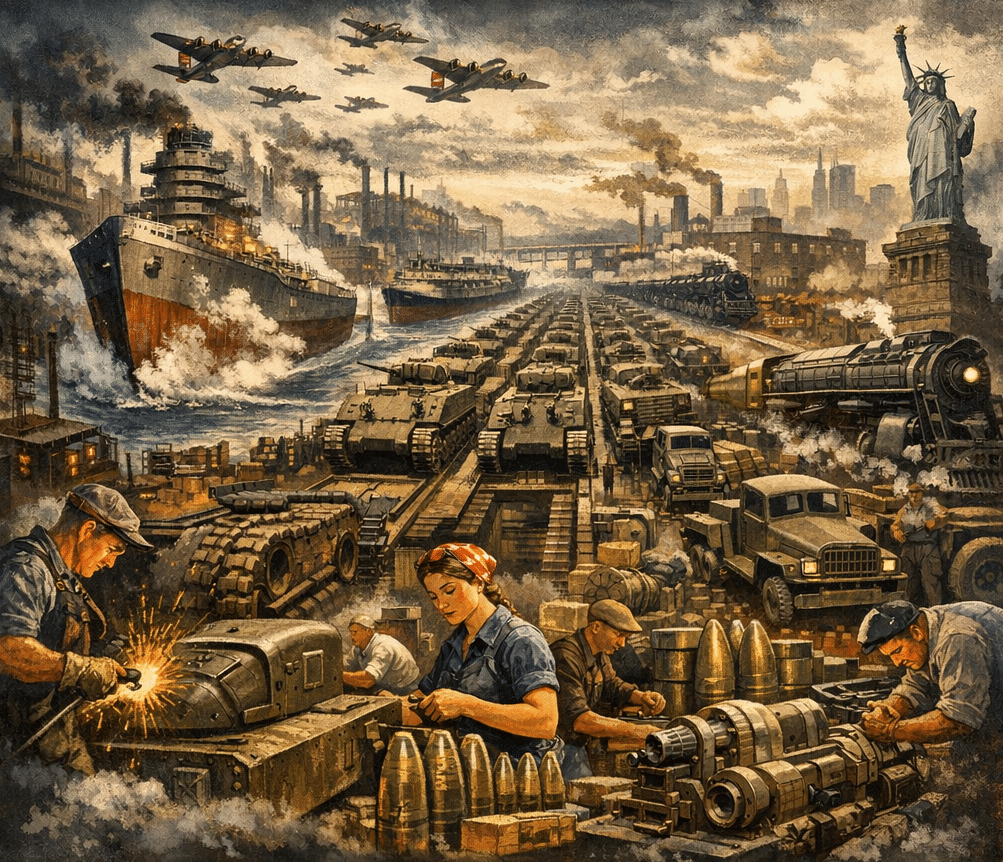
America did not win World War II because of luck, slogans, or sentiment. We won because the United States possessed the greatest industrial capacity ever assembled by human hands — and because we had a population formed by work, discipline, apprenticeship, and responsibility. The arsenal of democracy was not a metaphor. It was a fact, built from steel, skill, and national unity.
Today, as reshoring accelerates and new investment pours into American manufacturing, we stand at the beginning of a new mobilization. But if we fail to rebuild our educational foundations, this industrial resurgence will stall before it ever reaches maturity.
This is the Restorationist argument: Industrial revival requires human revival.
Table of Contents
I. The Industrial Capacity We Had Before WWII
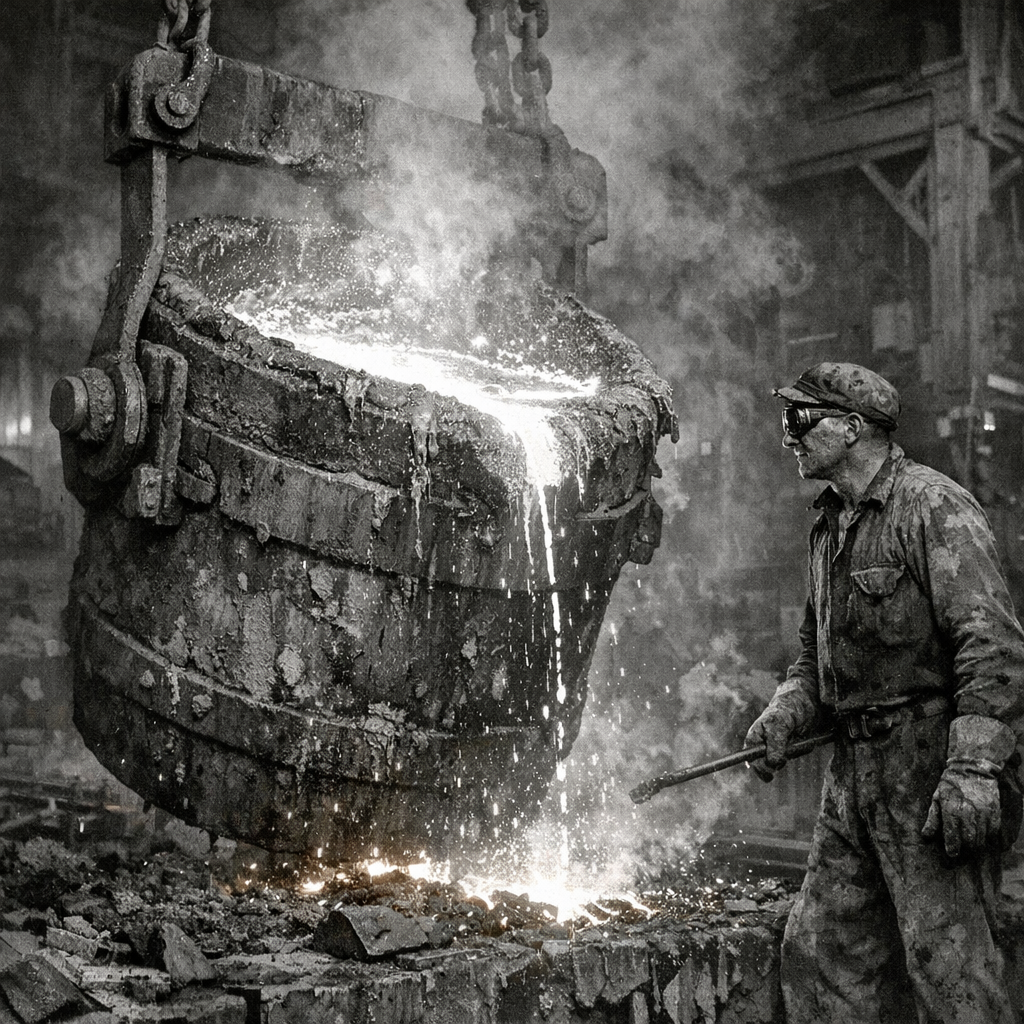
Before Pearl Harbor, America already possessed the bones of a continental industrial giant:
- Hundreds of blast furnaces
- A vast machine‑tool ecosystem
- A skilled trades workforce trained through apprenticeship
- A culture that valued competence over credentials
- A decentralized network of factories, mills, and workshops
- A population accustomed to physical work, responsibility, and discipline
By 1940, the United States produced more steel than Germany and Japan combined. We had the world’s largest automotive industry, the world’s largest shipbuilding capacity, and the world’s deepest pool of machinists, welders, pipefitters, electricians, and tool‑and‑die makers.
We were not yet mobilized — but we were formable.
When the War Production Board froze civilian auto production in 1942, Detroit didn’t panic. It converted. It adapted. It produced.
The United States transformed its industrial base in less than 24 months because the capacity already existed, and the skills already existed, and the culture already existed.
II. What We Did With That Capacity During WWII
Once mobilized, America became a force of nature.
- 297,000 aircraft
- 86,000 tanks
- 95 million tons of steel
- 2 million military trucks
- Thousands of ships, landing craft, and submarines
- Millions of artillery shells, engines, and munitions
We did not merely supply ourselves. We supplied the world.
Lend‑Lease was not charity — it was industrial dominance. Britain, the Soviet Union, China, and dozens of allies survived because American factories, American steel mills, and American workers produced at a scale no other nation could match.
This was the peak of American industrial civilization.
III. How That Capacity Disappeared
After the war, America demobilized — but slowly. The 1950s and 1960s still carried the momentum of wartime formation.
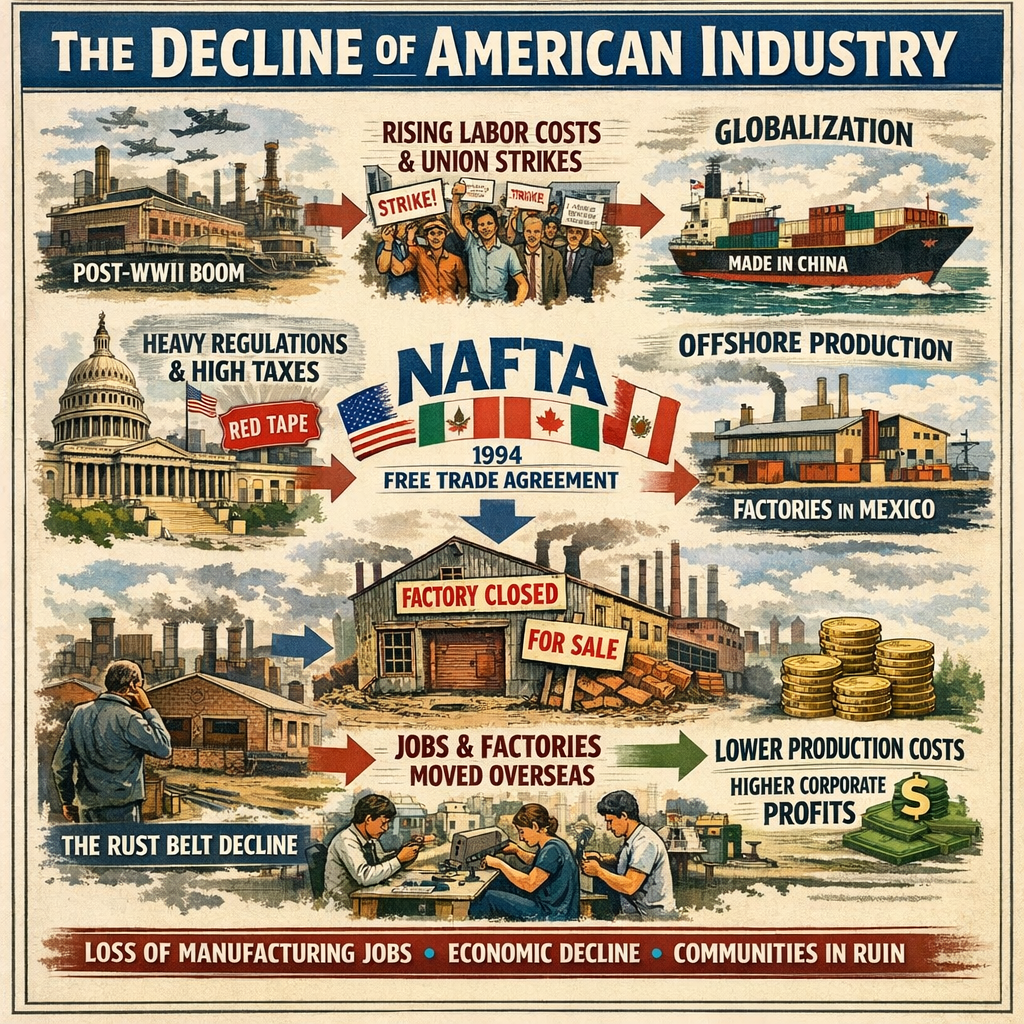
But by the 1970s, 1980s, and 1990s, several forces converged:
- offshoring
- deindustrialization
- credentialism
- union gatekeeping
- regulatory drag
- cultural drift
- the collapse of apprenticeship
- the rise of “college for all”
- the decline of skilled trades
- the erosion of civic and industrial identity
Steel mills closed. Machine shops vanished. Shipyards shrank. Trades pipelines dried up. Universities expanded into bloated bureaucracies. K–12 became a political battleground instead of a place of learning.
We did not lose our factories first. We lost our formation architecture — the system that produced capable adults.
Industrial decline followed educational decline, not the other way around.
IV. COVID: The Moment America Saw the Truth
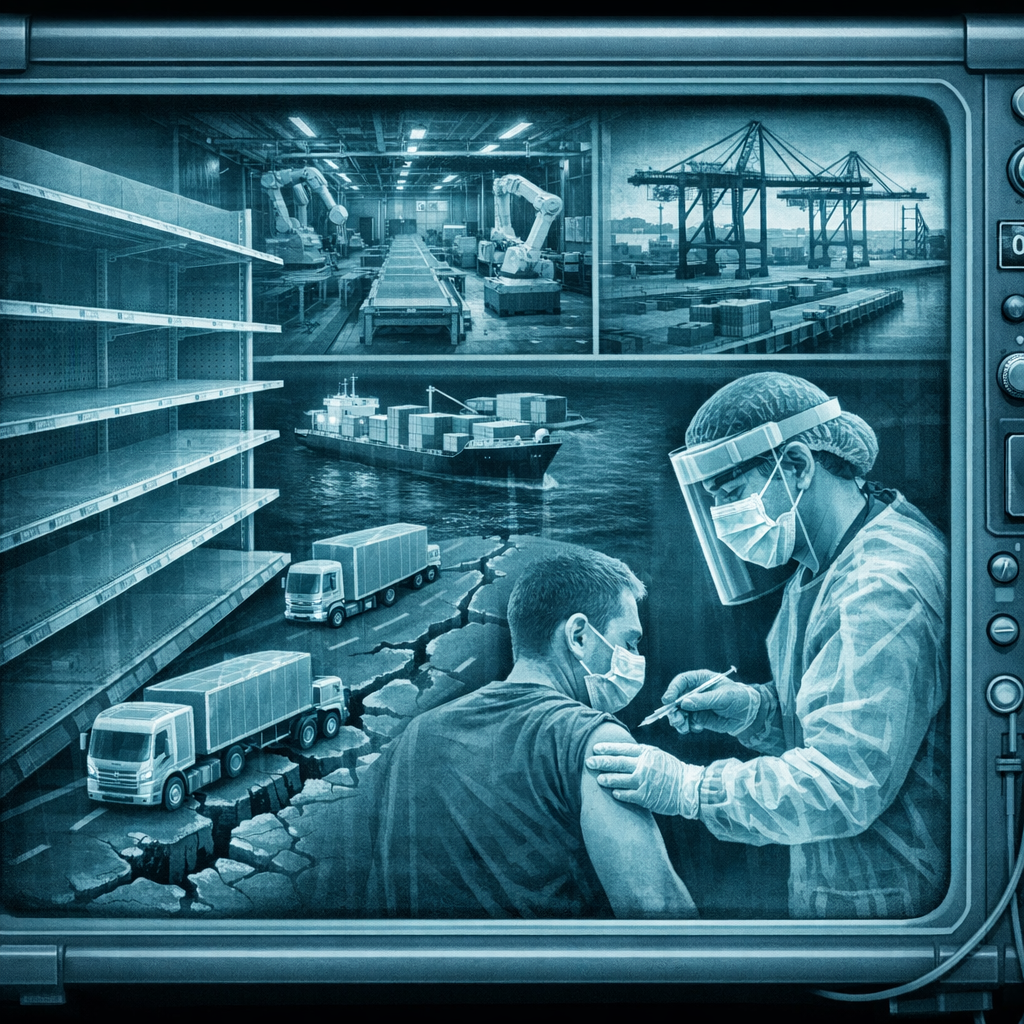
COVID was a national X‑ray.
It revealed:
- fragile supply chains
- foreign dependence
- hollowed‑out manufacturing
- shortages in basic goods
- lack of domestic production
- lack of skilled labor
- lack of industrial resilience
For the first time in decades, Americans saw the consequences of outsourcing everything from medicine to microchips.
We learned that a nation that cannot produce cannot protect itself.
We learned that globalization without domestic capacity is a vulnerability, not a strength.
We learned that industrial power is national power.
COVID did not create the crisis. It exposed it.
V. The New Industrial Mobilization
In recent years, the United States has begun a new industrial buildup:
- semiconductor fabs
- steel mills
- battery plants
- energy infrastructure
- defense manufacturing
- reshoring of critical supply chains
- investment in heavy industry
- revival of machine‑tool capacity
This is not a midterm. This is a mobilization.
It is the beginning of a new American industrial era — if we choose to finish it.
But this mobilization has a bottleneck: We lack the skilled trades and critical skills to sustain it.
We have capital. We have land. We have technology. We have demand.
We do not have the people.
VI. Why Education Must Be Rebuilt
Industrial revival requires human revival.
We cannot rebuild steel mills, shipyards, factories, and energy infrastructure with a K–12 system designed for social management instead of intellectual development.
We cannot produce machinists, welders, electricians, engineers, and technicians with universities that prioritize ideology over competence.
We cannot form industrial adults with:
- rigid age-based cohorts
- union-controlled school boards
- tenure-protected stagnation
- credential inflation
- bureaucratic bloat
- anti-meritocratic structures
- political capture
- standardized testing as a substitute for mastery

America needs a PATCO moment — not to punish teachers, but to break the institutional veto that prevents educational reform.
We need:
- merit-based advancement
- Montessori-style acceleration
- early sorting
- apprenticeship pipelines
- trade-school revitalization
- try-before-buy industrial training
- direct partnerships between industry and education
- a culture that values skill over credential
- a system that rewards excellence instead of mediocrity
We need to restore America’s ability to think, reason, build, and produce.
VII. The Restorationist Conclusion
America once possessed the greatest industrial capacity in human history. We mobilized it to defeat tyranny and rebuild the world.
We lost that capacity through neglect, drift, and institutional decay.
COVID revealed the cost of that decay. Reshoring is the beginning of our recovery. Industrial investment is the beginning of our revival.
But without educational reform — deep, structural, merit-based reform — America will not have the human capital required to sustain a 21st‑century industrial renaissance.
The Restorationist mission is clear:
Rebuild industry.
Rebuild education. Rebuild the American mind. Rebuild the American worker. Rebuild the American nation.**
This is not nostalgia. This is necessity.
And it begins now.

Leave a Reply