
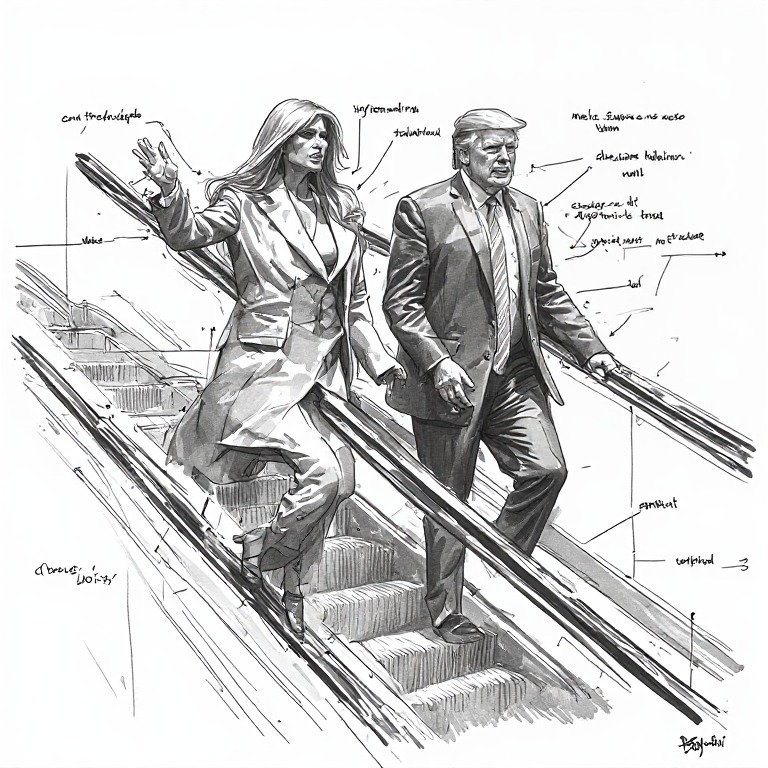
On June 16, 2015, Donald J. Trump descended the golden escalator at Trump Tower and announced his candidacy for President of the United States. It was a moment that felt theatrical, even surreal—like a scene from a reality show. But what followed wasn’t entertainment. It was upheaval.
The man who had once been the life of the party—celebrated by celebrities, courted by politicians, and welcomed on every media platform—was suddenly cast out. Overnight, Trump went from cultural icon to political pariah. The same insiders who had laughed with him at galas, accepted his donations, and praised his business acumen turned on him with ferocity. The backstabbing was swift, coordinated, and revealing.
Why?
Because Trump didn’t just announce a campaign. He declared war on the political machine.
The Betrayal Begins
Before the escalator, Trump was a fixture in American life. He’d hosted The Apprentice, appeared on magazine covers, and donated to both parties. He was photographed with Oprah, praised by Bill Clinton, and toasted by Hollywood. But the moment he challenged the establishment—on immigration, trade, foreign policy, and media corruption—he became a threat.
The political class recoiled. Media outlets that once begged for his interviews now labeled him a xenophobe. Republican elites dismissed him as unserious. Former allies scrambled to distance themselves. It wasn’t just disagreement—it was excommunication.

Policy Heresy
Trump’s platform violated the sacred tenets of both parties:
- He opposed endless war and regime change.
- He rejected globalist trade deals like NAFTA and TPP.
- He demanded border security and immigration enforcement.
- He promised to protect Social Security and Medicare.
- He called out media bias and political correctness.
These weren’t just policy tweaks—they were heresies. And the reaction proved it. The dozen Republican challengers in 2016 mostly echoed establishment orthodoxy. Trump bulldozed through it, exposing how disconnected the ruling class had become from the people they claimed to represent.

Populist Realignment
While elites recoiled, millions of Americans saw something different: a man who spoke plainly, defied scripted politics, and promised to fight for forgotten communities. The populist energy he unleashed couldn’t be contained. What was once fringe—border walls, trade protectionism, skepticism of foreign entanglements—became mainstream.
Today, those same policies enjoy overwhelming public support. Even his critics have adopted versions of his platform. The miracle isn’t that Trump won. It’s that he rewired the political landscape.
The Architecture of Rejection
The escalator moment wasn’t just a descent into a lobby. It was a descent into war with the ruling class. Trump exposed the fragility of political allegiances, the machinery of media manipulation, and the illusion of bipartisan consensus. He didn’t just run for office—he broke the script.
And in doing so, he revealed something profound: that the American people were ready to reclaim agency. That truth, once seen, couldn’t be unseen.