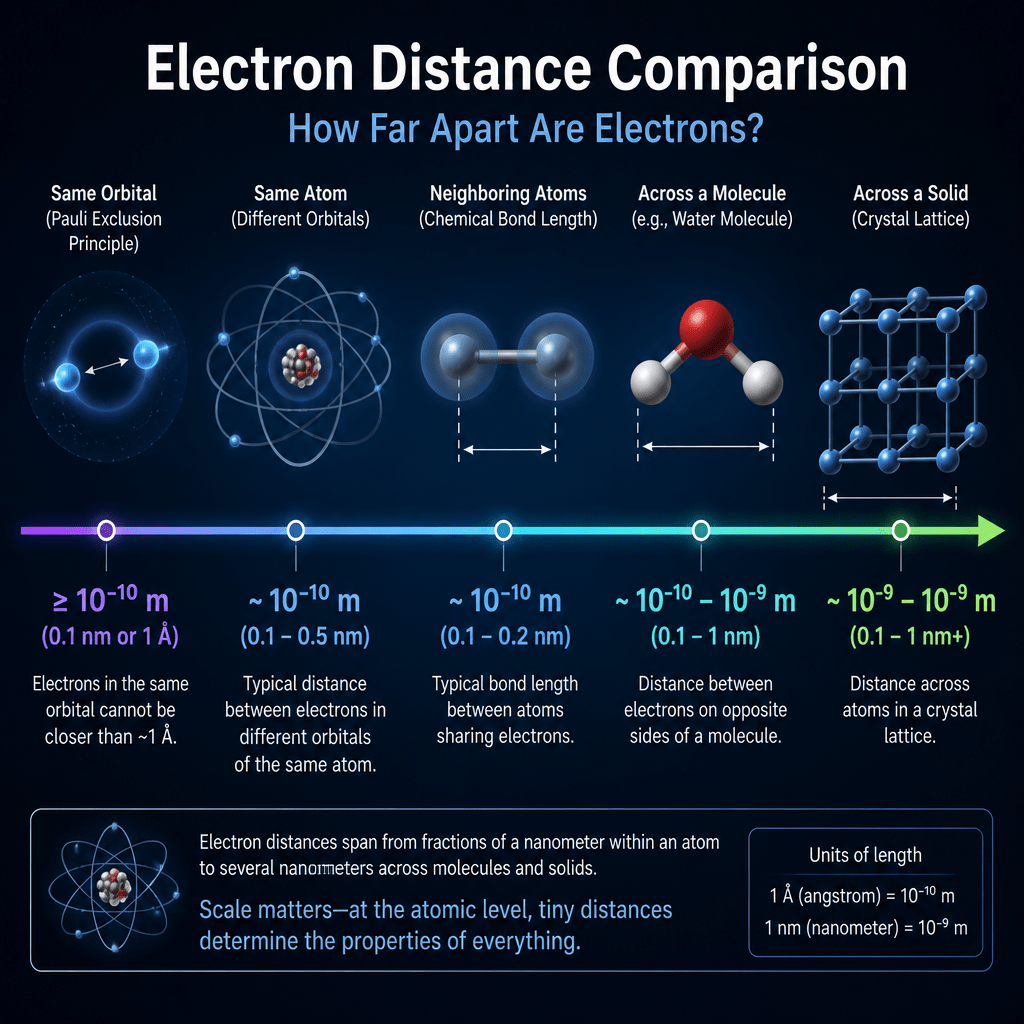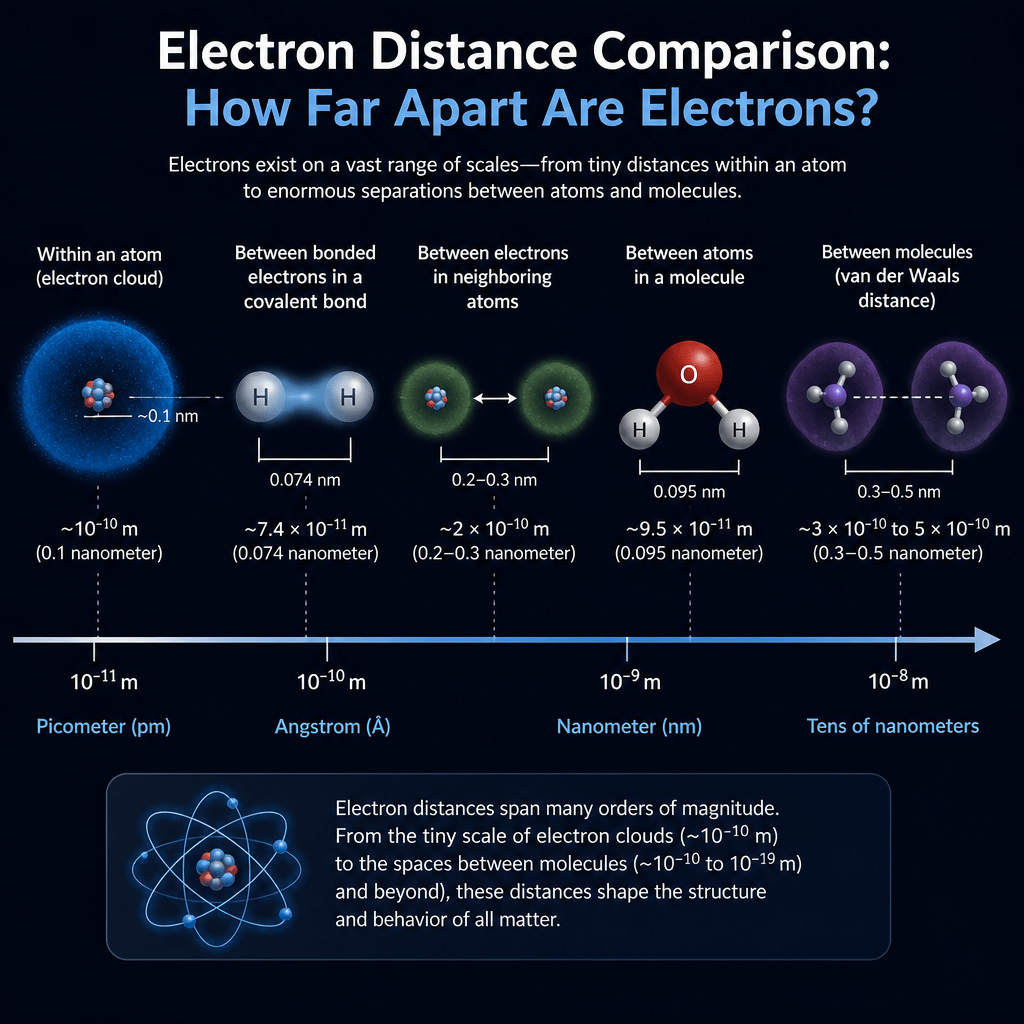
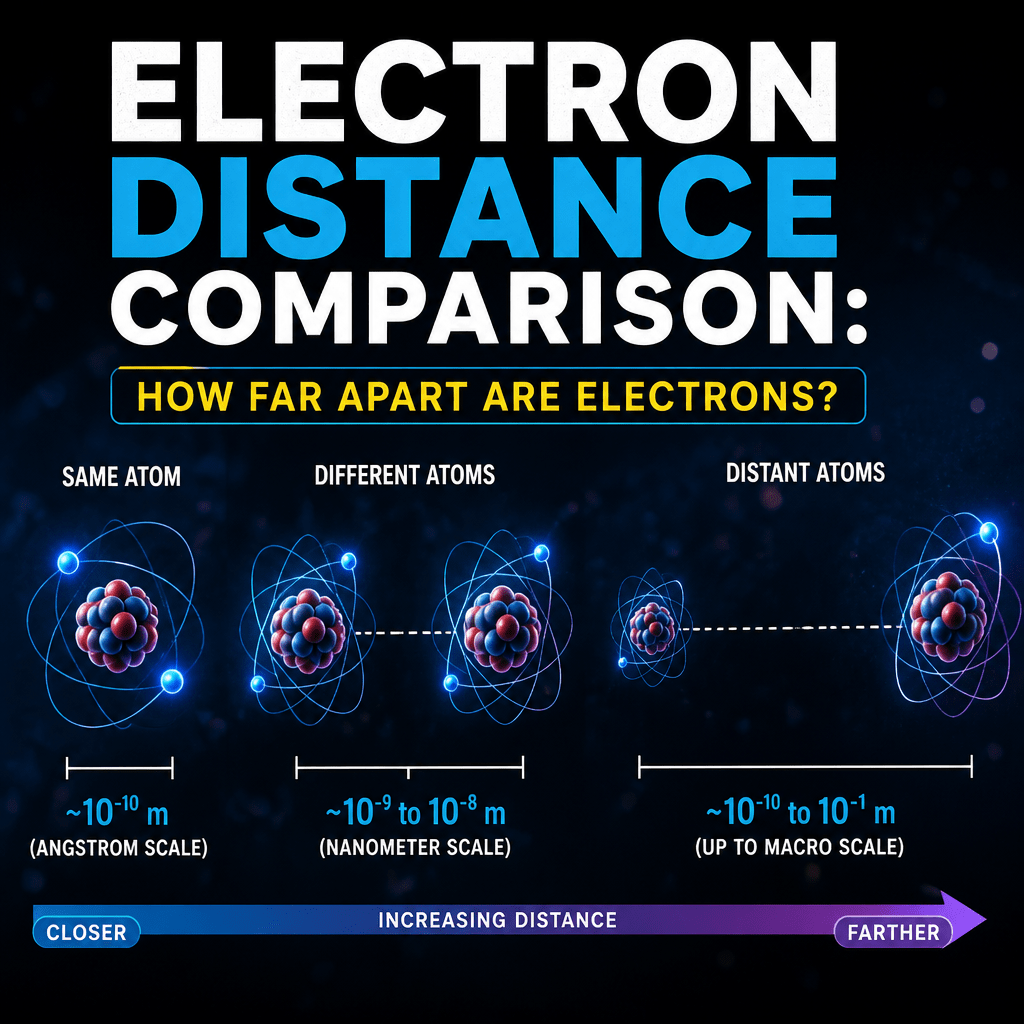
This is one of the most surprising scale facts in physics: if you were the size of an electron, another electron would be about 20,000 electron-widths away. That sounds impossible at first, but it is a powerful way to understand how much empty space exists inside matter.
At first glance, the comparison feels wrong because electrons seem like they should be packed tightly into atoms. In reality, atoms are mostly empty space, and that enormous gap is part of what makes the subatomic world so strange.
The idea also connects to bigger questions about how matter works, how chemistry happens, and why everyday objects feel solid even though they are built from tiny particles separated by huge relative distances. If you want a broader look at how scale and perception shape everyday understanding, see Learning Mastery in New Software: Overcoming the Initial Learning Curve.
What the comparison means
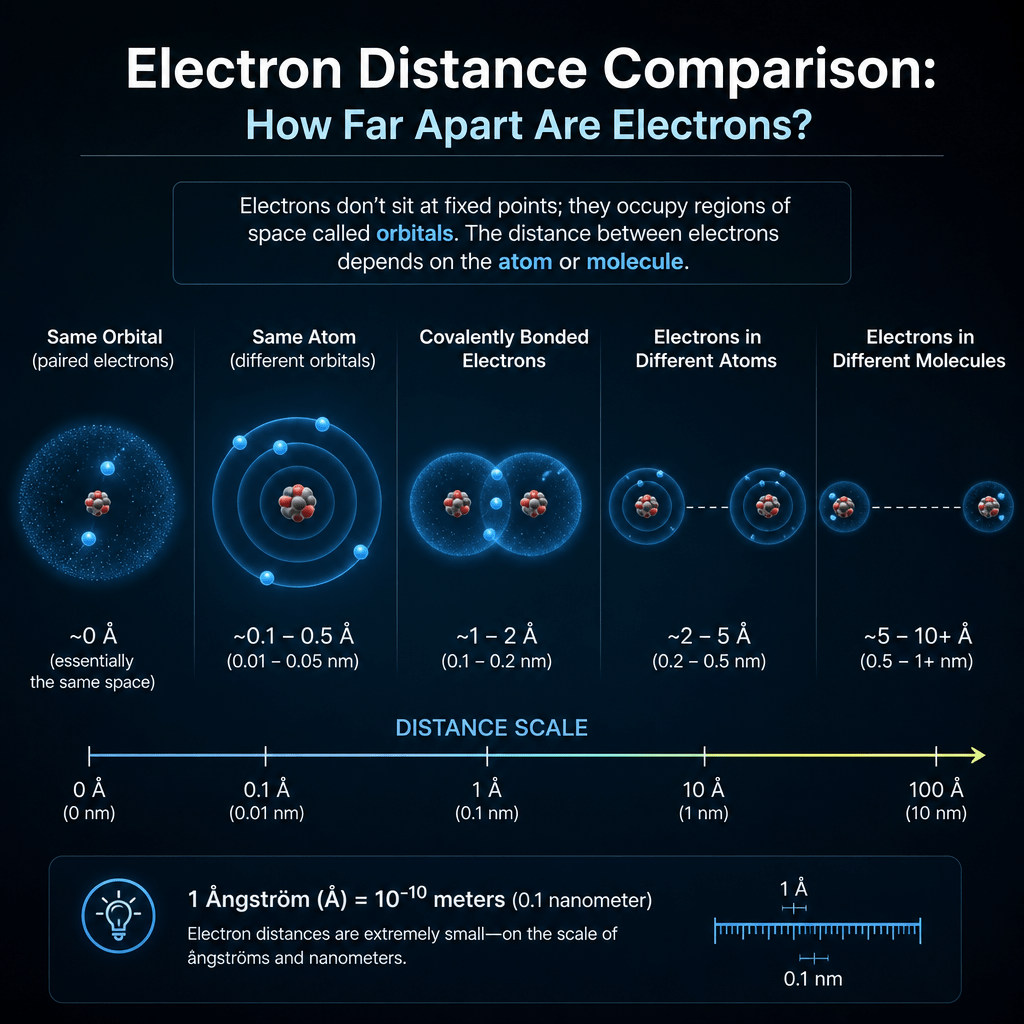
The idea is a scale comparison. If you shrink yourself down to the size of an electron, the next electron would not be right next to you in any crowded way. It would be about 20,000 electron-widths away.
That means:
- an electron is extremely small
- the space between particles is huge relative to their size
- matter is far less “solid” than it feels
Even though electrons are part of every atom, they do not sit packed together like marbles in a box. The structure of matter is much more spread out than our senses suggest.
This distance comparison is useful because it translates an abstract physical fact into a picture the mind can hold. Once the number is in your head, the idea of empty space inside matter becomes much easier to grasp. The phrase Distance is not just about separation in a simple sense; it is about the surprising ratio between size and spacing at the tiniest levels of reality.
Why the distance is so large
Electrons do not orbit in neat little paths like planets. That old image is useful as a starting point, but it is not how modern physics describes them.
Instead, electrons exist in regions of probability around the nucleus. Most of an atom is empty space, and that is what makes the scale comparison so dramatic. The apparent “gap” between particles is not a mistake in the model; it is part of the reality of atomic structure.
A few key points help explain the size of the gap:
- the nucleus is tiny compared with the atom
- electrons are tiny compared with the nucleus
- the space between particles is enormous on the subatomic scale
So when you look at an electron-to-electron distance, the number can become astonishingly large. On human scales, 20,000 widths sounds huge. On atomic scales, it is a reminder that “small” objects can still be separated by an enormous amount of relative space.
It also helps to remember that the atom is not a little solar system. The modern picture is less like tiny balls circling a center and more like a structured cloud of probability shaped by physical laws. That difference matters because it explains why the electron separation inside matter is not just a geometry problem but a quantum one.
A useful way to imagine it
Think about a room with two dust specks.
Now shrink the dust specks down to the size of an electron.
The room between them would become enormous.
That is the kind of gap we are talking about. The exact numbers matter less than the intuition they create: very small objects can still be separated by very large relative distances.
This is why the phrase “20,000 electron-widths away” is more than a fun fact. It gives a vivid way to picture the mostly empty structure of matter. It also helps explain why the world can feel solid even though solidity is not really the result of packed-together particles.
For another example of how tiny details can change our perception of a big topic, read Warm Peak of Earth: Preparing Civilization for Extreme Heat.
Another helpful image is to imagine a stadium with a few grains of sand inside it. If the grains represented electrons, most of the stadium would still be empty. That is not because the particles are missing; it is because the scale between them is so large that the emptiness dominates the picture.
You can also picture a city block with only a handful of people standing in it. From a distance, the block looks occupied. Up close, most of the space is still open. The same idea applies to atoms, only the contrast is far more extreme. That is why the comparison feels so shocking: the emptiness is not a minor detail, but the main feature of the structure.
How atoms create the illusion of solidity
When people hear that atoms are mostly empty space, they often assume that means objects should pass through each other. But that is not what happens.
The reason is that atoms interact through forces, not through little hard surfaces. What we call touch is really a combination of electromagnetic repulsion and quantum rules that prevent matter from occupying the same state in the same place.
In other words, a table feels solid because the electrons in your hand and the electrons in the table resist being squeezed into the same space. You are not pressing solid chunks of matter together. You are experiencing a force field of sorts, even if it does not feel like one in everyday life.
This is one of the most important lessons from the electron distance comparison: the world is not built like a pile of tiny rocks. It is built from particles, fields, and spaces that obey rules very different from the ones we see at human scale.
That also means solidity is an effect, not a simple substance. The surface of a desk, the shell of a rock, and the skin of your hand all seem firm because the underlying particles resist overlap. The sensation is real, but the mechanism behind it is less intuitive than it appears.
So the surprising Distance between electrons is not merely a curiosity. It is part of the reason objects hold their shape, why you do not sink through the floor, and why matter behaves in ways that seem ordinary only because we are used to them.
What this tells us about matter
This comparison changes how we think about the physical world.
We often imagine solid objects as tightly packed. But at the atomic level, that is not true. Matter is made of:
- tiny particles
- large gaps
- forces that hold everything together
That is why matter behaves the way it does. The structure is less like a dense block and more like an active arrangement of energy and probability.
It also means that the “size” of something is not the whole story. An electron is incredibly small, but the space associated with it in an atom is much larger than people expect. The same is true for many concepts in physics: what matters is not only what something is made of, but how its parts are arranged and how they interact.
Another useful way to think about it is to compare density and spacing. A material can contain a great deal of mass and still be mostly empty space at the microscopic level. The reason it feels dense to us is that the forces between particles are strong, not because the particles are jammed together like bricks.
Why this matters for chemistry
Chemistry depends on electrons. The way electrons are arranged determines how atoms bond, how molecules form, and how reactions proceed. If electrons were packed differently, the world of chemistry would look completely different.
That means the large relative distance between electrons is not just a trivia fact. It is part of why atoms have structure, why molecules have shape, and why substances have the properties they do. The spacing between particles influences everything from conductivity to reactivity to the feel of materials.
When chemists describe bonding, they are really talking about the arrangement and sharing of electrons across that vast relative space. Bonds are not little sticks connecting hard spheres; they are energetic relationships shaped by quantum rules. That is why the electron-to-electron gap matters so much even though it is invisible to us.
Why this matters for physics
Physics uses comparisons like this to show how intuition can fail. At the human level, we expect objects to be crowded together if they are made of tiny pieces. In the subatomic world, the opposite can be true. The emptiness inside atoms is not a weakness in the system; it is a fundamental feature of it.
That is also why modern physics uses probability, wave behavior, and fields to describe particles. The picture is more subtle than a simple model of hard balls moving through space.
This also explains why scale is so important in science. What seems negligible in one context can dominate in another. A difference that is invisible to the eye can still determine the shape of reality at the smallest levels. The striking Distance between electrons is a perfect example of how a simple ratio can reveal a much deeper structure.
Putting the number into perspective
The number 20,000 is easy to say, but it becomes more meaningful when you imagine it as a ratio. If one electron-width is your unit, then the next electron is not a few units away or even a few hundred units away. It is thousands of widths away. That is a huge separation in relative terms.
People often underestimate ratios because the absolute number is small by everyday standards. But in physics, a ratio can matter more than a raw measurement. A tiny object with a huge spacing ratio can create a system that feels open, flexible, and governed by fields rather than contact.
That is why scientists and educators use analogies so often. The human brain understands stories and comparisons faster than raw scale data. Saying another electron is about 20,000 electron-widths away creates a vivid mental picture that does more work than a dry number alone.
It is the same reason maps, models, and diagrams are so useful. They shrink reality into something the mind can navigate. This particular comparison is especially powerful because it reveals the hidden spaciousness of matter without requiring advanced mathematics.
Common questions about electron spacing
Are electrons actually spheres with a fixed width?
Not exactly. The phrase “electron-width” is a simplified comparison, useful for scale rather than a strict description of physical shape. Electrons are treated as elementary particles, so the point is to communicate relative size and distance in a way people can visualize.
In other words, the wording is a teaching tool. It is meant to show the scale of the separation, not to claim that electrons are tiny billiard balls. That distinction matters, because the real behavior of electrons is described by quantum mechanics rather than by classical shapes.
Does empty space mean nothing is there?
No. Empty space in physics does not necessarily mean an absence of all activity. Fields, forces, and quantum behavior still matter. The term “empty” simply means there is far less ordinary matter there than people would expect from a casual view of atoms.
So when we say atoms are mostly empty space, we are not saying they are meaningless voids. We are saying the material parts occupy only a small fraction of the total volume, while the rest is governed by interactions and probabilities that are not visible in everyday life.
Why use a comparison instead of exact measurements?
Because comparisons help the brain understand scale. Exact scientific numbers are important, but they can be hard to imagine. Saying that another electron would be about 20,000 electron-widths away creates a clear mental picture while keeping the meaning intact.
That does not make the comparison less scientific. It makes it more accessible. Good science communication often starts with a simple comparison and then adds the deeper explanation behind it.
Does this apply to all atoms equally?
The exact spacing varies depending on the atom and the state of its electrons. Still, the larger lesson remains the same: atomic structure contains far more space than solid-looking objects suggest.
Some atoms are larger, some are smaller, and electron arrangements can differ depending on energy and bonding. Even so, the overall picture remains consistent. The microscopic world is spacious in ways that do not match our gut feeling.
Why this fact matters
This kind of scale comparison helps explain several things:
- why atoms behave the way they do
- why chemistry depends on electron arrangement
- why quantum physics is so different from everyday experience
It also helps people understand that the world is built on space, not just matter. Once you notice that, many other scientific ideas become easier to picture. A fact like “20,000 electron-widths away” is memorable because it turns an abstract point into an image you can hold in your mind.
There is also a philosophical side to it. We trust our senses to tell us what the world is like, but scale can hide the truth. A desk looks solid, water looks continuous, and air looks empty, yet each of those appearances misses the deeper structure underneath. The electron comparison is a good reminder that reality often looks very different when you zoom in far enough.
For a different kind of perspective on how our expectations can be misleading, you may also enjoy 10 Minute Reset for a Positive Peace of Mind.
It also shows why careful language matters in science. Everyday words like “solid,” “empty,” and “touch” are useful, but they only describe the surface of what is happening. The deeper explanation involves forces, probabilities, and the unusual behavior of matter at tiny scales. That is what makes this comparison so useful: it points beyond intuition without losing clarity.
For readers who enjoy the broader scientific context, the National Geographic Education article on atoms is a helpful overview of atomic structure and the way subatomic particles fit together.
The big takeaway
If you were the size of an electron, another electron would be about 20,000 electron-widths away.
That enormous distance shows just how empty atoms really are.
It is a simple comparison, but it reveals a deep truth:
The universe at tiny scales is far more spacious than it looks.
Once you understand that, the strange behavior of matter becomes a little easier to appreciate. Electrons are not crowded together in a miniature solid world. They exist within a structure shaped by probability, force, and an astonishing amount of space.
The next time you think about matter, remember that the picture your senses give you is only part of the story. Beneath the surface, there is a great deal of room, and that hidden spacing is one of the reasons the physical world works the way it does. In that sense, the Distance between electrons is not just a fascinating number; it is a doorway into the deeper architecture of reality.