
A Restorationist Essay
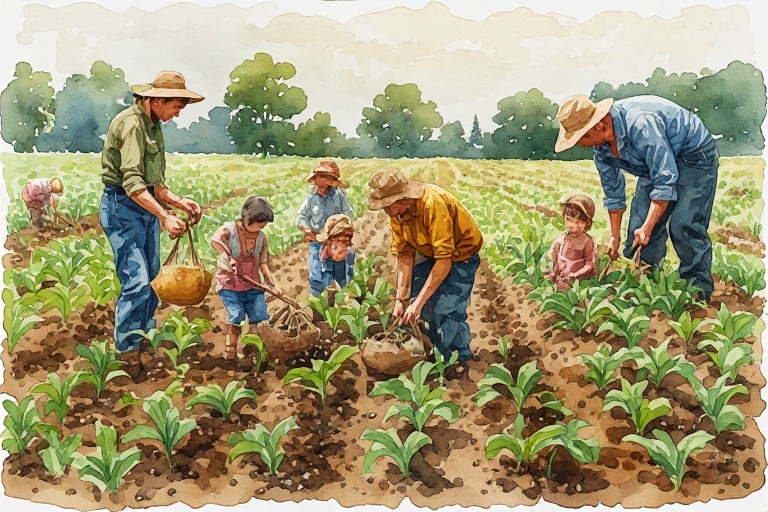
For most of human history, the barrier to higher learning has never been intelligence, curiosity, or willingness. It has been survival. People worked because they had to, not because the work formed them. They labored to stay alive, not to become wise. The mind was a luxury reserved for those who could afford not to starve.
This is the quiet truth beneath every era of limited education: people did not avoid learning because they lacked desire — they avoided it because they lacked time.
When a person spends the best hours of their life fighting for rent, food, and medical bills, the idea of studying philosophy or history becomes a kind of cruelty. It is not that they do not want it. It is that the structure of their world denies it.
The Founders understood this intuitively. Their classical formation was possible only because their society — especially in New England — created enough stability, literacy, and civic expectation to make learning a public duty rather than a private indulgence. They were not superhuman. They were formed.
But the 20th century broke that chain. Industrialization, credentialism, and the collapse of classical schooling created a new kind of scarcity: not scarcity of food, but scarcity of time, attention, and formation. The average American became too busy surviving to become a citizen‑philosopher. Education became job training. Learning became a credential. Wisdom became a hobby for the privileged.
This is why the modern era feels like a kind of intellectual Dark Age. Not because people are less capable, but because the structure of their lives leaves no room for the kind of formation that once produced statesmen, thinkers, and citizens.
But the Age of Abundance changes everything.
When AI and automation remove the economic necessity of work, the old barriers collapse. For the first time in history, millions of people will have:
- Time — no longer consumed by survival
- Security — no longer tied to employment
- Curiosity — long suppressed, now awakened
- Desire — to justify their presence in a world where machines do the labor
The very conditions that once made classical education impossible for most people will reverse. What scarcity once prevented, abundance will demand.
Because abundance without formation is not freedom — it is drift. A society where people no longer need to work must give them something worth living for. Without purpose, abundance becomes decadence. Without meaning, leisure becomes despair. Without formation, freedom becomes chaos.
This is why classical education returns, not as nostalgia, but as necessity.
In the Age of Abundance, classical learning becomes the new civic infrastructure:
- Philosophy teaches people how to live.
- History teaches people where they stand.
- Rhetoric teaches people how to speak and reason.
- Logic teaches people how to think.
- Moral philosophy teaches people how to choose.
- Civic formation teaches people how to govern themselves.
These are the capacities machines cannot replace. These are the virtues abundance requires.
The medieval world rediscovered classical education when stability returned and survival no longer consumed every waking hour. The Renaissance was not a miracle — it was the predictable result of a society that finally had time to think again.
We are approaching the same hinge in history.
The post‑work world will not eliminate the need for education. It will intensify it. It will universalize it. It will restore it.
The Age of Abundance will not make people useless. It will make them available — available for formation, for meaning, for citizenship, for the kind of education that once shaped the Founders.
The Dark Age of modern schooling ends when survival ends. And in its place rises a new classical era, not for the few, but for the many.
A society that no longer needs workers will need citizens. A society that no longer needs labor will need wisdom. A society that no longer needs productivity will need purpose.
And classical education — the oldest formation system humanity ever built — becomes the architecture of that future.