Constitution Covenant is best understood through the Founders’ worldview as a living agreement between the people and the government they created. It was never meant to be just a technical legal document or a cold set of rules. Instead, it was designed as a constitutional framework grounded in popular sovereignty, passed down through generations, and sustained by an informed and responsible citizenry.
So, what is the best answer to the question? In broad terms, yes: the Founders would agree that Americans are born into the Constitution Covenant. But they would also stress an important truth that is often missed today: this covenant comes with duties as well as rights. It is not a passive inheritance. It is a shared responsibility.
Constitution Covenant and the Founders’ View of Sovereignty
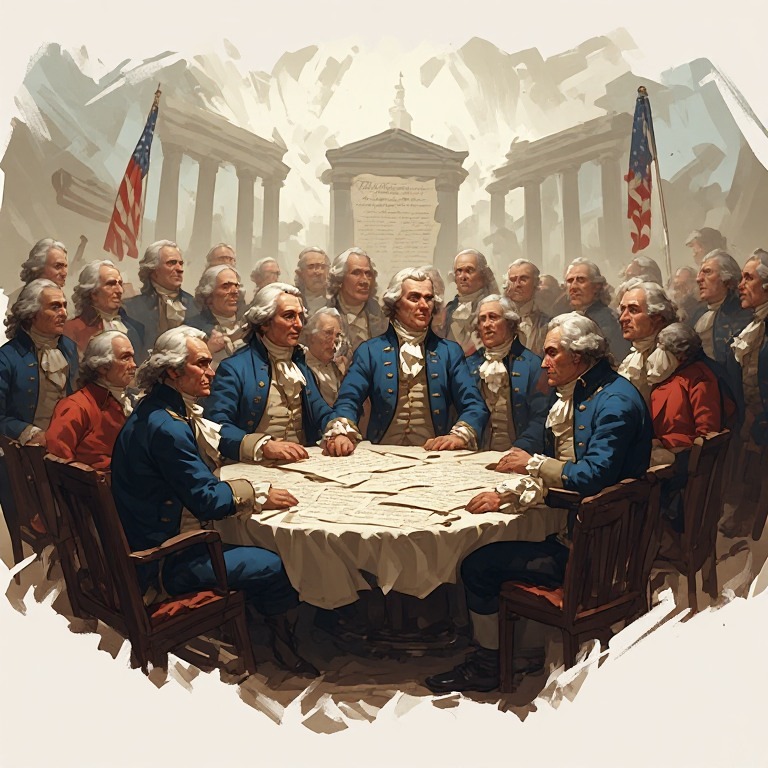
The Constitution was drafted in 1787, ratified by the states between 1787 and 1788, and put into effect in 1789. Its authority was never supposed to come from a king, a military leader, or a remote elite. It begins with the powerful words, “We the People,” and those words define the entire system.
The Founders did not say, “We the states,” “We the colonies,” or “We the government.” They said, “We the People… do ordain and establish this Constitution.” That choice of language is not accidental. It shows that the source of authority is the people themselves.
This is why the Constitution Covenant can be understood in covenantal terms. The people are not subjects living under arbitrary rule. They are the sovereign source of political legitimacy. The government exists because the people established it, and it remains legitimate only as long as it serves the purposes for which it was created.
The Declaration of Independence and the Constitution Covenant
Although the Constitution was not legally retroactive to July 4, 1776, the principle behind it certainly was. The Declaration of Independence laid the moral and political foundation for the American system. It declared that governments derive “their just powers from the consent of the governed.”
That idea sits at the center of the Constitution Covenant. The Declaration articulated the philosophy; the Constitution gave it structure.
In that sense, the Constitution did not invent popular sovereignty from nothing. It formalized and protected a principle already announced to the world. The Declaration stated that the people are the rightful source of government authority. The Constitution then built a republic designed to preserve that authority through limited powers, separated branches, and checks and balances.
This distinction matters because it shows that the Constitution was not a replacement for the Declaration’s principles. It was their practical expression.
Constitution Covenant: Why Future Generations Are Included
One of the most important features of the Founders’ design is that they did not think the Constitution Covenant applied only to the generation that wrote or ratified it. They assumed it would bind future Americans as well.
No one is born and handed a signature page. Instead, each generation inherits the benefits, protections, and obligations of the constitutional order. That means future citizens inherit:
– the rights secured by the Constitution
– protection against arbitrary power
– the responsibilities of self-government
– the duty to preserve the republic
This is a crucial point. The Founders did not treat citizenship as a passive condition. They viewed it as a civic trust. Every generation enters the Constitution Covenant by birth into the political community and by participation in its preservation.
James Wilson, one of the earliest Supreme Court Justices and a major constitutional thinker, captured this logic when he said, “The people are the masters of the Constitution.” That statement reflects the Founders’ vision perfectly. The people are not trapped by the Constitution; they are its rightful stewards.
Moral Formation and the Success of the Constitution Covenant
The Founders understood that no constitutional system can survive without educated and morally formed citizens. A republic does not sustain itself automatically. It depends on people who know its principles, respect its limits, and are willing to defend its structure.
This is where the Constitution Covenant becomes more than a legal idea. It becomes a moral and civic one.
The Founders believed citizens needed:
– civic understanding
– historical memory
– moral discipline
– the ability to reason clearly
– the ability to judge character and leadership
Thomas Jefferson warned, “If a nation expects to be ignorant and free… it expects what never was and never will be.” His point was simple and enduring: freedom requires knowledge. A people cannot preserve a covenant they do not understand.
When citizens forget how government works, they become vulnerable to manipulation. When they do not understand the roles of Congress, the presidency, the courts, and the states, they cannot hold power accountable in any meaningful way. When that happens, the covenant weakens.
The Civic Duty Hidden Inside the Constitution Covenant
One of the most overlooked parts of the Founders’ design is that rights and responsibilities belong together. Americans inherit liberty, but they also inherit the duty to protect the system that makes liberty possible.
That means each generation must do more than enjoy the Constitution. It must learn it, defend it, and pass it on.
This includes:
– understanding the oath of office
– knowing the limits of government power
– recognizing the role of the citizen in self-government
– staying alert to corruption and overreach
– participating with principle rather than tribal loyalty
In the Founders’ view, the republic survives only when the people act as guardians rather than spectators. A Constitution Covenant cannot thrive if citizens treat freedom as something they consume instead of something they preserve.
Why the Constitution Covenant Is Threatened Today
The modern crisis is not simply political disagreement. It is civic forgetfulness. Many Americans inherit the Constitution but not the understanding of it. That creates a dangerous gap between possession and comprehension.
When people vote by party instead of principle, they weaken the republic. When they outsource judgment to media, slogans, or social pressure, they stop acting as sovereign citizens. When they no longer understand the structure of government, they cannot properly defend it. And when they cease to see themselves as guardians of the constitutional order, the system begins to drift.
This is the real challenge facing the Constitution Covenant today: the people still possess the inheritance, but too often they no longer know what they have inherited.
Constitution Covenant Explained: The Best Answer
So what is the clearest and most accurate answer?
Yes, in the Founders’ worldview, Americans are born into the Constitution Covenant.
The Constitution was adopted by the people of the states in 1787–1789.
Its legitimacy rests on the Declaration’s principle of consent, announced in 1776.
The Founders believed future citizens would inherit both rights and responsibilities.
They assumed citizens would be educated enough to preserve the system.
And they understood that the covenant weakens when the people forget their duties.
That is the heart of the matter. The Constitution Covenant is not merely a historical artifact. It is a generational responsibility. Every American is born into its protections, but also into the obligation to understand, uphold, and renew it.
In the end, the Founders did create a covenantal republic. The Constitution Covenant lives whenever citizens recognize that they are not just beneficiaries of liberty, but stewards of it.