
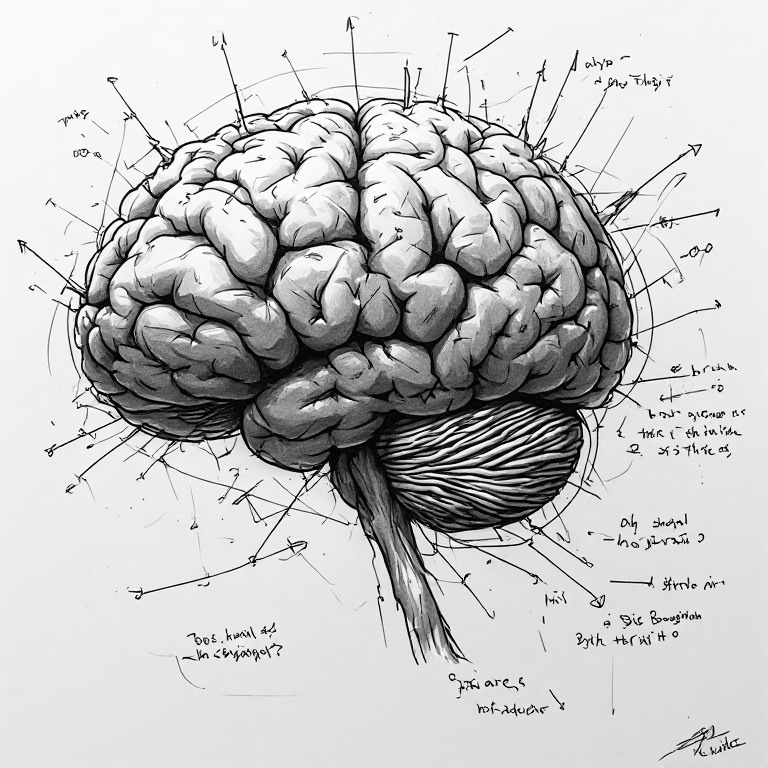
The Population Architecture of Emotional Hijack
“Most people imagine political disagreement as a clash of ideas. It isn’t. It’s a clash of emotional grammars — two different ways of processing threat, meaning, and moral urgency. And once you see this, the entire political landscape becomes legible.“
I. The Human Baseline: Most People Are Limbic-First Under Stress
Neuroscience is blunt on this point: The majority of the population — roughly two-thirds — defaults to limbic-first processing whenever identity, morality, or group belonging is at stake.
This doesn’t mean they are irrational. It means they are human.
The limbic system is fast, ancient, and survival-oriented. The prefrontal cortex is slow, expensive, and fragile under stress.
Political communication is engineered to hit the limbic system first.
So the real question is not who is limbic-driven. It’s how different cultures train people to handle limbic activation once it occurs.
II. Two Moral Grammars: Restraint vs. Expression
Across Western democracies, the political divide is not primarily about policy. It is about formation — the emotional training people receive from their cultural tribe.
A. Restraint-Based Formation (more common on the right)
This grammar teaches:
- emotional privacy
- self-command
- duty before expression
- suspicion of mass emotional movements
- preference for order and stability
This creates a cognitive buffer between stimulus and response. Emotion is felt, but it is contained.
B. Expression-Based Formation (more common on the left)
This grammar teaches:
- emotional authenticity
- visibility of feeling
- moral urgency
- collective emotional solidarity
- externalization of harm
This creates a cognitive accelerant between stimulus and response. Emotion is felt, and it is expressed.
Neither grammar is superior. Each has strengths and vulnerabilities.
But they produce different political behaviors under emotional hijack.
III. Why It Looks Like One Side Is More Emotional
The key insight:
Both sides experience limbic activation. They simply express it differently.
Restraint-based cultures
Emotion is submerged. The rhetoric is calm, orderly, procedural. The emotional energy is channeled into stability, boundaries, and continuity.
Expression-based cultures
Emotion is foregrounded. The rhetoric is urgent, moralized, and mobilizing. The emotional energy is channeled into visibility, solidarity, and change.
This is why observers often mistake visibility for intensity.
The right feels as much as the left. The left shows more than the right.
IV. The Population-Level Pattern
When you zoom out, a clear architecture emerges:
- 30–40% of people are naturally more limbic-reactive in daily life
- 60–70% become limbic-first under political or identity threat
- 80–90% become limbic-first during mass emotional events (crisis, media panic, war, election season)
This is not ideological. It is neurological.
Political tribes simply activate and reward different emotional pathways.
V. The Restorationist Conclusion
The political divide is not a battle between the rational and the irrational. It is a battle between two emotional operating systems, each with its own virtues and blind spots.
One system treats emotion as something to be governed. The other treats emotion as something to be revealed.
Both are coherent. Both are human. Both can be hijacked.
And until people understand the architecture of their own emotional formation, they will remain vulnerable to anyone who knows how to pull the limbic lever.