The Promethean Action website is more than a news page or political blog. It is a platform for examining history, economics, culture, and power through a deeper civilizational lens. The site’s central concern is how human creativity, moral choices, and productive activity shape the future of nations and the world.
The name itself matters. “Promethean” suggests invention, discovery, and the refusal to accept limits as permanent. That idea runs through the site’s way of thinking. It asks what kind of world we are building and what kind of human beings that world encourages us to become. For me, this perspective is useful because it connects current events to first principles rather than treating every headline as an isolated incident. Promethean Action presents those questions in a way that links personal responsibility with the larger direction of civilization.
For readers encountering the site for the first time, Promethean Action can be understood as an invitation to think historically and constructively. It does not ask us merely to identify what is wrong. It asks what institutions, ideas, and forms of cooperation could make a better future possible.
Table of Contents
What Is Promethean Action?
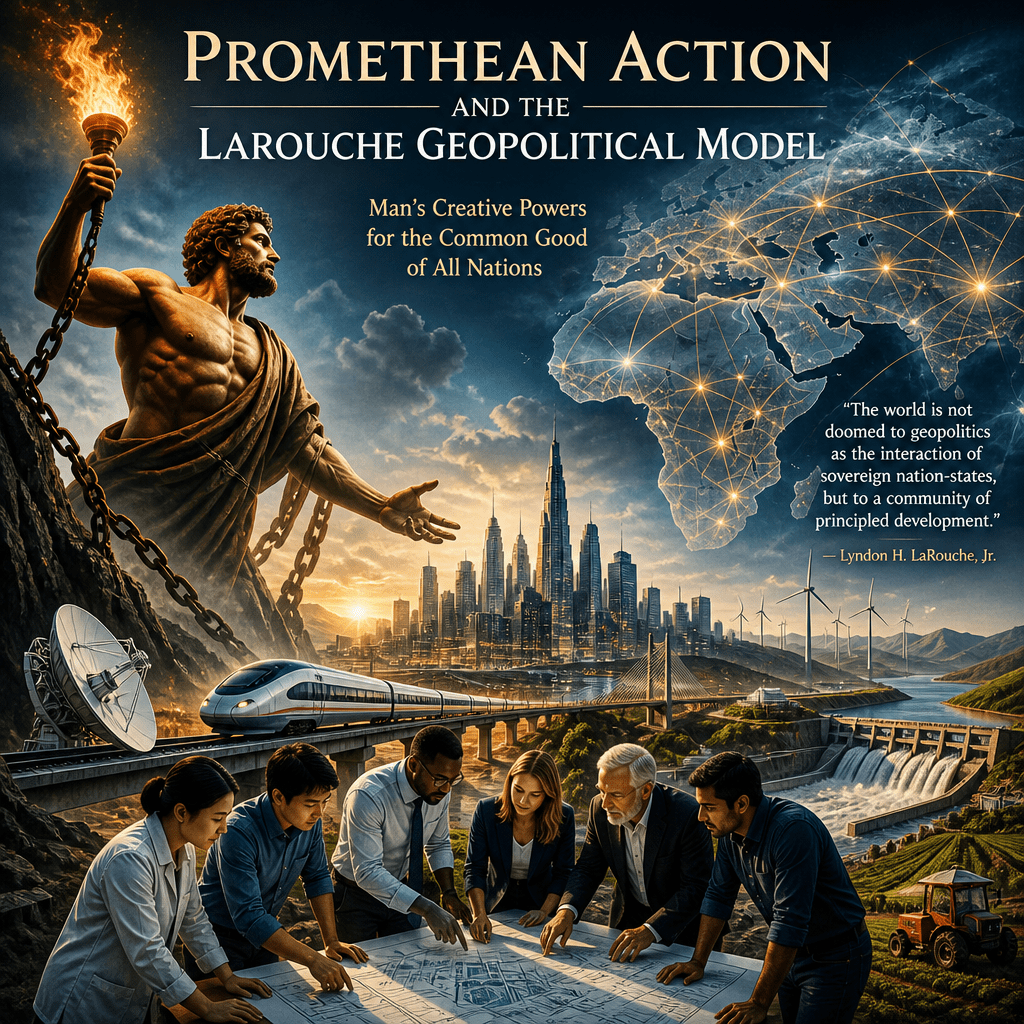
Promethean Action is valuable to me because it encourages pattern recognition. It pushes readers to look beyond personalities, slogans, and short-term political conflict and ask what is driving events underneath. How does a nation understand its purpose? What institutions increase its creative power? Which economic arrangements strengthen independence, and which create dependency?
The value of Promethean Action is not limited to a particular political position or current controversy. Its deeper contribution is methodological. It encourages readers to connect the immediate event with the historical process behind it, then to ask what kind of human future is being supported by the choices under consideration.
This approach treats political life as connected to the development of the human person. Education, scientific discovery, infrastructure, industry, culture, and family life are not separate subjects. They form a larger system. A society’s choices reveal what it believes human beings are capable of becoming.
In this context, Promethean Action challenges fatalism. A fatalistic outlook assumes that the future is fixed by technology, financial power, demographics, or inherited conflict. A creative outlook asks what new discoveries, institutions, and forms of cooperation could change those conditions. That does not mean ignoring constraints. It means refusing to confuse current limits with permanent laws.
In this sense, Promethean Action is a defense of agency. Human beings inherit circumstances, but they also create new circumstances through discovery and organized action. The question is not whether constraints exist; it is whether a society has the imagination and institutions required to transform them.
This is why the Promethean Action perspective appeals to me. It considers politics a form of human action rather than a spectator sport. Citizens are not merely consumers of news. They can study history, identify the principles behind policy, and participate in shaping a better direction.
The LaRouche Geopolitical Model in Plain Language
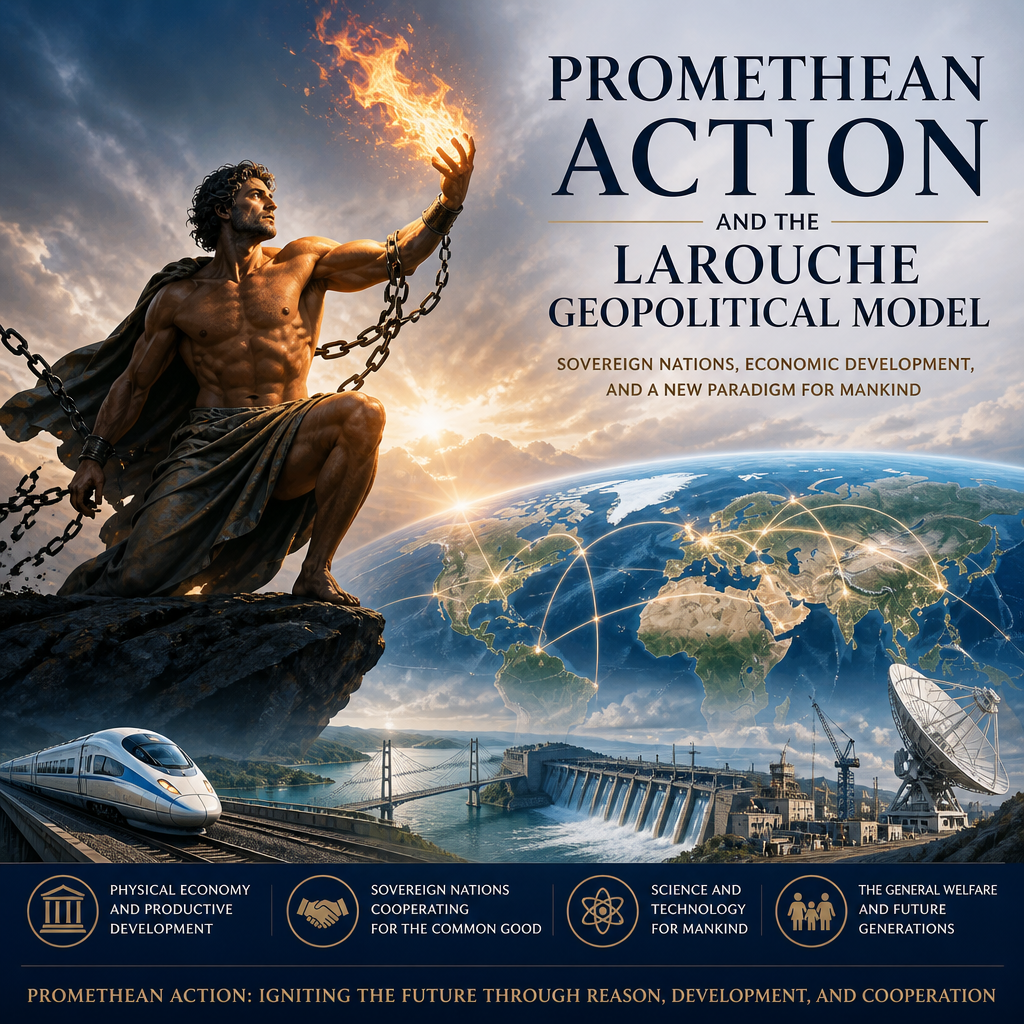
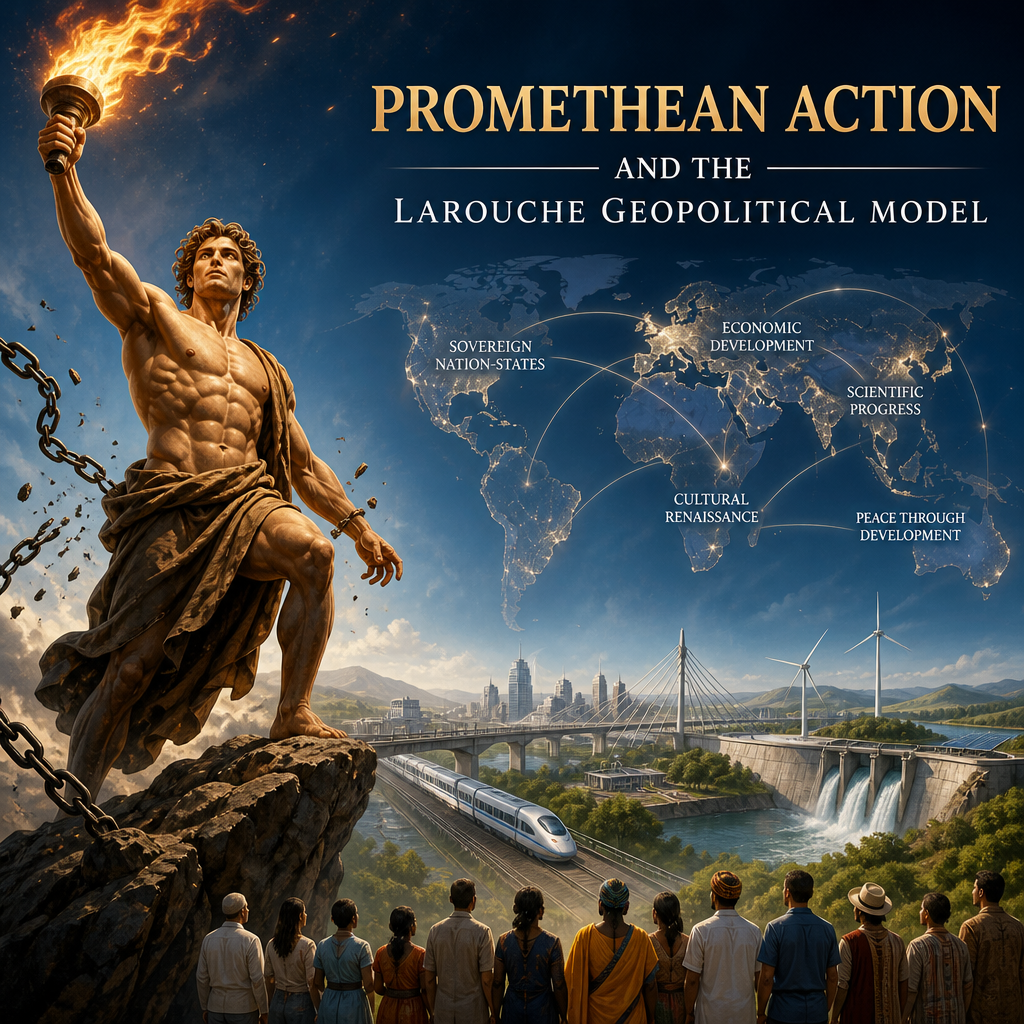
The LaRouche Geopolitical Model is a framework for understanding world affairs as a contest between different development paths. At its core, it says that geopolitics is not only about territory, weapons, diplomacy, or the personalities of national leaders. It is also about productive power, cultural outlook, and the moral purpose of a society. Within Promethean Action, this model provides a structured way to connect those dimensions.
That is a major reason I use it. Instead of seeing the world as a simple clash of parties or personalities, the model asks deeper questions:
- What is the real engine of a nation’s strength?
- Does a policy increase human creativity and productivity?
- Does it improve the material conditions of life?
- Does it encourage cooperation, or does it reward permanent conflict?
- Does it serve a higher civilizational purpose?
The model places economics at the center, but not in a narrow sense. It is not simply about money, market prices, or financial transactions. It is about whether a society can generate energy, infrastructure, science, transportation, manufacturing, and skilled labor. These capabilities determine what a population can actually do.
The use of Promethean Action alongside the LaRouche model makes this distinction especially clear. Economic strength is treated as the capacity to improve the conditions of human life, not merely as the accumulation of financial claims. That shifts attention from appearances to productive reality.
Through the lens of Promethean Action, a country may possess impressive financial assets while losing its industrial capacity. It may appear wealthy on paper while becoming dependent on imported essentials, fragile supply chains, or speculative investment. The model asks us to distinguish financial claims from physical economic strength.
The LaRouche model gives Promethean Action a practical way to examine power. A nation’s freedom depends partly on whether it can produce essential goods, maintain infrastructure, educate its population, and develop new technologies. Political independence without productive capability can become only a formal independence.
This distinction makes the framework practical. It ties foreign policy to real-world capability. A nation that cannot build, produce, educate, or maintain critical infrastructure has less freedom of action, regardless of how powerful its rhetoric may sound. Conversely, productive cooperation between nations can create a foundation for peace because it gives each country a constructive interest in the success of others.
This is where Promethean Action highlights the difference between a win-lose balance of power and a development-oriented relationship. In a purely adversarial model, one country’s gain is assumed to be another’s loss. In a development model, scientific progress and improved infrastructure can raise the potential of several nations at once. That does not eliminate political disagreements, but it changes the question from “Who controls whom?” to “What can we build together?”
This does not mean that the model dismisses security, sovereignty, or conflict. Instead, it places those concerns in a broader setting. A nation needs security so that its people can develop, but security should not become an excuse for permanent mobilization or the suppression of productive cooperation. Durable security is strengthened when populations have a credible future.
Reading the World’s Moral Grammar
When I talk about the world’s Moral Grammar, I mean the hidden structure of values that shapes decisions, institutions, and outcomes. Every civilization speaks this grammar, whether it admits it or not. Some systems reward creativity and responsibility. Others reward extraction, fear, and short-term gain. In my analysis, Promethean Action provides a vocabulary for identifying those differences.
Promethean Action also helps make moral grammar visible in ordinary policy debates. A discussion about interest rates, energy, transportation, or trade may appear technical, yet each decision contains an assumption about whose needs matter and what kind of future deserves investment.
A moral grammar is visible in the questions a society considers legitimate. Does it believe that every child should have the opportunity to develop? Does it treat workers as creative contributors or as disposable costs? Does it view scientific knowledge as a public benefit or merely as a commercial asset? Does it understand national sovereignty as a basis for cooperation or as an excuse for domination?
Reading through Promethean Action means looking for these assumptions beneath public language. Words such as “efficiency,” “security,” “growth,” and “stability” can describe legitimate goals, but they can also conceal who bears the cost of achieving them. Moral analysis requires asking what those words mean in lived experience.
The LaRouche framework becomes useful to me because it helps interpret both the visible policy and the value judgment inside it. A budget is not only a list of numbers. It expresses priorities. A transportation plan is not only an engineering document. It reveals whether leaders believe in long-term growth. A foreign policy is not only a security strategy. It shows whether a nation expects humanity to remain trapped in conflict or believes that common development is possible.
I use the model as a guide by asking:
- What kind of future does this policy make possible?
- Who benefits, and who is sacrificed?
- Does this system produce stronger families, communities, and nations?
- Does it expand the productive powers of labor?
- Does it elevate human life, or does it merely manage decline?
- Does it encourage citizens to think creatively and take responsibility?
These questions do not provide an automatic answer to every political dispute. They establish a standard for judging the direction of a policy. They also prevent analysis from becoming morally empty. A policy can be efficient in a narrow administrative sense and still be destructive if it reduces human potential.
One benefit of Promethean Action is that it joins intention and consequence. Good intentions do not automatically produce good results, and harmful systems can sometimes use attractive language. The moral grammar of a policy is therefore revealed not only by what its advocates say, but also by the capabilities it builds and the burdens it imposes.
How I Use the Model to Understand Events
In a Promethean Action analysis, I begin by separating immediate events from long-term processes. A crisis may be triggered by a particular speech, election, sanction, or military incident, but those events usually rest on deeper economic and cultural conditions. Looking only at the immediate trigger can make history seem random.
My use of Promethean Action begins with that same separation between event and process. I try to identify what has changed recently, what has been developing for years, and what older assumptions continue to shape the present. This prevents a dramatic headline from becoming the entire explanation.
Following the Promethean Action method, I next examine the physical consequences of a policy. If a trade decision weakens domestic industry and makes a nation dependent on fragile supply chains, I do not see that as neutral. It is a moral choice with strategic consequences. If an energy policy raises costs while discouraging reliable production, I ask who bears the burden and whether the policy expands or contracts human freedom.
Promethean Action is especially useful here because it directs attention toward measurable capacities. Can people obtain energy, housing, education, transportation, health care, and meaningful work? Can a country maintain its infrastructure and train the next generation? These questions connect broad principles with observable conditions.
I also compare stated intentions with actual results. A foreign policy may describe itself as promoting stability while supporting conditions that produce endless conflict. A financial reform may promise prosperity while transferring productive assets into speculative channels. The model encourages me to test political language against measurable outcomes.
Another step in Promethean Action is to look for the creative potential inside a crisis. A shortage can expose the need for new infrastructure. A diplomatic conflict can reveal the failure of an outdated security arrangement. A technological breakthrough can open a path to greater productivity, provided institutions make it broadly available. This does not mean romanticizing hardship. It means asking what constructive response could transform a dangerous condition.
The model also helps me evaluate proposals rather than merely criticize existing policies. A serious alternative should explain how it will improve energy supply, transportation, education, scientific research, manufacturing, public health, and cultural confidence. Moral language becomes credible when it is connected to a workable program for improving life.
This emphasis on material conditions does not reduce morality to economics. Instead, it shows that moral commitments require practical means. A society cannot claim to value human dignity while allowing preventable poverty, collapsing infrastructure, or permanent unemployment to become normal. Ideals must be expressed through institutions capable of sustaining them.
A further step is comparison. I compare policies with their alternatives rather than judging them in isolation. A proposal that appears modest may be inadequate if a more productive and achievable option exists. Likewise, a large project should be evaluated by its engineering, financing, labor, and environmental realities rather than by its symbolism alone.
The best use of Promethean Action therefore combines imagination with verification. I want to ask what could be built, but I also want to know whether the proposal has credible resources, competent institutions, and a realistic sequence of implementation. Creative thinking becomes responsible when it can withstand evidence.
Why Use This Model Over Others?
Many available models are useful for particular purposes. A military model can explain alliances and deterrence. A market model can describe incentives and trade. An identity-based model can illuminate the power of language, religion, and historical memory. A diplomatic model can clarify negotiations between governments.
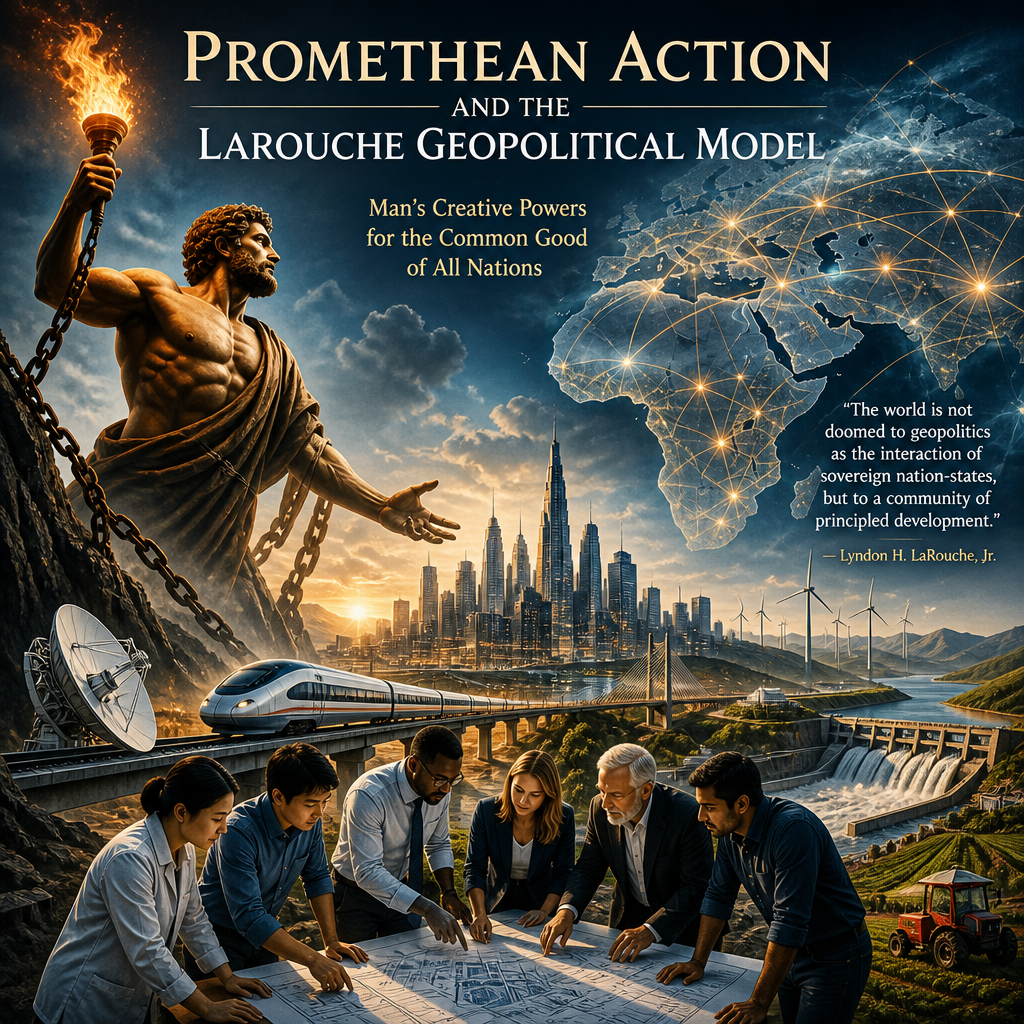
The strength of the LaRouche approach is that it attempts to connect these levels. It asks how military power depends on industrial capacity, how markets affect productive investment, how culture shapes political choices, and how moral assumptions influence long-term development. It does not treat economics, strategy, and ethics as sealed compartments. This integrative quality is why Promethean Action offers more than a single-purpose analytical model.
Promethean Action differs from a narrow geopolitical commentary because it does not treat power as an end in itself. Power matters, but the decisive question is what power makes possible. Does it support the development of people and productive institutions, or does it merely preserve the ability of one group to dominate another?
That wider view is important because narrow models can create narrow solutions. If every problem is interpreted as a security problem, the answer will tend toward force. If every problem is interpreted as a market problem, the answer will tend toward price and profit. If every problem is interpreted as an identity problem, common material interests may disappear from view.
What makes Promethean Action persuasive to me is its effort to hold several dimensions together. It can recognize the importance of national identity without turning identity into permanent antagonism. It can recognize markets without confusing prices with physical progress. It can recognize security concerns without accepting endless conflict as inevitable.
The model I use keeps human creativity at the center. It asks whether institutions help people discover principles, solve problems, and contribute to the future. That gives it a standard that is both practical and moral. It can assess roads, power systems, factories, schools, scientific programs, and diplomatic agreements according to whether they increase the productive and creative potential of humanity.
It also provides a better basis for international cooperation. Rather than assuming that nations must compete for a fixed amount of wealth, it allows us to imagine development as expandable. New infrastructure, better education, advanced science, and improved energy systems can create opportunities that did not previously exist. The official United Nations Sustainable Development Goals provide one useful reference point for considering how poverty reduction, infrastructure, education, and international cooperation can be treated as connected challenges.
For readers who want to place this discussion within the wider intellectual framework of this site, America’s Formative Tradition: A Worldview for Rebuilding the Republic offers a related discussion of national purpose and republican development.
Another advantage is that the model can be applied at more than one scale. It can examine the choices of a nation, the design of an international institution, or the condition of a local community. In each case, the central issue is whether people have the knowledge, infrastructure, and freedom needed to improve their circumstances.
For me, Promethean Action offers a stronger framework than models that describe only competition. Competition can reveal important behavior, but it does not explain how societies create new resources, institutions, and forms of cooperation. A development-centered approach asks not only who has power today, but how power can be used to enlarge human capability tomorrow.
Limits, Evidence, and Intellectual Responsibility
Within Promethean Action, using a broad model does not mean accepting every conclusion without examination. A framework is a tool, not a substitute for evidence. It should help us ask better questions, compare historical cases, and identify assumptions that ordinary commentary leaves hidden.
Promethean Action should be practiced with the same intellectual responsibility it advocates. A hopeful view of human potential is not permission to overlook facts, dismiss contrary evidence, or treat every ambitious project as automatically beneficial. Confidence in progress must be joined to careful judgment.
I therefore try to distinguish facts, interpretations, and forecasts. Facts should be checked against reliable records. Interpretations should be explained rather than presented as self-evident. Forecasts should acknowledge uncertainty. This discipline is especially important in geopolitics, where emotionally powerful narratives can encourage people to see every development as proof of a preferred theory.
A responsible Promethean Action analysis should also identify its terms. What does “development” mean in a particular case? Which physical improvements are being proposed? Who will build and maintain them? How will benefits be distributed? Asking these questions keeps inspiring language from becoming vague or merely rhetorical.
The model is most useful when it remains open to correction. If new evidence shows that a policy has different effects than expected, the analysis should change. If a historical comparison does not fit the present situation, it should not be forced. A commitment to human creativity includes the willingness to improve one’s own thinking.
There is also a responsibility to avoid dehumanizing language. Nations are not abstract chess pieces, and populations are not merely instruments of state policy. Any geopolitical framework should keep ordinary people in view: their work, families, hopes, losses, and opportunities. The purpose of analysis should be to clarify how people can gain greater control over their future, not to celebrate power for its own sake.
For that reason, I do not treat the LaRouche model as a complete answer to every question. It is a lens that emphasizes productive power, development, and moral purpose. Other approaches may provide useful information about law, institutions, psychology, ecology, or culture. The goal is not to reject every other lens, but to avoid allowing any single narrow lens to define the whole of reality.
A Framework for Human Development
Promethean Action offers a way to connect political analysis with a larger question: what conditions allow human beings to become more capable, creative, and responsible? The LaRouche Geopolitical Model helps answer that question by examining productive power, infrastructure, science, culture, and the moral purpose of national policy.
I prefer this model because it does not stop at describing conflict. It asks what produces conflict, what kind of economic system sustains it, and what alternative forms of cooperation could create a more promising future. It also reminds me that moral choices are present in material decisions. Energy, industry, education, trade, and diplomacy all express ideas about the value of human life.
The continuing value of Promethean Action is its insistence that history is not only something to interpret. It is also something people shape through choices about knowledge, production, institutions, and cooperation. That does not guarantee success, but it creates a more serious basis for hope than passive confidence or wishful thinking.
Used carefully, the framework becomes more than a way to interpret headlines. It becomes a guide for recognizing whether a policy expands or contracts human potential. It encourages us to look for development instead of fatalism, cooperation instead of permanent confrontation, and creative responsibility instead of passive acceptance.
That is why I return to it. The world is complicated, but complexity does not require confusion. By studying the relationship between productive power, moral purpose, and civilizational development, we can make better judgments about where history is going and what choices might help shape it.
In the end, Promethean Action is most useful when it turns understanding into responsibility. It encourages readers to study carefully, question inherited assumptions, and support practical measures that improve the prospects of future generations. The moral grammar of a civilization is expressed by what it chooses to build.
Leave a Reply