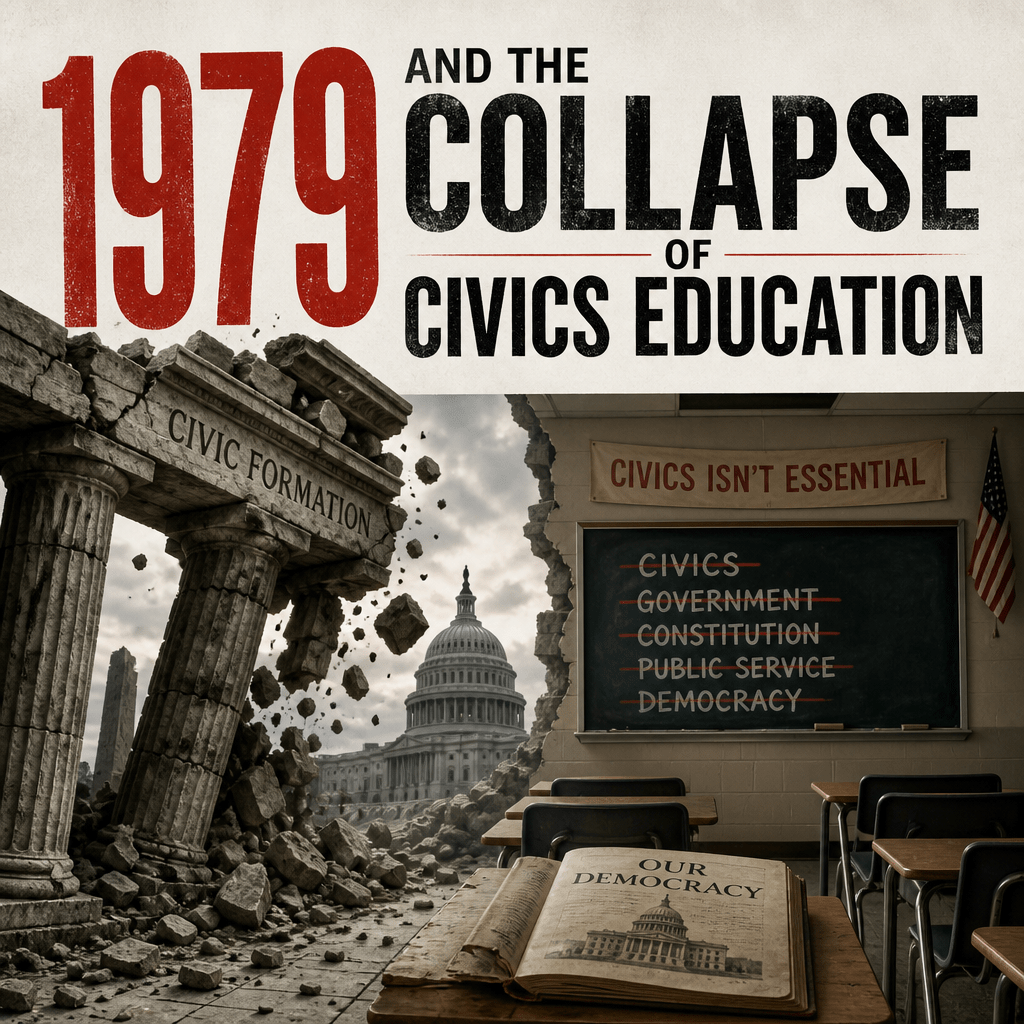
Civic formation once stood near the center of American public schooling. Through civics, government, and history, students learned how Congress worked, how laws were made, why federalism mattered, and what citizenship required. This shared institutional language made Civic formation the republic’s first defense against political confusion.
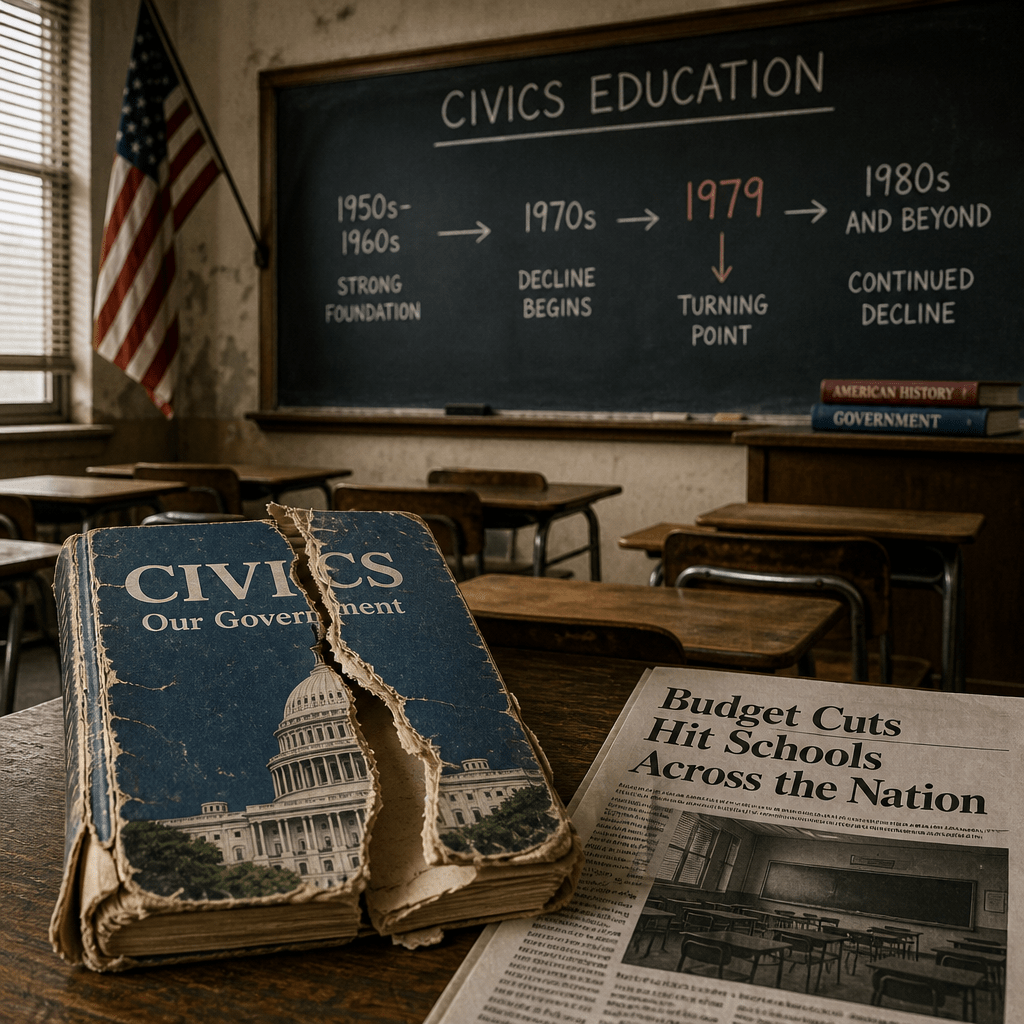
The argument is not that this tradition vanished on one date or followed the same course in every school. Traditions erode through changing priorities, curricula, and expectations. By 1979, Civic formation remained visible, but its foundations had begun to weaken.
Table of Contents
Civic formation in the classroom before the decline
Before that decline became obvious, Civic formation was not a minor elective. Students studied Congress, the separation of powers, the courts, the executive branch, and the relationship between state and federal authority. The purpose of Civic formation was institutional literacy rather than agreement about policy.
Civic formation also connected knowledge with character. History supplied memory, government explained public authority, and civics taught participation. In this sense, Civic formation prepared students to judge public questions patiently and disagree without abandoning the constitutional institutions that made disagreement possible.
Why 1979 became the hinge year for Civic formation
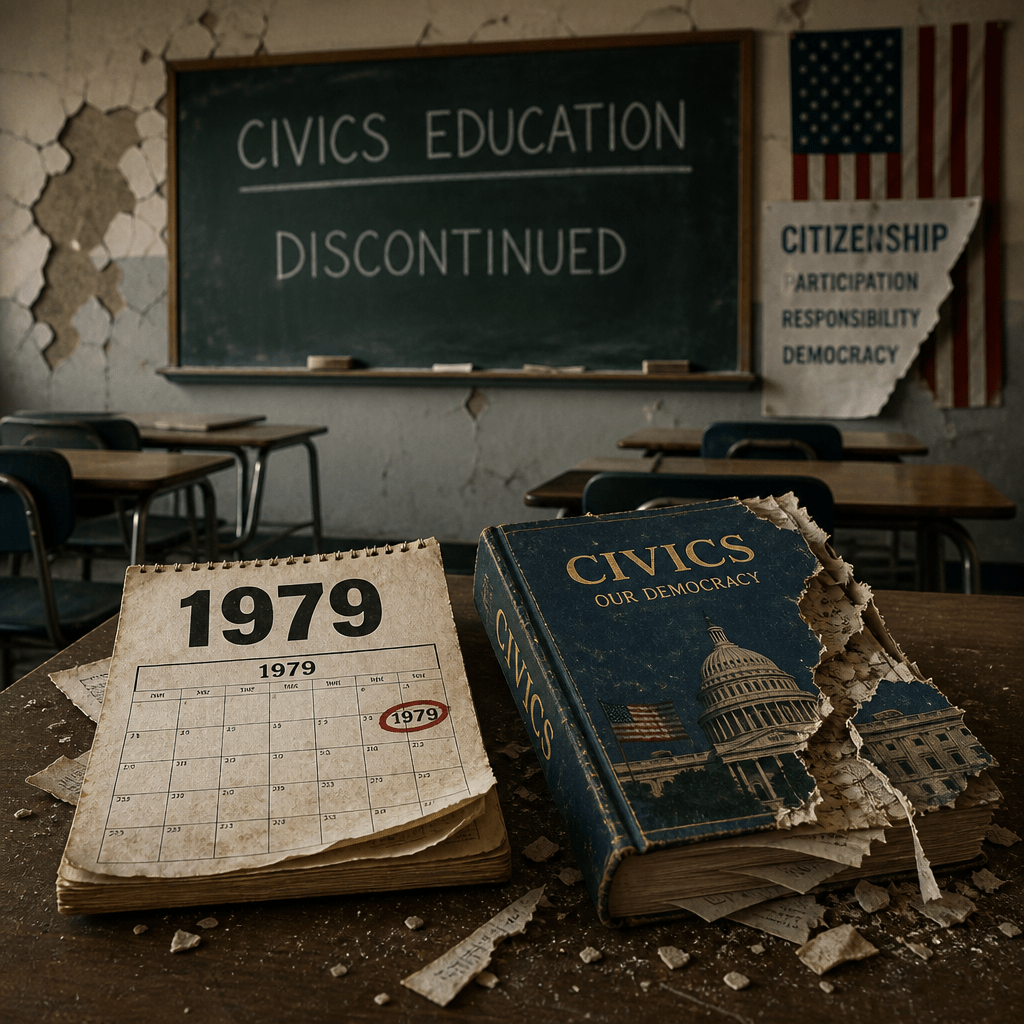
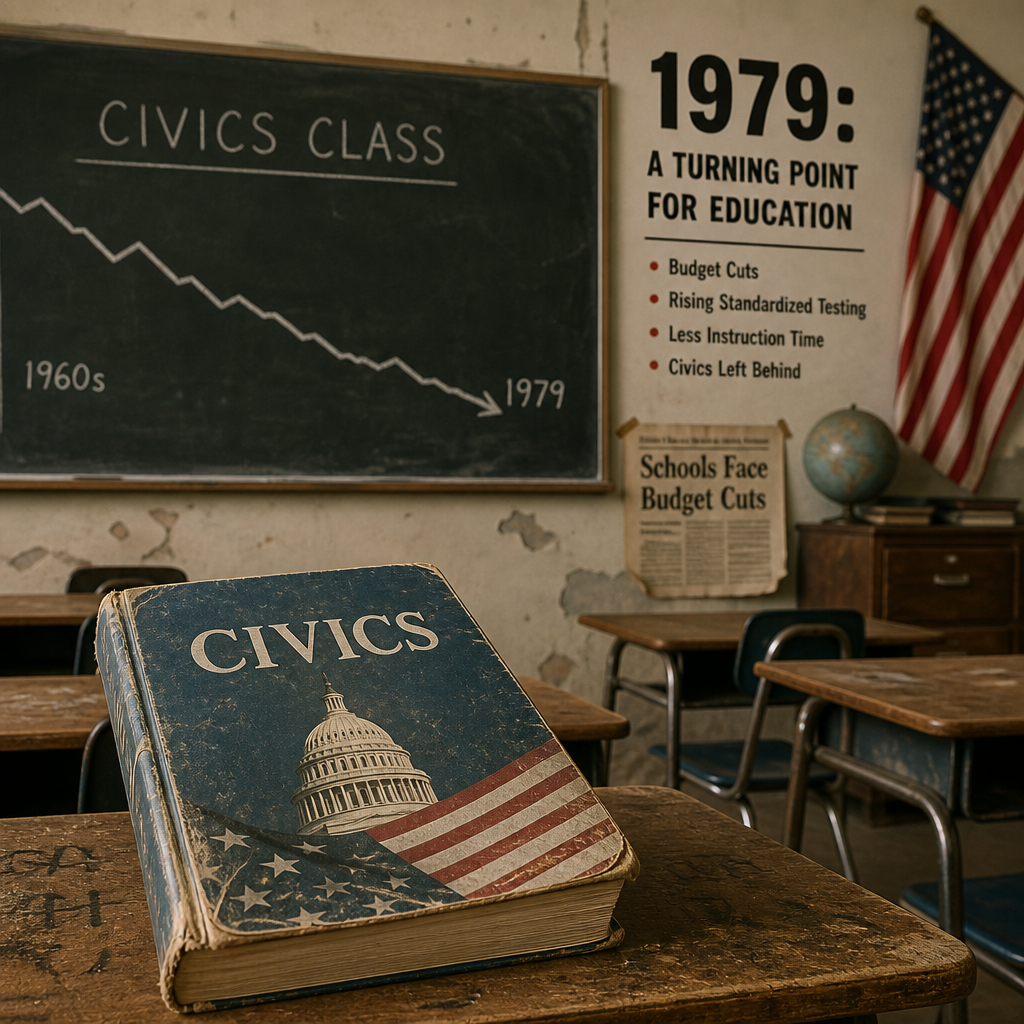
In 1979, Civic formation was still structurally present in many schools. Civics remained in the curriculum, government was commonly required, and history was often chronological. Yet Civic formation no longer possessed the confidence or priority it once had.
During the late 1960s and 1970s, universities and schools of education gave greater attention to power, inequality, social conflict, and neglected experiences. Those subjects could deepen Civic formation when joined to constitutional literacy. Problems arose when critique displaced institutional understanding and Civic formation became less deliberate.
Paulo Freire’s Pedagogy of the Oppressed, published in 1968, influenced critical pedagogy and debates about education. The transition was gradual, but the larger purpose behind Civic formation was fading even while familiar courses remained.
How institutional drift weakened Civic formation
No single law, election, or public debate ended Civic formation. Instead, courses were combined, requirements shortened, teacher-training priorities changed, and curriculum sequences revised. When Civic formation lost a distinct place in schools, institutional knowledge became easier to neglect.
Civics was increasingly folded into broad social studies programs. Integration can connect history, economics, geography, and government, but it becomes damaging when the purpose of Civic formation disappears. Civic formation then becomes one theme among many instead of a practical language of public responsibility.
The treatment of history changed as well. Thematic approaches can illuminate important questions, but chronology helps students understand causes, consequences, and institutional development. That sequence supports Civic formation; without it, Civic formation can become detached from the choices that shaped the republic.
By the 1990s and 2000s, standalone civics had disappeared in many districts, government was often reduced to a brief senior-year requirement, and history was less consistently chronological. Students could discuss political conflict without understanding the offices, procedures, authorities, and limits involved. In practice, Civic formation had fragmented.
Citizens who do not understand how a bill becomes law, what Congress controls, or how federalism divides authority may blame the wrong office or mistake publicity for accomplishment. As the discussion of lost moral grammar and civic renewal suggests, Civic formation gives public judgment a usable institutional foundation.
Restoring Civic formation and the grammar of self-government
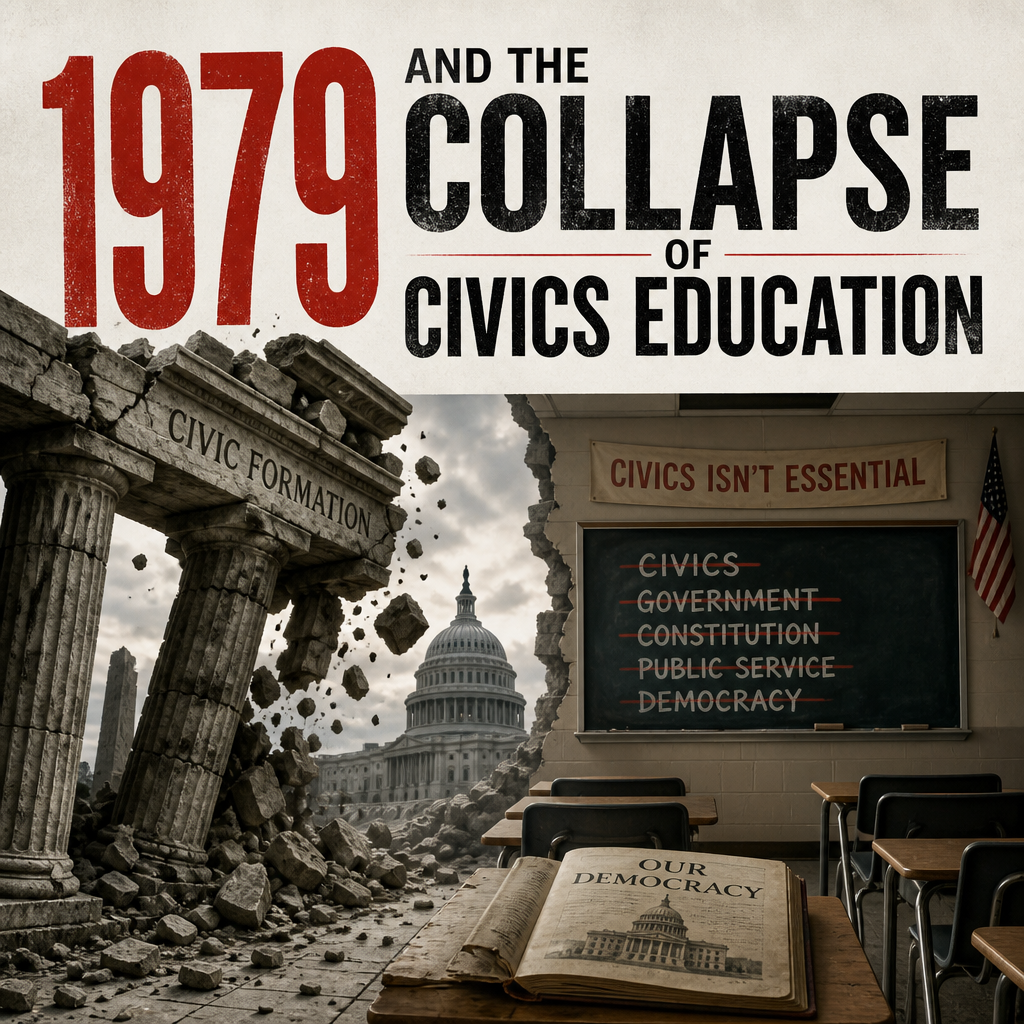
Restoring Civic formation requires more than adding facts to a crowded curriculum. Schools must recover the idea that education prepares students for membership in a constitutional community. Renewed Civic formation should teach the country’s full history, including injustice, exclusion, reform, and the institutions through which Americans contested public life.
Students should be able to explain how Congress is organized, how committees develop legislation, how the executive administers law, how courts exercise judgment, and how state and federal authority interact. Practical Civic formation can include tracing a bill, comparing levels of government, attending a public meeting, evaluating a budget, or writing to a representative.

Teacher preparation also matters. Educators do not need to deliver partisan instruction, but they do need strong preparation in constitutional structure, American history, public law, and the operation of government. That knowledge makes Civic formation more serious and useful.
Civics, government, and history should reinforce one another. Civics without history becomes thin; history without government becomes a sequence of events; government without responsibility becomes a technical description of offices. Together, they make Civic formation coherent.
The annual appropriations process offers a practical example. Twelve bills create twelve opportunities to observe Congress debating priorities, allocating resources, negotiating disagreement, and exercising oversight. Such institutional visibility turns Civic formation from an abstraction into a public practice.
1979 matters because it represents a moment when the older grammar of self-government remained visible even as its foundations weakened. That grammar has been neglected, not destroyed beyond recovery. Schools, universities, families, and communities can make Civic formation a deliberate responsibility once again.
For an official guide to the constitutional structure discussed here, consult the Constitution Annotated from the Library of Congress.
Leave a Reply