
Project 2025 administrative adjustments are the staffing, structural, and executive-branch reforms proposed in a conservative transition plan known as Project 2025. Supporters argue that these reforms are needed to return America’s government to what they understand as its original constitutional purpose: a federal system directed by elected officials, limited by law, and accountable to voters. Critics, however, contend that the same proposals could concentrate too much authority in the presidency and weaken the independence and expertise of the civil service.
Understanding the debate requires more than repeating slogans. Project 2025 is both a detailed policy agenda and an effort to prepare personnel for a future conservative administration. These Project 2025 administrative adjustments reflect a longstanding disagreement over the proper relationship between the president, Congress, administrative agencies, and career federal employees. Its proponents see an unaccountable bureaucracy; its opponents see institutions designed to provide continuity, professional competence, and lawful restraint.
The initiative was organized largely through The Heritage Foundation, often referred to here as the Heritage Organization, alongside a broad coalition of conservative groups. Its purpose is not merely to propose legislation. The Project 2025 administrative adjustments are intended to help a new administration enter office with policy plans, trained personnel, and a coordinated understanding of how executive agencies could be directed from the first day.
Table of Contents
What Project 2025 Is
Project 2025 is a conservative governing and transition initiative developed for a future presidential administration. Its best-known publication, Mandate for Leadership, offers policy recommendations across federal departments and agencies. The project also includes a personnel database, training materials, and transition planning intended to help a conservative administration fill executive-branch positions more quickly. In this context, Project 2025 administrative adjustments connect policy recommendations with the personnel needed to carry them out.
The initiative rests on a practical observation: presidential transitions are short, while the federal government is large and complex. A president takes office with thousands of appointments to make, numerous agencies to supervise, and immediate policy decisions to address. Supporters believe that administrations without a prepared team can lose valuable time, allowing existing agency priorities and career procedures to determine the early direction of government. They present Project 2025 administrative adjustments as a way to reduce that transition gap.
Project 2025 seeks to reduce that delay. It provides a framework for identifying potential appointees, explaining administrative processes, and setting priorities before an election is decided. In that sense, it resembles earlier transition efforts, though its scale and specific recommendations have made it especially prominent in public debate. The proposed Project 2025 administrative adjustments are therefore both managerial and constitutional in their stated purpose.
The project includes several connected elements:
- A policy agenda addressing the work of federal departments and agencies.
- A personnel effort intended to identify individuals prepared to serve in executive roles.
- Training for prospective officials on administrative procedures and constitutional arguments.
- Transition planning intended to make a future administration operational quickly.
- Recommendations for reorganizing, narrowing, or redirecting selected federal functions.
Supporters describe this preparation as responsible governing. They argue that voters elect a president to pursue a program and should be able to expect that program to receive a fair opportunity for implementation. Critics respond that the executive branch is bound not only by presidential preferences, but also by statutes, court decisions, appropriations, civil-service protections, and constitutional limits. Those competing views shape the debate over Project 2025 administrative adjustments.
That disagreement is central to the controversy. Project 2025 is not simply a list of ideas about individual policies. It is an argument about who should exercise practical power inside the federal government and how directly an elected president should be able to guide the administrative state. The Project 2025 administrative adjustments make that institutional argument especially concrete.
Project 2025 administrative adjustments and executive accountability
At the heart of the initiative are Project 2025 administrative adjustments involving personnel, agency leadership, regulations, enforcement priorities, and the relationship between political appointees and career employees. Advocates believe these changes would restore a clearer chain of accountability: voters elect a president, the president directs the executive branch, and agencies carry out lawful policy under that direction.
This argument begins with Article II of the Constitution, which vests executive power in the president and requires the president to “take Care that the Laws be faithfully executed.” Supporters maintain that many modern agencies exercise substantial discretion in writing regulations, interpreting statutes, awarding grants, conducting investigations, and enforcing rules. In their view, this discretion has allowed unelected administrators to shape policy beyond what elected officials intended. They believe Project 2025 administrative adjustments would narrow that gap between elected direction and administrative action.
The constitutional structure is more complicated than a simple command chain. Congress creates agencies, writes statutes, appropriates funds, and conducts oversight. Courts review executive actions and agency rules. Federal employees are also subject to legal protections designed to prevent patronage, retaliation, and arbitrary dismissal. Still, Project 2025 supporters argue that these safeguards should not make the executive branch effectively independent of the president. This is one reason Project 2025 administrative adjustments remain controversial.
Proponents commonly identify five reasons for administrative reform:
- Democratic accountability. They believe major executive policies should be traceable to officials chosen by voters or appointed by those officials.
- Speed and coordination. They argue that overlapping offices, lengthy internal review, and conflicting agency priorities can delay lawful action.
- Clearer management. They maintain that agency leaders need greater ability to ensure employees carry out an administration’s lawful agenda.
- Limited government. They seek to reduce programs, regulations, or enforcement practices they regard as beyond proper federal authority.
- Durable transition planning. They believe a prepared administration is less likely to be governed by institutional inertia during its first months.
In this view, administrative reform does not mean ignoring the law. Rather, supporters say it means enforcing statutes according to their text, reducing discretionary expansions of power, and ensuring agencies answer to constitutionally accountable leadership. Their underlying concern is that a permanent bureaucracy can develop priorities that persist regardless of election results. Project 2025 administrative adjustments are offered as an institutional response to that concern.
Critics challenge both the diagnosis and the remedy. They argue that career civil servants provide specialized knowledge that political appointees may lack, particularly in public health, national security, environmental regulation, financial oversight, and scientific research. They also warn that reducing employment protections could encourage loyalty tests, discourage candid professional advice, and make technical agencies more vulnerable to partisan turnover. From this perspective, Project 2025 administrative adjustments could create risks that outweigh their promised benefits.
The debate therefore is not between government and no government. It is a dispute over administrative authority. One side emphasizes presidential control and electoral accountability; the other emphasizes institutional continuity, professional independence, and checks against politicized power. Project 2025 administrative adjustments sit at the center of that dispute.
Why supporters believe the federal government has drifted
Supporters of Project 2025 often argue that America’s government has drifted from its original intent because federal administration has become more centralized, more expansive, and less directly answerable to the electorate. They point to the growth of the modern administrative state: the network of departments, commissions, offices, rules, adjudications, and enforcement systems that carry out federal law. Project 2025 administrative adjustments are meant to address what supporters see as the consequences of that growth.
From their perspective, Congress has increasingly delegated broad authority to agencies. Instead of making detailed policy choices through legislation, lawmakers may enact general standards and leave agencies to determine the practical rules. Agencies then issue regulations, interpret ambiguous provisions, establish eligibility requirements, and enforce compliance. Supporters contend that this arrangement can blur the line between making law and executing law, which is why they advocate Project 2025 administrative adjustments.
They also believe the system can make accountability difficult. If a voter dislikes a regulation, it may be unclear whether responsibility lies with Congress, the president, an agency head, a career office, or a court interpretation. Project 2025’s advocates want executive agencies to be more clearly managed by officials who can be held politically accountable for the outcomes. They see Project 2025 administrative adjustments as a way to make that responsibility easier to identify.
This perspective is related to a broader constitutional argument about the separation of powers. Advocates favor a stronger understanding of the president’s responsibility for the executive branch. For additional context on that argument, readers may find useful this discussion of why Project 2025 emerged and the reassertion of Article II. That constitutional framework helps explain why Project 2025 administrative adjustments focus so strongly on presidential supervision.
Critics answer that modern government necessarily requires administrative expertise. Congress cannot personally manage every technical detail involved in aviation safety, food inspection, benefit administration, emergency response, securities regulation, or military procurement. In their view, delegating implementation is not a constitutional accident but a practical feature of governing a large and complex nation. They question whether Project 2025 administrative adjustments would preserve enough expertise and continuity.
Both perspectives recognize a real tension. A government with no expert administration could be ineffective; a government with too little democratic control could become distant from the people it serves. The question is how to balance those concerns without diminishing either lawful authority or constitutional safeguards. Project 2025 administrative adjustments attempt to resolve that balance in favor of stronger presidential direction.
Who the Heritage Organization is
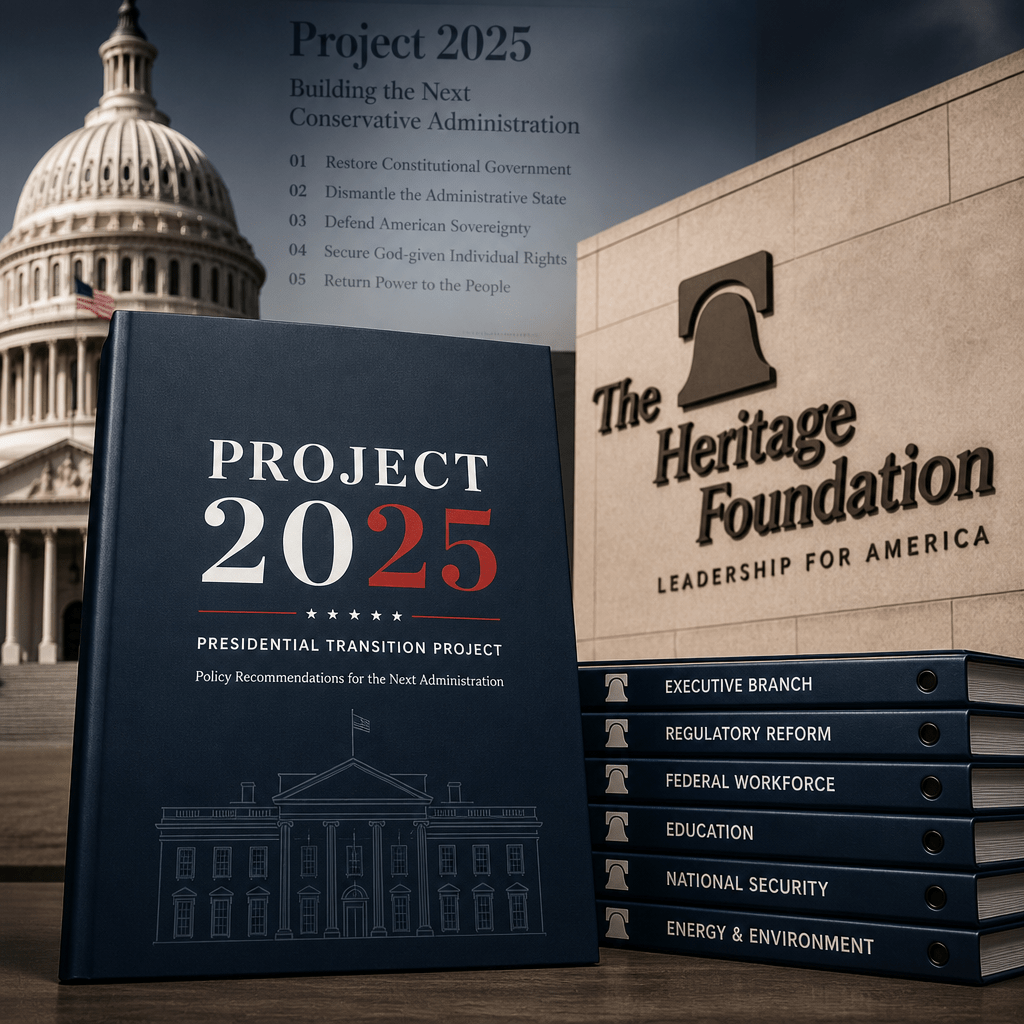
The Heritage Organization is more commonly known as The Heritage Foundation, a Washington, D.C.-based conservative think tank founded in 1973. Heritage has been influential in Republican and conservative policy circles for decades. It promotes positions generally associated with limited government, free enterprise, a strong national defense, religious liberty, and traditional social values. Its institutional philosophy helps explain its support for Project 2025 administrative adjustments.
Think tanks do not govern, but they can influence governing by researching policy, publishing reports, advising officials, organizing coalitions, and training staff. Heritage has long sought to provide conservative elected officials with concrete policy recommendations rather than broad principles alone. Its earlier Mandate for Leadership publications were prepared for incoming Republican administrations and became a model for linking election campaigns to governing plans. Project 2025 administrative adjustments continue that tradition by combining policy with implementation planning.
Heritage’s role in Project 2025 is central because it helped convene a coalition and provide organizational infrastructure. The project draws on contributions from many conservative organizations, but Heritage has been widely identified as its leading institutional sponsor. The organization’s involvement reflects its belief that conservative policy ideas must be paired with administrative readiness if they are to be implemented effectively. That belief is the foundation for the Project 2025 administrative adjustments.
The Heritage Foundation describes Project 2025 as a transition effort intended to help a future conservative president govern from the first day in office. Its materials emphasize policy preparation, personnel selection, and the need to understand the internal operations of executive agencies. Readers can review the initiative’s own framing through the official Project 2025 website.
Calling Heritage a “Heritage Organization” can sometimes obscure what it is. It is not a federal agency, a political party, or an arm of a presidential campaign. It is an independent advocacy and research institution with a clear conservative orientation. Its proposals should therefore be understood as recommendations and political arguments, not as binding law. The same distinction applies when evaluating Project 2025 administrative adjustments.
What brought Heritage to create Project 2025
Several experiences and convictions led Heritage and allied groups to create Project 2025. First, they concluded that conservative administrations often arrive in office insufficiently prepared for the scale of the executive branch. Campaigns are built to win elections, while governing requires people who understand budgets, personnel rules, agency procedures, regulatory law, and the practical limits of executive action. Project 2025 administrative adjustments were developed to address that preparation problem.
Second, Heritage and its partners believe that previous conservative presidents faced internal resistance from parts of the bureaucracy. The term “resistance” can mean different things: disagreement by career employees, slow implementation, legal caution, adherence to established procedures, or opposition from appointees and outside institutions. Supporters of the project see these patterns as evidence that a president needs a better-prepared governing team. Critics often see them as normal features of a lawful civil service and a system of checks and balances. The disagreement informs the proposed Project 2025 administrative adjustments.
Third, the coalition is concerned about rapid policy reversals between administrations. When one president changes rules, enforcement priorities, and departmental leadership, the next president may reverse those actions. Heritage’s answer is to build a coherent agenda that can be pursued across agencies, rather than treating every department as an isolated policy problem. Project 2025 administrative adjustments are intended to give that agenda greater durability.
Fourth, the initiative reflects a belief that conservative electoral victories should lead to meaningful administrative change. Supporters argue that if voters choose a president on a platform of deregulation, border enforcement, energy development, education reform, or limits on federal power, agency structures should not prevent that president from pursuing lawful versions of those policies. They view Project 2025 administrative adjustments as tools for translating that electoral mandate into administration.
Finally, Project 2025 emerged from a larger restorationist desire to reconnect public institutions with what its advocates regard as the Constitution’s original allocation of authority. They favor a federal government with defined powers, a Congress that legislates more clearly, courts that enforce constitutional limits, and an executive branch led decisively by the president. Project 2025 administrative adjustments express that restorationist goal in personnel and agency terms.
This does not mean every proposal is free of controversy. A plan to alter staffing classifications, reorganize agencies, or expand presidential influence raises serious questions about statutory authority, due process, institutional competence, and the potential for abuse. The fact that supporters call a change restorative does not settle whether it is constitutional, prudent, or likely to achieve its stated purpose. Those questions require public debate, congressional action where necessary, and judicial review when disputes arise.
How the proposed changes could work in practice
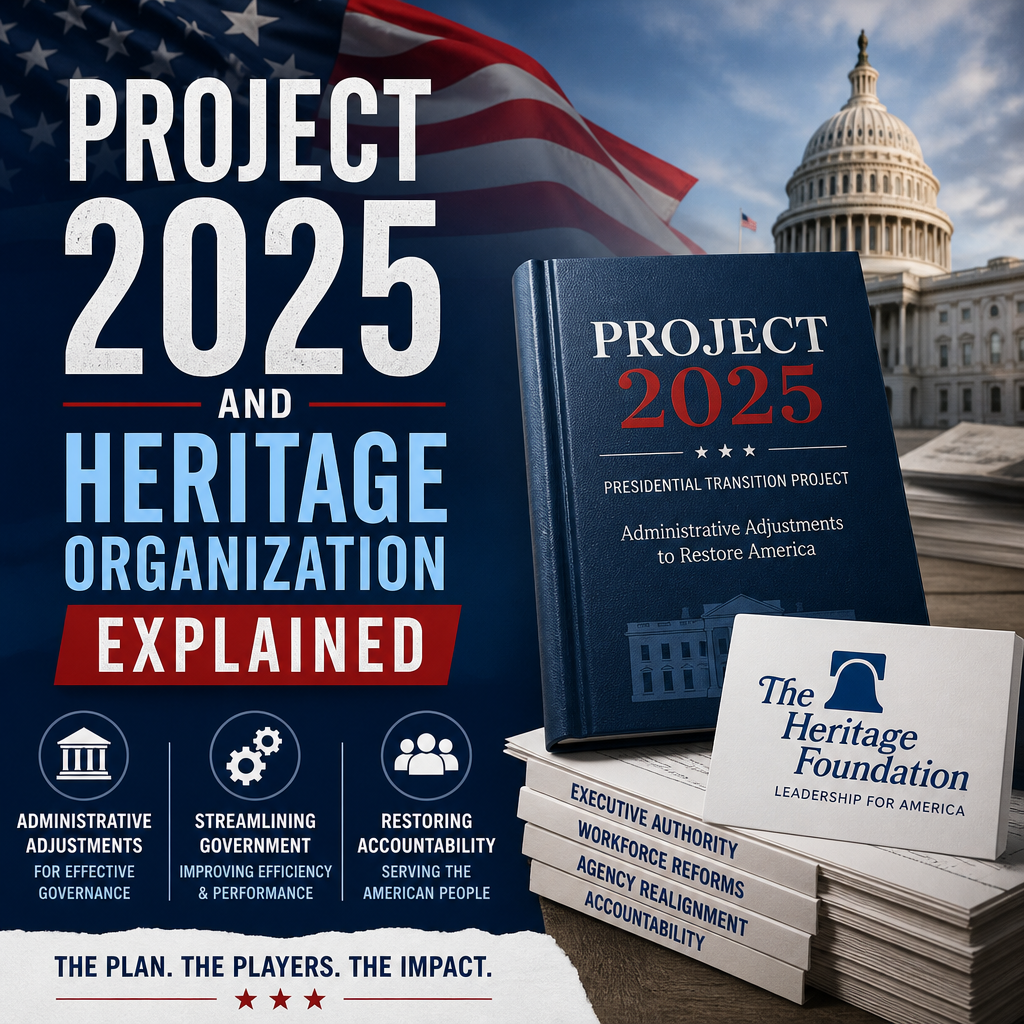
In practical terms, Project 2025 administrative adjustments could affect who leads agencies, how priorities are set, how regulations are reviewed, and how readily a president can replace or reassign certain officials. The proposals are often discussed together, but they involve distinct legal and managerial questions.
Personnel is one major area. Supporters want an administration to identify qualified appointees before inauguration and ensure they understand its priorities. They also favor greater flexibility in managing positions involved in policy development or confidential work. Their argument is that officials who help shape policy should be responsive to elected leadership. These personnel-related Project 2025 administrative adjustments are among the most debated aspects of the plan.
Opponents worry that broad changes to civil-service protections could reach beyond genuinely political roles. The modern merit system was designed in part to replace the nineteenth-century spoils system, under which government jobs could be distributed as political rewards. Critics argue that weakening those protections could make public service more partisan and reduce the willingness of employees to provide objective analysis.
Regulatory reform is another major area. Supporters favor reviewing regulations that they see as unauthorized, burdensome, or inconsistent with statutory text. They may seek to centralize review within the executive branch, require stronger cost-benefit analysis, or direct agencies to reconsider prior interpretations. These regulatory Project 2025 administrative adjustments can be lawful when authorized, but they remain subject to administrative procedure, statutory limitations, and court review.
Agency organization is also important. Some advocates seek to consolidate offices, reduce programs, shift responsibilities, or limit enforcement activities. A president can direct many executive functions, but major reorganizations often require Congress because Congress creates agencies and provides their funding. The success of any reform agenda therefore depends on legal authority, appropriations, staffing, and political support—not simply on presidential preference.
This distinction matters. Project 2025 presents a vision for executive government, but implementation would be constrained by the Constitution, federal statutes, judicial decisions, appropriations, and public accountability. Even a determined administration cannot lawfully accomplish every proposal through executive action alone. Those constraints would shape every Project 2025 administrative adjustments proposal in practice.
Arguments for and against a return to original intent
Supporters describe the project as a return to original intent because they believe the Constitution places executive authority in a president elected by the nation. They argue that administrative agencies should execute laws rather than become independent centers of policymaking. In their view, a more directly supervised executive branch would make the government both more accountable and more faithful to constitutional design. Project 2025 administrative adjustments are presented as a practical route toward that result.
Critics question whether “original intent” offers a complete answer to modern administrative problems. The federal government of the twenty-first century addresses issues that the founding generation could not have anticipated, including complex national markets, modern technology, environmental risks, global supply chains, and extensive social programs. They argue that constitutional principles must be applied through institutions capable of handling those realities. For critics, Project 2025 administrative adjustments may oversimplify that institutional challenge.
There is also disagreement about the meaning of accountability. Supporters emphasize the voter’s ability to reward or reject a president. Critics emphasize that accountability includes legal process, transparent rulemaking, congressional oversight, independent inspectors general, whistleblower protections, and courts that can review executive actions. A durable constitutional system may require more than one form of accountability, even when Project 2025 administrative adjustments are intended to strengthen presidential responsibility.
These competing concerns should not be dismissed as merely partisan. They involve enduring questions: How much discretion should Congress delegate? When does expertise become unaccountable power? When does presidential control become excessive centralization? What protections are necessary to preserve a professional civil service? Project 2025 has drawn attention because it places those questions in concrete administrative terms, with Project 2025 administrative adjustments serving as the main vehicle for its proposed changes.
Why Project 2025 matters
Project 2025 matters because it offers a detailed example of how a political movement seeks to translate constitutional principles and policy preferences into the actual machinery of government. It is not only a debate about particular regulations or programs. It is a debate about preparation, personnel, executive authority, and the structure of federal administration. Project 2025 administrative adjustments bring those broad questions into specific proposals.
For its supporters, the project is a necessary corrective to bureaucratic drift. They see Project 2025 administrative adjustments as a means of restoring the president’s ability to execute the law, reducing what they view as unaccountable agency power, and making the federal government more responsive to voters.
For its critics, the proposals risk replacing institutional safeguards with concentrated political control. They caution that expertise, due process, and continuity are not obstacles to democracy but protections for lawful and competent government. They therefore see the Project 2025 administrative adjustments as a potential threat to civil-service independence.
Whatever conclusion a reader reaches, the most useful approach is to examine the proposals carefully: distinguish what can be done by executive action from what requires Congress, compare the arguments to constitutional text and history, and consider both the promised benefits and the potential costs. Project 2025 is ultimately a plan for governing, and its significance lies in the serious national debate it has renewed over who governs the federal government, by what authority, and for what purpose. The future of Project 2025 administrative adjustments will depend on those legal, political, and institutional choices.
Leave a Reply