
Many people believe drugs and alcohol offer relief, confidence, creativity, or escape. But that relief is often short-lived. It comes with a cost.
Sober consciousness offers something deeper.
It gives clarity, control, memory, energy, and real emotional strength. It is not a dull state. It is a powerful state of mind. In many ways, it can be described as a superpower.
- What sober consciousness really means
- Why people turn to drugs and alcohol
- Why sober consciousness can compete and win
- Why sober consciousness is a superpower
- How to explain sober consciousness to others
- The brain’s utility is easier to use when sober
- The strongest argument is visible change
- How to make sober consciousness more attractive
- Sober does not mean less alive
- The real superpower is self-command
What sober consciousness really means
Sober consciousness is the experience of being fully present without chemical distortion. It is the ability to think clearly, feel deeply, and respond with intention.
It is not just “not using substances.” It is a different level of awareness.
A sober person can notice more, choose better, and recover faster from stress. That creates a strong foundation for life, work, relationships, and purpose.
At its best, this state is not passive. It is active awareness. It is the mind operating with fewer filters, fewer delays, and fewer false comforts. A person can see patterns sooner, identify problems earlier, and make adjustments before small issues become large ones.
That matters because much of life depends on timing. The ability to recognize what is happening while it is happening gives a person more options. That is one reason sober consciousness can feel less like restraint and more like access.
For readers who want a broader framework for self-mastery, self-awareness and integrity help explain why clear thinking and honest action support lasting change.
Sober consciousness also makes room for self-observation. Instead of being pulled around by cravings, moods, or social pressure, a person can step back and ask what is really going on. That moment of pause may seem small, but it is often the difference between repeating a harmful pattern and choosing a better one.
Why people turn to drugs and alcohol
To convince someone that sobriety is powerful, it helps to understand why substances are appealing.
People often use them to:
- reduce anxiety
- numb pain
- escape stress
- feel more social
- silence self-doubt
- chase pleasure
- avoid uncomfortable emotions
These are human needs. The problem is that drugs and alcohol only mask the issue. They do not solve it.
They borrow pleasure from the present and collect interest later in the form of confusion, dependency, regret, and health damage.
In practical terms, that means the person pays for a brief lift with a longer decline. The short-term comfort feels real, but the long-term trade is expensive.
This is why substance use can become such a difficult habit to challenge. The brain learns to associate the substance with relief, even when the overall outcome is harmful. Over time, the habit can shift from choice to compulsion, and what once felt like an escape starts to feel like a trap.
The more this pattern repeats, the more the person may forget what ordinary clarity feels like. That forgetting matters. A person cannot easily choose sobriety if they no longer remember how good a clear mind can be.
That is why the conversation should not only focus on harm. It should also focus on the positive reality of a clear, stable, capable mind. People need to know what they are moving toward, not just what they are leaving behind.
Why sober consciousness can compete and win
The brain is built for adaptation. It can learn, rewire, and strengthen through repetition. That means sobriety is not weakness. It is training.
A sober state of mind can compete with substances because it gives access to real, lasting advantages:
- better decision-making
- improved memory
- stronger emotional regulation
- more stable energy
- deeper sleep
- sharper focus
- better relationships
- more trust in self
These are not small benefits. They affect every part of life.
Drugs and alcohol may create a temporary high. Sober consciousness creates a sustainable life.
Neurology and public health research also support the idea that repeated substance use can impair judgment, learning, and impulse control. The National Institute on Drug Abuse offers a clear overview of how addiction affects the brain at NIDA’s drugs, brains, and behavior resource.
That information matters because it reframes the argument. Sober living is not about being deprived of pleasure. It is about protecting the brain’s ability to function. Once people understand that, they begin to see sobriety as a strategy for performance, not just a moral preference.
In that sense, sober consciousness can compete and win because it preserves the very abilities that allow a person to build a good life. Concentration, patience, memory, and emotional steadiness may not sound dramatic at first, but they are foundational. Without them, even talented people struggle. With them, ordinary people can become remarkably effective.
Why sober consciousness is a superpower
Calling sober consciousness a superpower is not exaggeration. It is a useful way to describe its function.
A superpower is not just strength. It is the ability to do what others cannot easily do.
Sober consciousness gives people the power to:
- pause before reacting
- observe thoughts without being ruled by them
- endure discomfort without collapsing
- face reality without distortion
- build discipline over impulse
- recover from setbacks faster
- choose meaning over escape
That is a real power.
Most people move through life on autopilot. A sober, conscious state of mind allows someone to become deliberate, aware, and fully alive.
This is where the idea becomes persuasive: sober consciousness is not a restriction. It is increased capability.
It is also a form of independence. When a person no longer needs a chemical aid to feel okay, think clearly, or manage an ordinary challenge, they become less fragile. They can handle more of life with less disruption. That resilience is one of the clearest signs of strength.
A useful way to explain the superpower idea is to compare it to a tool that has been cleaned, sharpened, and put back in proper working order. The tool was always there, but now it works better. Sobriety does not erase personality or reduce human depth; it lets more of what was already there come through.
That is why sober consciousness can feel almost like a hidden advantage. It reveals capability that was previously buried under numbness, fog, or distraction.
How to explain sober consciousness to others
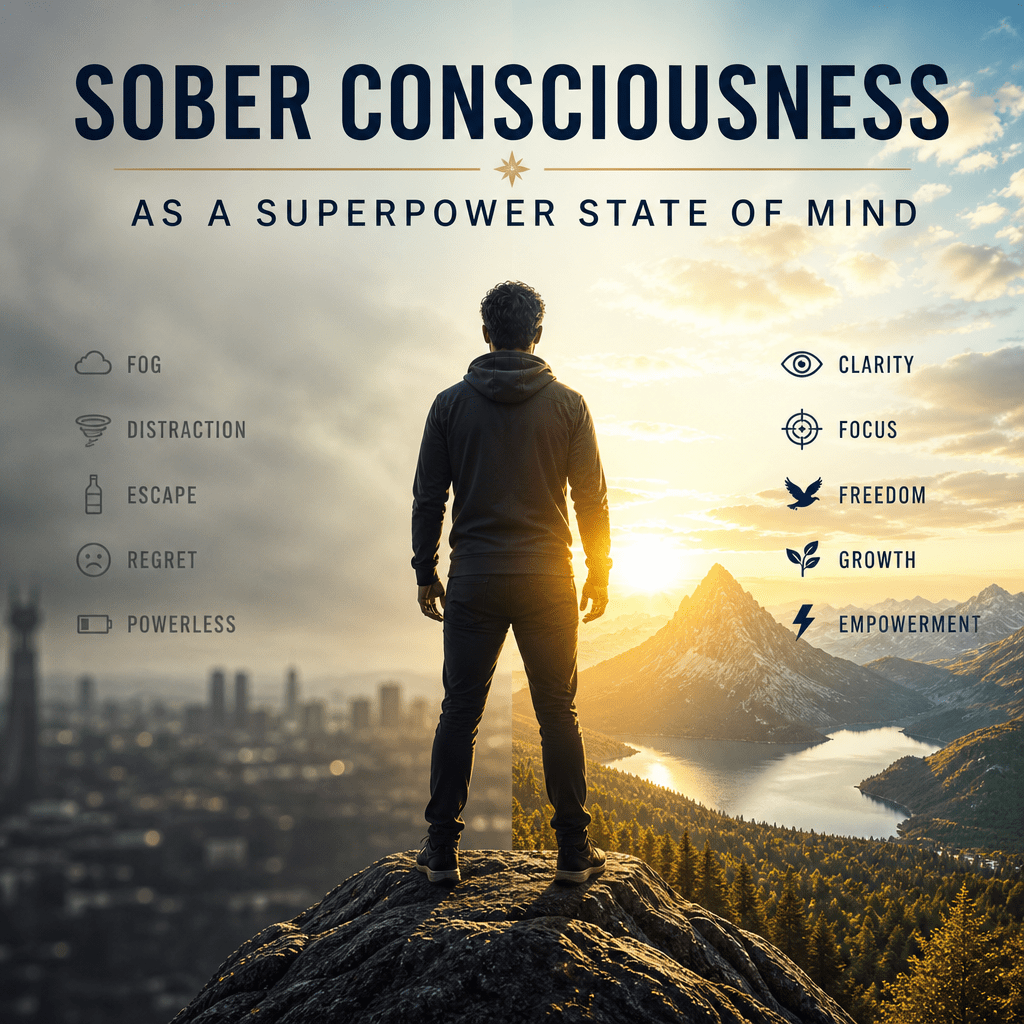
If you want to convince someone, do not lead with judgment. Lead with experience.
People respond better to benefits than lectures.
You can describe sober consciousness like this:
- It is mental clarity without a filter.
- It is emotional strength without numbing.
- It is confidence that comes from reality, not chemicals.
- It is a clearer connection to identity.
- It is freedom from dependence on a substance to feel okay.
This makes the idea more relatable. It shows that sobriety is not about loss. It is about gain.
Another helpful approach is to link the idea to dignity and trust. A person who can stay grounded without a chemical crutch often becomes easier to rely on, easier to respect, and easier to believe.
You can also make the case through everyday language. For example, say that sober consciousness means being sharp enough to remember what was said in a conversation, calm enough to answer carefully, and steady enough to keep a promise. Those ordinary strengths accumulate into a powerful reputation.
When people hear sober life described in practical terms, they are less likely to dismiss it as a rigid rule and more likely to see it as a better operating system. That shift in language matters. It can change how people think about identity, self-control, and possibility.
The brain’s utility is easier to use when sober
The brain is an incredible tool. It can plan, imagine, solve problems, create art, build relationships, and regulate behavior.
But drugs and alcohol reduce that utility.
They can weaken:
- attention
- judgment
- impulse control
- memory consolidation
- motivation
- emotional processing
A sober brain works with less interference. That means more of your natural intelligence becomes available.
In other words, sobriety is not the absence of power. It is access to more of it.
When people understand the brain as a usable instrument, they see sobriety less as sacrifice and more as optimization. The person becomes more able to think, decide, and build a life that actually works.
This is also where the practical value becomes obvious. A clear mind can track details, make plans, weigh consequences, and stay present through difficult conversations. Those are not glamorous skills, but they are the skills that keep lives from falling apart.
The utility of the brain is easier to use when sober because sobriety reduces distortion. There is less internal noise, fewer false urgencies, and more room for accurate perception. That accuracy improves everything from work performance to personal relationships.
People often underestimate how much energy is wasted when the mind is constantly managing the fallout from intoxication, hangovers, cravings, or regret. Sobriety returns that energy to the person. It becomes available for creativity, discipline, and growth.
For some, that reclaimed energy is the first time in years that they can genuinely feel how their own mind works. That experience can be both surprising and empowering.
The strongest argument is visible change
People are often convinced by results, not theory.
If someone is sober and thriving, others notice.
They see:
- calm under pressure
- better follow-through
- improved appearance
- stronger communication
- more patience
- more consistency
- more self-respect
This is why sober consciousness can feel magnetic. It is visible. It changes how a person speaks, listens, works, and lives.
That is more persuasive than any slogan.
It also becomes easier for others to imagine the same outcome in their own lives. When they see steadiness instead of chaos, they begin to understand that a clear mind can be more attractive than a chemically altered one.
Visible change matters because people trust what they can observe. A person who becomes more dependable, less reactive, and more grounded does not need to argue for sobriety very loudly. Their life already makes the case.
There is also an emotional effect. People around a sober, conscious person often feel safer. They sense stability, and stability is deeply appealing in friendships, families, and relationships. Over time, that steadiness can inspire more trust than charm ever could.
The strongest argument is not just that sobriety prevents damage. It is that it produces a better quality of presence. A calm, clear presence changes the atmosphere of a room, a household, or a workplace.
How to make sober consciousness more attractive
To help others see sobriety as a superpower state, focus on these ideas:
1. Make clarity desirable
People want to feel smart, sharp, and in control. Show how sobriety supports that.
2. Make freedom the message
Substances often create dependence. Sobriety creates choice. Freedom is a powerful motivator.
3. Make resilience the reward
A sober person can handle stress without needing escape. That is a major life advantage.
4. Make identity part of the story
Sober consciousness is not just a behavior. It can become part of who someone is. That identity is stabilizing.
5. Make growth visible
People trust what they can see. Better health, better relationships, and better focus all demonstrate the value of sobriety.
You can also frame the change as a positive upgrade: more energy in the morning, more reliable memory, fewer regrets, and more confidence in daily choices.
Another important factor is language. If sober life is described only as “not doing something,” it will seem empty. If it is described as gaining presence, strength, and reliability, it becomes far more appealing. The story has to include what is being built, not just what is being left behind.
That is why many people find sobriety more attractive when they associate it with excellence. When the clear mind becomes linked with competence, courage, and purpose, it stops looking like deprivation and starts looking like advancement.
How sober consciousness supports relationships
One of the most overlooked benefits of a sober state of mind is the improvement it can bring to relationships. When the mind is clear, communication usually improves. A person listens better, remembers details more reliably, and responds with more patience.
That matters because relationships are built on trust, and trust is strengthened by consistency. A person who is sober is often more capable of being consistent with their word, their emotions, and their behavior.
Sobriety also reduces the likelihood of misunderstandings caused by intoxication. Conversations are less likely to become distorted. Conflicts are less likely to escalate unnecessarily. And apologies, when needed, become more meaningful because they come from a grounded place.
For families, this can be especially important. Children, partners, and close friends often respond less to abstract promises and more to steady presence. Sober consciousness helps create that presence. It gives people a version of you that is easier to know and easier to trust.
Even in casual friendships, clarity matters. When a person can show up fully, remember what was said, and remain emotionally available, others tend to feel valued. That sense of value strengthens bonds and makes relationships more durable over time.
Sober consciousness in daily routines
Big claims about sobriety become more believable when they show up in ordinary life. The daily routine is where the state of mind becomes visible.
A sober morning may look like waking up without dread, remembering the previous night clearly, and starting the day without needing to recover from it. That alone can change the tone of an entire week.
A sober workday may include better attention, more consistent output, and fewer avoidable mistakes. Instead of spending energy on hiding, coping, or recovering, the person can direct that energy toward the task at hand.
A sober evening may involve real rest rather than escape. The person can read, walk, reflect, talk, or simply sleep with less internal noise. Those routines gradually become part of a healthier identity.
Daily life is also where people begin to notice a deeper kind of satisfaction. The rewards are quieter than intoxication but often more lasting. A finished task, a clear conversation, or a peaceful night of sleep can begin to feel deeply rewarding when the mind is no longer chasing chemical highs.
Sober does not mean less alive
One of the biggest myths is that sober life is boring.
In reality, alcohol and drugs often flatten experience. They distort it.
Sober consciousness allows life to feel more direct, more vivid, and more authentic.
Colors seem brighter. Conversations feel richer. Time feels more meaningful. Wins feel earned. Emotions feel real. That depth is part of the superpower.
A sober state of mind does not remove joy. It makes joy more honest.
That honesty can be intense at first, but it also becomes grounding. Instead of chasing highs and recovering from lows, a person learns how to live inside reality with more confidence.
There is also a creative benefit here. A clear mind is often better at noticing detail, making original connections, and sustaining attention long enough to finish work. Creativity is not always helped by chaos. Often, it is strengthened by focus.
So sober consciousness is not a smaller life. It is a life with fewer distortions and more access to what is actually there. That can feel richer, not poorer.
The real superpower is self-command
At the center of sober consciousness is self-command.
That means:
- choosing instead of reacting
- feeling without collapsing
- thinking before acting
- staying present under pressure
- building a life that does not depend on chemical escape
This is one of the most valuable forms of strength a person can develop.
It is not flashy, but it is powerful.
It creates trust in yourself. And self-trust changes everything.
For readers interested in the emotional side of that discipline, emotional self-control is a useful companion concept because it shows how regulation and resilience work together.
Self-command also helps a person tolerate discomfort without immediately trying to erase it. That matters because many important forms of growth require patience. Whether someone is repairing a relationship, improving health, or rebuilding a career, the ability to stay steady through difficult moments becomes essential.
Once self-command becomes a habit, it influences every area of life. The person starts to trust their own judgment more. They become less dependent on external approval. They become more capable of living by principles rather than impulses. That is why this quality feels so central to the idea of a superpower.
How to think about sober consciousness every day
One reason people struggle to value sobriety is that they think of it only as abstinence. A better way is to see it as a daily practice of awareness.
Ask simple questions:
- What do I notice right now?
- What am I feeling without trying to escape it?
- What choice would help me most in the next hour?
- What action would make tomorrow easier?
Those questions move a person from impulse to intention. Over time, that shift changes the shape of a life.
It also reinforces the fact that clarity is not passive. It is active. It takes effort, but it returns far more than it costs.
A daily commitment to awareness may begin with small habits: drinking water, getting enough sleep, writing down thoughts, taking a walk, or pausing before reacting. These are simple acts, but they support the larger goal of staying present and capable.
The more often someone practices awareness, the less foreign sobriety feels. Eventually, it stops being something they have to force and starts being something they prefer because it works better.
What changes when the brain is not being numbed
When the mind is no longer being dulled, a person often notices improvements that go beyond mood alone.
Common changes include:
- more reliable routines
- better short-term and long-term goals
- less emotional whiplash
- more meaningful conversations
- more patience with difficult tasks
- greater awareness of consequences
These changes build momentum. One improvement supports the next.
That is why sober consciousness can outperform a substance-based coping style. It does not just remove a problem. It creates conditions for growth.
People often begin by noticing practical gains. They get more done. They sleep better. They remember more. Then the deeper gains appear: stronger character, better relationships, and a more stable sense of self. These layered changes make sobriety feel less like a limitation and more like a transformation.
And because the brain is adaptable, those improvements can continue. The more a person practices clear thinking and intentional living, the more natural those habits become. In that way, sober consciousness can grow stronger over time rather than weaker.
How sobriety supports a stronger future
The future benefits of sobriety are easy to miss when someone is focused on short-term relief. But over months and years, the difference becomes dramatic.
A person who stays clear-headed is more likely to:
- maintain stable relationships
- protect physical health
- save money
- perform better at work
- repair trust
- develop discipline
- build self-respect
Those are not abstract benefits. They shape the quality of an entire life.
The deeper point is simple: sober consciousness does not just help someone avoid harm. It helps someone become more capable of living well.
It also gives a person more future options. When the brain is clear and the body is not being repeatedly burdened by intoxication and recovery, it becomes easier to plan ahead, save energy, and invest in long-term goals. That future orientation is one of the most powerful benefits of sobriety.
Over time, a sober life can become a life of momentum. The person begins to collect evidence that they can trust themselves, handle responsibility, and keep moving forward. That evidence builds confidence, and confidence opens even more doors.
Why the brain’s utility matters to meaning
The brain is not only for survival. It is also for meaning. It helps people reflect, create, love, remember, and decide what matters.
When substances cloud the brain, they do not only affect performance. They can affect the sense of purpose itself. A person may become less able to connect with goals, values, and priorities.
Sober consciousness restores that connection. It makes it easier to ask: What kind of person do I want to be? What kind of life do I want to build? What do I want my mind to be available for?
Those are not small questions. They are the questions that shape a life with direction.
When the brain’s utility is respected, sobriety becomes more than self-denial. It becomes a way of honoring the human capacity for thought, choice, and growth. That is a deeply persuasive reason to value it.
Final thought
To convince humans that sober consciousness can compete with drugs and alcohol, show them the truth: sobriety is not deprivation. It is expansion.
It is a clearer state of mind, a stronger brain, and a more capable self.
If drugs and alcohol offer temporary escape, sober consciousness offers real power.
That is why it can be described as a superpower state.
And the more a person experiences that state in daily life, the less likely they are to see it as a sacrifice. They begin to see it as a better way to live: steadier, sharper, more honest, and more free.