

American exceptionalism is not just a slogan, a marketing phrase, or a feeling. It is a constitutional idea rooted in the belief that liberty must survive changing public opinion, political anger, and the pressure of temporary majorities.
The Great American Experiment was built on a bold principle: the majority does not receive unlimited power. In the United States, self-government was designed to protect individual rights even when emotions rise and political passions take over. That principle remains central to understanding American exceptionalism.
Table of Contents
- The Core Idea Behind American Exceptionalism
- Why the Founders Feared Unchecked Majorities
- A Republic, Not a Mob Rule System
- Why Civic Education Matters
- The Danger of “Total Democracy”
- Why the Electoral College Still Matters
- Why the Supreme Court Must Remain Independent
- What Happens When Structure Is Replaced by Impulse
- American Exceptionalism Is a Constitutional Design
- Why This Matters Now
- Preserving What Made America Great

The Core Idea Behind American Exceptionalism
At the heart of the American Republic is a simple but revolutionary belief: the rights of the individual matter, the minority must be protected, government power must be limited, and temporary majorities must not control everything. This constitutional vision is one reason American Exceptionalism remains an important subject for citizens who want to understand the nation’s political identity.
- The rights of the individual matter
- The minority must be protected
- Government power must be limited
- Temporary majorities must not control everything
This is the opposite of pure majoritarian rule. A “50 percent plus one” system may sound democratic, but it can quickly become dangerous. If the majority can always do whatever it wants, then the rights of the few are never secure.
That is why the Founders built checks and balances into the system. They divided authority among branches, separated federal and state responsibilities, and placed certain rights beyond the reach of ordinary political contests. The point was not to make government impossible. The point was to make power answerable to law. American Exceptionalism depends on that distinction between popular authority and unlimited authority.
In that sense, American exceptionalism describes an unusual political ambition: to combine popular government with durable limits. Citizens would choose leaders, but leaders would still face constitutional boundaries. Elections would matter, but an election victory would not authorize the winner to erase the rights of everyone else.
Democracy is strongest when it accepts that some decisions require patience, procedure, and restraint. Majority rule is necessary for representative government, but it is not sufficient for liberty. A free society also needs institutions capable of saying no when popular pressure threatens a basic right. This balance is central to American Exceptionalism.
Why the Founders Feared Unchecked Majorities
The men who shaped the Constitution did not trust power to stay peaceful simply because it came from the people. They understood that a majority can be sincere, energetic, and still wrong. They also understood that a majority can use lawful procedures to impose unlawful burdens on a smaller group.
James Madison warned that factions could unite and oppress the minority. Alexander Hamilton argued that constitutional limits were necessary to restrain sudden majorities. Their concern was not an abstract fear of ordinary citizens. It was a practical recognition that groups often pursue their immediate interests without considering the rights of people outside the group. This understanding of power helped shape American Exceptionalism.
They were not anti-democracy. They were pro-liberty. They knew that free government is not just about counting votes. It is about protecting rights before, during, and after an election.
The Constitution therefore creates friction on purpose. A bill may need to pass two legislative chambers, receive executive approval, survive judicial review, and comply with rights protected by the constitutional text. That process can frustrate people who want immediate results, but it also gives minorities time to organize, persuade, and seek protection.
That is the deeper meaning of American exceptionalism. America was not created to give the loudest group total control. It was created to protect the weakest citizen from the strongest crowd. The system is imperfect, and American history includes grave failures, but the constitutional standard provides a framework for correcting those failures without abandoning liberty itself.
Rights also become more secure when they are treated as principles rather than favors. If freedom depends entirely on the goodwill of the current majority, then every election can put basic liberties at risk. Constitutional protections provide a more stable promise: the government must justify its actions under rules that apply even when political conditions change. That promise is another enduring feature of American Exceptionalism.

A Republic, Not a Mob Rule System
The United States is a republic. That distinction matters because a republic is built on law, structure, representation, and constitutional restraint. It is not ruled by raw impulse, and it does not allow every issue to be decided by instant emotion or shifting outrage. American Exceptionalism is therefore better understood through republican government than through simple majoritarianism.
In a republic:
- Power is divided
- Rights are written down
- Leaders are limited
- Minorities retain protection
- The Constitution stands above political pressure
Representation adds another layer of judgment between public passion and public policy. Representatives are expected to listen to voters, study consequences, deliberate with colleagues, and accept responsibility for difficult decisions. That does not make representatives superior to citizens. It recognizes that governing a large and diverse nation requires more than measuring the loudest response at a given moment.
A constitutional republic also gives citizens peaceful ways to challenge authority. They can vote, petition, speak, publish, assemble, litigate, and organize. Those avenues are more meaningful when institutions are stable enough to hear disagreement rather than treating every objection as an attack on the nation.
This structure is the foundation of American greatness. Without it, government becomes a contest of force rather than a system of rights. The central question is not whether the public should have power. It is whether public power will remain accountable to principles that protect everyone, including those who currently lack influence. That accountability is essential to American Exceptionalism.
The constitutional design does not eliminate conflict. It gives conflict a lawful channel. That distinction is essential. Disagreement is normal in a free society, but political disagreement becomes destructive when each side believes that winning one election entitles it to permanent control.

Why Civic Education Matters
For much of American history, schools taught more than job skills. They taught citizenship. Students learned reading, writing, arithmetic, the Constitution, the Bill of Rights, separation of powers, and the duties of self-government. A serious study of American Exceptionalism should begin with that civic foundation.
- Reading and writing
- Arithmetic
- The Constitution
- The Bill of Rights
- Separation of powers
- The duties of self-government
This civic education helped create informed citizens. It taught people why the system worked, how public institutions were organized, and why constitutional limits mattered. It also gave citizens a vocabulary for discussing rights, responsibilities, representation, and the rule of law.
Since the decline of serious civic education, many Americans have lost that understanding. Some now view the Constitution as an obstacle instead of a safeguard. Others think American exceptionalism is a myth because they were never taught what made America exceptional in the first place. Without that knowledge, American Exceptionalism becomes a slogan rather than a civic argument.
A nation cannot defend what it no longer understands. Citizens who do not know the purpose of the separation of powers may mistake every institutional check for sabotage. Citizens who do not understand due process may support punishment before evidence is examined. Citizens who do not know the difference between a constitutional right and a temporary policy may confuse political victory with unlimited authority.
Civic education should not be partisan instruction. It should give students the tools to read founding documents, evaluate evidence, understand institutional roles, and recognize the difference between a fact and a political claim. Students should learn both the ideals of the Republic and the ways the nation has failed to live up to them.
That balanced approach is especially important because constitutional literacy makes honest criticism possible. A citizen can acknowledge slavery, discrimination, war, corruption, or government overreach while still defending the constitutional principles that provide tools for reform. Respect for the founding framework does not require pretending that every historical decision was just.
Schools cannot do this work alone. Families, libraries, civic organizations, journalists, and public officials all contribute to the habits of self-government. A free people must practice listening, reasoning, and disagreeing without treating fellow citizens as enemies who have no rights. Sustaining American Exceptionalism requires that shared civic responsibility.
The Danger of “Total Democracy”
Today, there is growing pressure toward what some call total democracy. This is the idea that the majority should be able to override nearly every restraint. The phrase can sound empowering, but it raises a serious question: what protects a person when the majority becomes determined to use government against that person? American Exceptionalism rejects the assumption that majority power should be unlimited.
Total democracy sounds appealing until it reaches your rights. If a temporary majority can control everything, then no right is truly safe. Not speech. Not religion. Not property. Not due process. A coalition that demands unlimited power may eventually discover that a different coalition can use the same power against it.
That is why constitutional democracy exists. It draws a line between popular power and permanent rights. The majority may choose lawmakers, approve policies, and change many laws, but it cannot lawfully make every freedom dependent on political popularity. This is a defining concern of American Exceptionalism.
Without that line, political life becomes unstable. Every election becomes a struggle to seize total control, and every loss becomes a threat to the system itself. Political parties begin treating compromise as betrayal because they believe that only complete victory can protect their interests.
This dynamic encourages escalation. If one side believes that institutions are merely tools for whoever wins, it will try to capture every institution. The other side will respond in kind. Over time, constitutional habits weaken, public trust declines, and citizens become more willing to excuse abuses committed by their own side.
That is not American exceptionalism. That is instability. The promise of a constitutional republic is not that every citizen will get every preferred outcome. It is that citizens can lose an argument or an election without losing their basic rights.
Why the Electoral College Still Matters
One of the clearest examples of constitutional design is the Electoral College. It was created to prevent a handful of large population centers from dominating the entire country and to require presidential candidates to build broader geographic coalitions. The debate over the Electoral College is therefore also a debate about American Exceptionalism.
America is not one city, and it is not one social class. It is a vast nation with different regions, economies, industries, and cultures. A presidential system that rewarded attention only to the largest urban concentrations could leave many smaller states and rural communities with little incentive for national campaigns to hear their concerns.
The Electoral College helps preserve balance. It ensures that smaller states and less populated areas retain a voice in presidential elections. Candidates must consider a range of states and constituencies rather than appealing only to the most densely populated metropolitan areas. That federal balance reflects an important aspect of American Exceptionalism.
Critics argue that the system can produce outcomes that do not match the national popular vote. That criticism deserves serious discussion, as do questions about campaign strategy, swing-state influence, and the allocation of electoral votes. Defenders respond that the system reflects the federal character of the United States and prevents presidential elections from becoming contests centered on a few population hubs.
Whatever position a person takes, the debate should begin with constitutional purpose rather than slogans. The question is not simply whether one arrangement sounds more democratic. It is whether the arrangement encourages national representation, protects federal balance, and gives citizens across the country a meaningful reason to participate.
Without some form of geographic balance, a few major urban centers could decide every national outcome. That would not necessarily create broader democracy. It could create concentrated power, leaving large portions of the country politically invisible. A constitutional debate grounded in American Exceptionalism should take those consequences seriously.
Why the Supreme Court Must Remain Independent
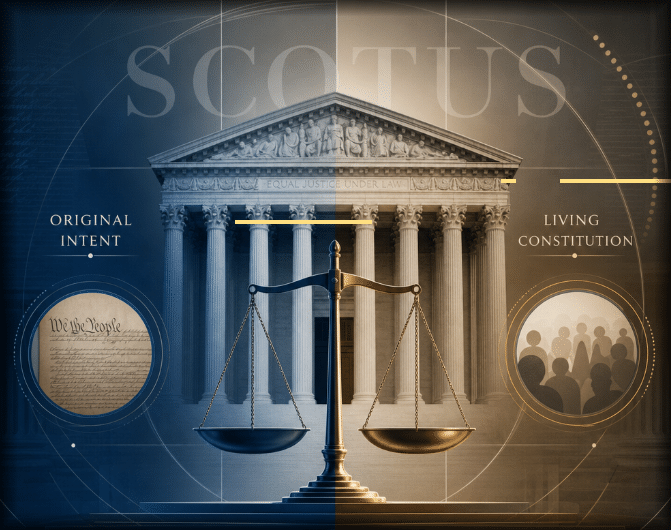
Another safeguard is the Supreme Court. The Court is not supposed to follow public emotion. It is supposed to interpret the Constitution and apply the law. Its job is to preserve the rule of law when politics becomes heated. Judicial independence helps preserve American Exceptionalism by keeping basic legal questions from becoming simple popularity contests.
Judicial independence does not mean that judges are beyond criticism. Courts can make mistakes, and constitutional interpretation can involve serious disagreement. Independence means that judges should decide cases according to legal reasoning rather than fear of political retaliation or the demands of a temporary majority. That principle is part of American Exceptionalism, not a rejection of democracy.
Calls to pack the Court often come from a desire to make it more responsive to short-term political goals. But if the Court becomes just another political weapon, then the Constitution loses one of its strongest defenses. Every change in party control could produce a new effort to restructure the judiciary, making legal rights depend on the latest election.
A strong constitutional system needs a court that can resist pressure. That is not a flaw. That is the design. The judiciary should be open to reasoned argument, bound by law, and accountable through legitimate constitutional processes, but it should not be required to follow opinion polls.
Judicial independence also protects elected officials. Legislators and executives can make difficult decisions knowing that courts may review those decisions under established rules. That review can prevent officials from turning temporary authority into permanent control.
The proper response to an unpopular ruling is legal argument, lawful reform, and constitutional amendment where appropriate—not the destruction of the institution because it refused to deliver a preferred political result. That restraint is vital to American Exceptionalism.
What Happens When Structure Is Replaced by Impulse

History shows that nations weaken when they replace structure with impulse. When rules are ignored, rights become fragile. When institutions are attacked, stability fades. When political power is treated as a tool for total victory, citizens stop trusting the system. These lessons reinforce the constitutional meaning of American Exceptionalism.
The result is division, fear, and decline. People begin to measure justice by whether their own side benefits. They excuse conduct they would condemn from an opponent. They may even support extraordinary measures because they believe their preferred leaders are uniquely trustworthy.
That is dangerous reasoning. Institutions must be designed for ordinary human beings, including ambitious, angry, frightened, and self-interested people. A constitutional system cannot depend on every officeholder being virtuous. It must limit the damage that any officeholder can do.
The Great American Experiment was never meant to be easy. It was meant to endure. Endurance depends on discipline, constitutional literacy, and respect for limits even when those limits are inconvenient. Those habits give American Exceptionalism practical meaning.
Structure also protects peaceful transitions of power. When officials and citizens accept that authority is temporary, losing an election does not become an existential catastrophe. The defeated side can organize, persuade, and compete again. The winning side understands that its mandate has boundaries and an expiration date.
Political institutions cannot eliminate selfishness or anger. They can make those forces less destructive by requiring procedures, creating competing centers of authority, and protecting independent criticism. That is why constitutional restraint is not an enemy of energy or reform. It is the condition that allows reform to occur without civil conflict.
American Exceptionalism Is a Constitutional Design
American exceptionalism is not about claiming moral perfection. It is not about saying America has never made mistakes. It is about something more durable: a government that placed liberty above raw power and created lawful tools for correcting injustice. This constitutional design is the substance of American Exceptionalism.
America was exceptional because it built a government that placed liberty above raw power. It created a system where the majority could not simply crush the minority, the Constitution limited political passion, rights were protected by law, and citizens were expected to understand self-government.
- The majority could not simply crush the minority
- The Constitution limited political passion
- Rights were protected by law
- Citizens were expected to understand self-government
That design changed history. It established a model in which written constitutional rules, representative institutions, and individual rights were connected. The model was never fully realized, but its promises gave reformers a language for challenging injustice and demanding that the nation honor its own principles.
No political structure automatically makes citizens good. A constitution can be ignored, distorted, or violated. Its value lies partly in giving citizens a standard by which to judge government and a lawful framework through which to correct abuses.
That is the real meaning of American exceptionalism. It is not a claim that Americans are naturally better than other people. It is a claim about a distinctive political experiment: liberty depends on limits, rights require institutions, and self-government requires citizens willing to restrain their own side. This is why American Exceptionalism should be treated as a constitutional responsibility rather than a boast.
Readers who want a related discussion of these principles can explore the moral grammar of the American Republic. The broader lesson is that a free society requires habits of responsibility as well as formal rules.
Why This Matters Now
As the country heads into another election season, these questions matter more than ever. Americans must decide whether they want a constitutional republic or a politics of total control. They must decide whether they still believe in limits and whether the rights of the few still matter when the many are angry. Those choices will shape the future of American Exceptionalism.
These are not abstract questions. They affect election administration, public speech, religious liberty, property rights, criminal justice, education, and the relationship between state and federal authority. Every policy debate eventually raises a deeper question about who should have power and what that power should be allowed to do.
If the Constitution is treated as a barrier instead of a safeguard, the American experiment weakens. If civic education disappears, citizens lose the ability to defend the system. If political power becomes a tool for winner-take-all rule, the Republic moves closer to collapse.
Public discussion should therefore return to first principles. People should ask whether a proposed reform protects liberty for everyone or merely gives one coalition a stronger weapon. They should ask whether an institution is being improved or captured. They should ask whether a temporary problem is being used to justify a permanent expansion of power.
The constitutional text remains an important starting point for those questions. Readers can consult the official transcript of the U.S. Constitution from the National Archives to review the structure of the federal government and the framework that limits it.
Citizens should also remember that disagreement is not evidence of national failure. A large republic will contain conflicting interests and competing visions. The goal is not to eliminate disagreement. The goal is to keep disagreement within a system where persuasion, elections, law, and peaceful reform remain possible.
Preserving What Made America Great
The Great American Experiment was never about wealth alone. It was never about land alone. It was never about military strength alone. It was about creating a system where freedom could survive human nature. That purpose remains at the heart of American Exceptionalism.
That required constitutional limits, respect for minority rights, and a citizenry capable of understanding self-government. It required leaders willing to accept defeat and citizens willing to criticize their own allies. It required people to recognize that liberty includes protections for unpopular neighbors and political opponents.
America became exceptional because it understood a truth that many systems ignore: power must be restrained if liberty is to last. That lesson still matters in every election, every debate over the Constitution, and every moment when a majority is tempted to overreach. It is one of the clearest practical lessons of American Exceptionalism.
Preserving the Republic does not mean freezing the nation in the past. It means using lawful means to address new problems while maintaining the principles that keep power accountable. Amendments, legislation, elections, court decisions, and civic action can all shape the future without abandoning constitutional government.
American exceptionalism will not survive as a slogan alone. It survives only when the nation remembers why its Republic was built in the first place. The minority must be protected. The Constitution must remain supreme. Citizens must learn enough civics to recognize both the promise and the danger of political power.
The Great American Experiment must be defended if it is to endure. Its success depends not on perfection, but on the willingness of each generation to renew the discipline of self-government and preserve liberty against the tyranny of the majority. That renewal keeps American Exceptionalism grounded in constitutional practice rather than political rhetoric.
Lost Moral Grammar: Stunning Best Civic Renewal GuideFederalist 10:
Stunning Best Guide to FactionsProgressive Social Engineering in American EducationFederalist 10:
Stunning Best Guide to FactionsLost Moral Grammar: Stunning Best Civic Renewal GuideLost Moral Grammar: Stunning Best Civic Renewal GuideFederalist 10: Stunning Best Guide to FactionsProgressive Social Engineering in American EducationBetter Questions: Stunning Best Decision Guide
Leave a Reply